
Filing A Personal Injury Lawsuit In Michigan Step-By-Step
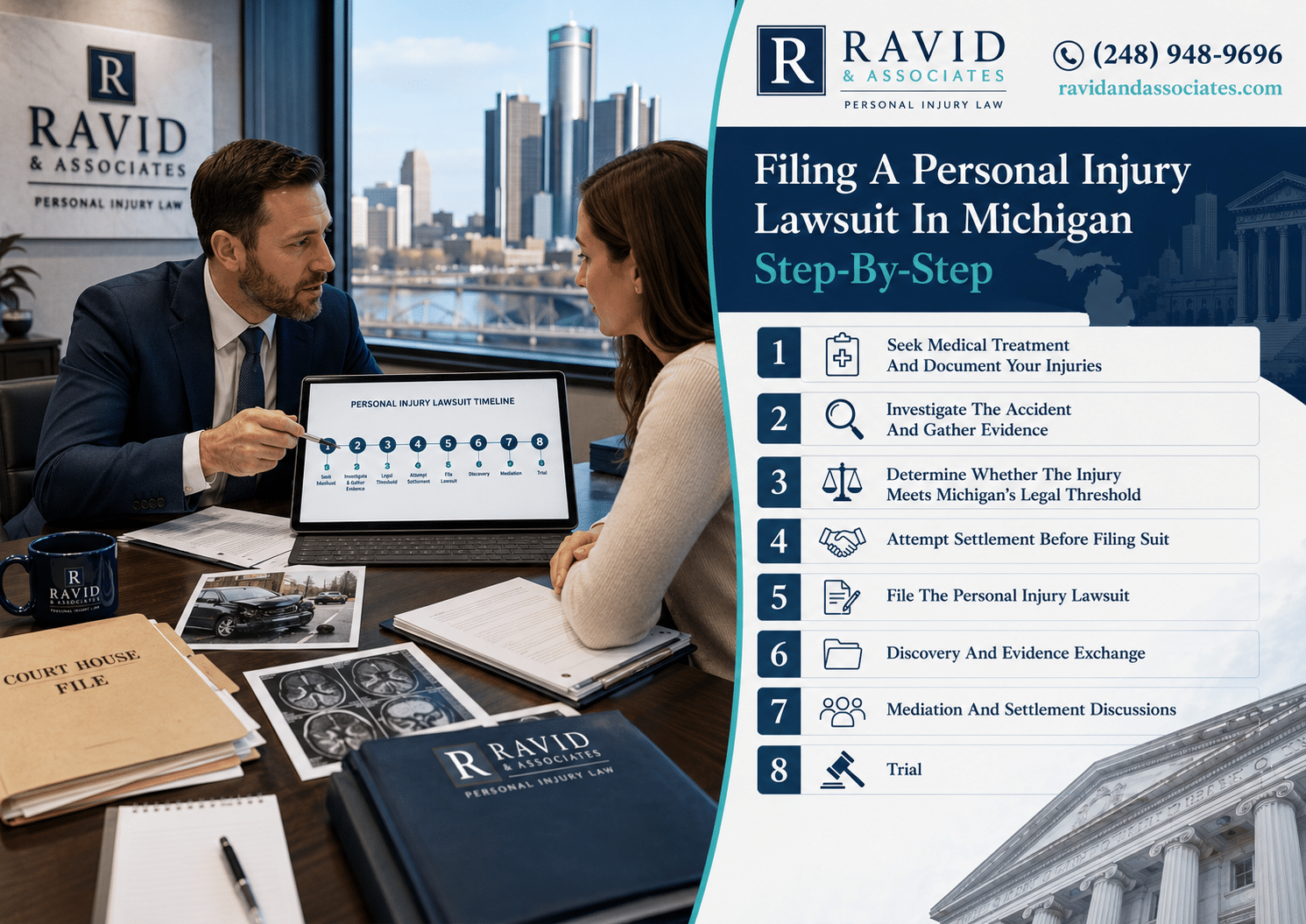
Suffering an injury because of someone else’s negligence can leave you dealing with medical bills, lost income, physical pain, and uncertainty about the future. While many personal injury claims are resolved through insurance negotiations, some cases require filing a lawsuit to pursue fair compensation. Understanding how the process works can help injured individuals make informed decisions about their legal rights. Michigan law provides a structured path for injury victims to seek financial recovery, but strict rules and deadlines apply. Taking the proper steps early can make a significant difference in a case’s outcome.
We help people in Detroit and across Michigan get compensation after serious accidents. No matter if your injury happened in a car, truck, or motorcycle crash, as a pedestrian, in a slip-and-fall, or another situation, it’s important to understand how the legal process works. Here’s a step-by-step look at how a Michigan personal injury lawsuit usually unfolds.
Step One: Seek Medical Treatment And Document Your Injuries
Your health should always come first after an accident. Getting medical care right away helps you recover and creates records that could be important for your case. Sometimes injuries that seem minor at first can get worse later.
Medical records show the link between your accident and your injuries. Insurance companies often look closely at any gaps or delays in treatment. Getting care regularly helps create a clear record of your injuries and recovery.
In Michigan motor vehicle accident cases, injured individuals may also seek Personal Injury Protection (PIP) benefits under Michigan’s No-Fault Act, MCL 500.3101, which may provide coverage for medical expenses and certain wage losses regardless of fault.
Step Two: Investigate The Accident And Gather Evidence
After you start medical treatment, the next step is to collect evidence. The stronger your evidence, the stronger your personal injury claim will be.
Important evidence may include police reports, accident scene photographs, witness statements, surveillance footage, vehicle damage documentation, medical records, and employment records showing lost wages.
Michigan uses a modified comparative fault system under MCL 600.2959. If you are partly at fault for the accident, your compensation can be reduced by your share of responsibility. That’s why it’s so important to have strong evidence showing who was at fault.
Step Three: Determine Whether The Injury Meets Michigan’s Legal Threshold
In motor vehicle accident cases, Michigan law imposes additional requirements before an injured person may pursue pain and suffering damages against the at-fault driver.
Under MCL 500.3135, the injured person generally must demonstrate:
- Death
- Permanent serious disfigurement
- Serious impairment of body function
The Michigan Supreme Court has made many decisions about what counts as a serious impairment of body function. The details of each case matter when deciding if this requirement is met.
Step Four: Attempt Settlement Before Filing Suit
Many personal injury claims settle before a lawsuit is ever filed. Once your medical condition is better understood, we usually share evidence of fault, injuries, medical bills, lost wages, and other damages with the insurance company.
Settlement negotiations may occur over several weeks or months. Some insurers evaluate claims fairly, while others dispute liability, challenge medical treatment, or undervalue injuries.
When settlement efforts fail to produce a fair result, filing a lawsuit may become necessary.
Step Five: File The Personal Injury Lawsuit
A lawsuit officially begins when a complaint is filed with the appropriate Michigan court.
The complaint identifies:
- The parties involved.
- The facts surrounding the accident.
- The legal claims being asserted.
- The damages being sought.
Michigan’s statute of limitations generally requires personal injury lawsuits to be filed within three years from the date of injury under MCL 600.5805. Missing this deadline can permanently bar recovery.
After filing, the defendant must be formally served with the lawsuit and given an opportunity to respond.
Step Six: Discovery And Evidence Exchange
Discovery is often the longest stage of litigation. During discovery, both sides exchange information and gather evidence.
This process may include written interrogatories, requests for documents, depositions, medical examinations, and expert witness disclosures.
Depositions allow attorneys to question parties and witnesses under oath. Discovery often reveals strengths and weaknesses in each side’s case and frequently leads to renewed settlement discussions.
Step Seven: Mediation And Settlement Discussions
Michigan courts frequently encourage settlement efforts before trial. Mediation may be ordered by the court or voluntarily agreed upon by the parties.
During mediation, a neutral third party works with both sides to explore settlement options. Many cases resolve during this stage because both sides gain a better understanding of the risks and costs associated with the trial.
A settlement provides certainty and allows injured individuals to avoid the time and expense of courtroom litigation.
Step Eight: Trial
If a settlement cannot be reached, the case proceeds to trial.
At trial, both sides present evidence, examine witnesses, and make legal arguments. A judge or jury evaluates the evidence and determines:
- Liability
- Comparative fault percentages
- Damages
The jury’s verdict determines the compensation awarded, subject to applicable Michigan laws and any reductions based on comparative fault.
Frequently Asked Questions About Filing A Personal Injury Lawsuit In Michigan
How Long Do I Have To File A Personal Injury Lawsuit In Michigan?
Michigan law generally provides a three-year statute of limitations for most personal injury lawsuits under MCL 600.5805. Certain exceptions may apply depending on the type of claim, the parties involved, and other factors. Waiting too long can result in losing the right to pursue compensation.
Do I Have To Go To Court To Recover Compensation?
No. Most personal injury claims settle before trial. Many cases are resolved through negotiations with insurance companies, mediation, or settlement conferences. However, filing a lawsuit may still be necessary to preserve legal rights and encourage meaningful settlement discussions.
What If I Was Partially Responsible For The Accident?
Michigan follows modified comparative fault principles under MCL 600.2959. Your compensation may be reduced by your percentage of fault. If you are more than 50 percent responsible, you may be barred from recovering certain non-economic damages, including pain and suffering.
How Long Does A Michigan Personal Injury Lawsuit Take?
The timeline varies depending on the complexity of the case, the severity of the injuries, court schedules, and whether settlement negotiations are successful. Some cases resolve within months, while others may take several years if they proceed through trial.
What Evidence Is Most Important In A Personal Injury Case?
Medical records, accident reports, witness statements, photographs, surveillance footage, employment records, and expert testimony often play important roles. The stronger the evidence connecting the injuries to the accident, the stronger the claim may become.
Can I Recover Compensation For Future Medical Expenses?
Yes. Michigan law allows injured individuals to seek compensation for reasonably anticipated future medical care when supported by medical evidence. Serious injuries often require ongoing treatment, rehabilitation, surgeries, or long-term care.
Our Detroit Injury Attorneys Help Accident Victims Throughout Michigan
Filing a personal injury lawsuit can feel overwhelming, especially while recovering from serious injuries. We help clients understand their rights, gather evidence, deal with insurance companies, and pursue the compensation allowed under Michigan law. Our goal is to protect our clients throughout every stage of the legal process while seeking the maximum recovery available.
If you were injured because of someone else’s negligence, call our Detroit personal injury attorneys at Ravid & Associates, P.C. today by calling (248) 948-9696 to receive your free consultation. We represent injury victims in Detroit and throughout the entire state of Michigan from our office locations in Southfield, Michigan. Let us help you pursue the compensation you deserve and protect your future.

