
What Is A Demand Letter In Michigan Personal Injury Law?
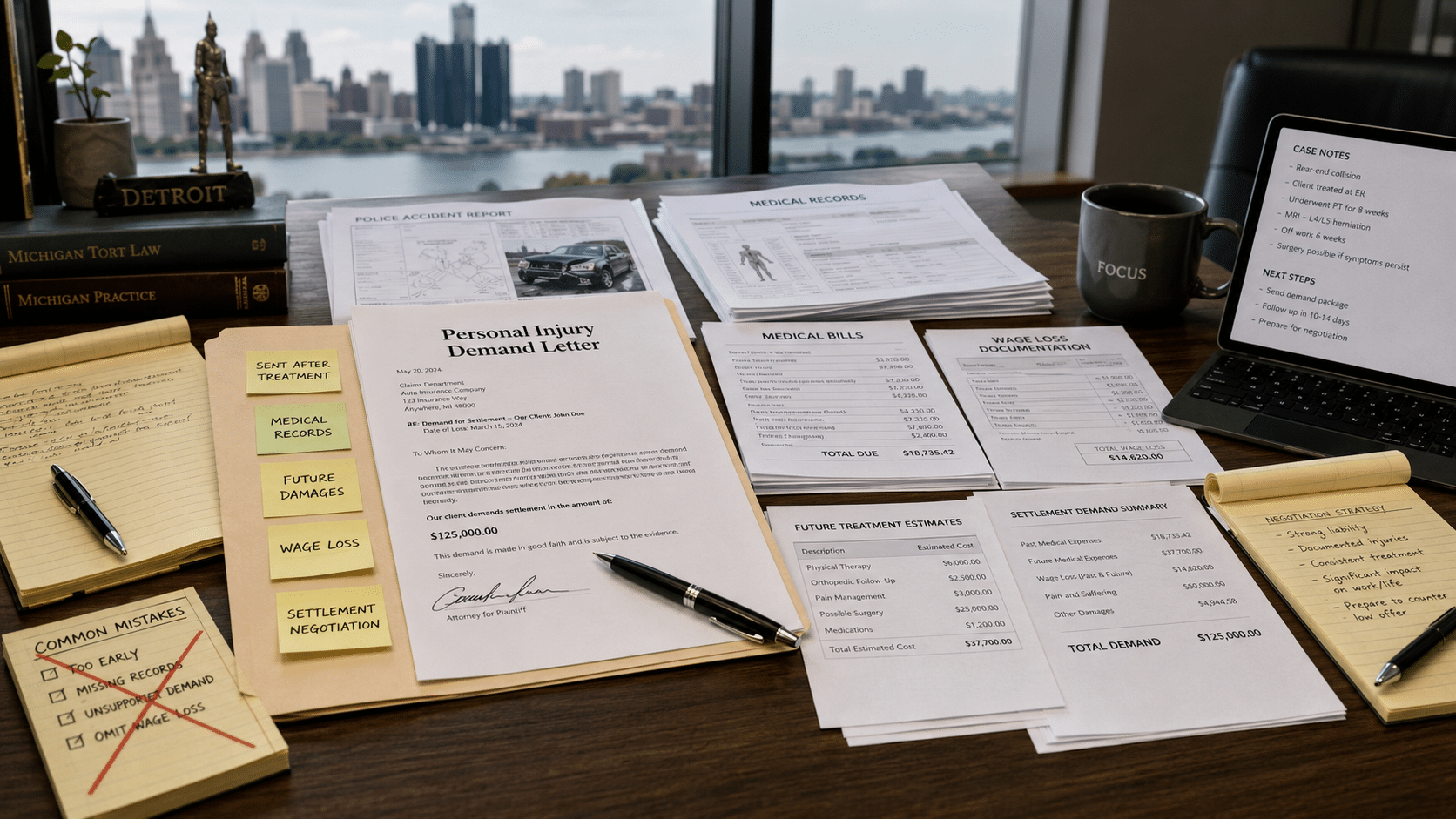
After a serious car accident or personal injury, many people think the next step is to file a lawsuit right away. However, most injury cases actually start with a demand letter. This document lays the groundwork for settlement talks and can decide if a case is resolved without going to court. A well-prepared demand letter shares the facts, describes the injuries, explains why the other party is responsible, and asks for compensation from the person or insurance company at fault. It is one of the most important documents in a Michigan personal injury claim.
We often prepare demand letters for Detroit clients hurt in car, truck, or motorcycle accidents, pedestrian accidents, slip and falls, and other incidents caused by negligence. A strong demand package can help show the value of a claim and encourage real settlement talks. Knowing how demand letters work can help injured people better understand the claims process and what to expect before a lawsuit is filed.
A Demand Letter Is A Formal Written Communication
A demand letter is a formal written communication sent to an insurance company, defendant, or opposing attorney requesting compensation for injuries and losses caused by an accident.
The purpose of the demand letter is to explain:
- How the accident occurred.
- Why the other party is legally responsible
- The injuries suffered.
- The medical treatment received.
- Financial losses incurred.
- The amount of compensation being requested.
In many cases, the demand letter is the first chance to show the full details of the claim. Insurance companies often depend on the information in the demand package when deciding how much a claim is worth.
When Is A Demand Letter Sent?
A demand letter is typically sent after the injured person reaches a point where the extent of the injuries and future medical needs can be reasonably evaluated.
Sending a demand letter too early can create problems because the full extent of damages may not yet be known. On the other hand, waiting too long can delay settlement discussions.
In Michigan car accident cases, timing is particularly important because of the state’s No-Fault system under MCL 500.3101 and the deadlines that may apply to Personal Injury Protection (PIP) claims and third-party lawsuits.
We aim to gather enough medical records, proof of lost wages, and evidence of future damages before sending a demand package.
What Information Is Included In A Demand Letter?
Every case is different, but a thorough demand letter typically includes several important sections.
The letter often begins with a detailed discussion of liability. This section explains why the defendant’s actions caused the accident and injuries.
The demand package may also include police reports, witness statements, medical records, medical bills, diagnostic imaging results, photographs, employment records, and wage loss documentation.
The letter explains how the injuries have affected daily life, employment, physical activities, and overall quality of life.
For Michigan automobile accident claims, the demand may also discuss whether the injuries meet the serious impairment threshold under MCL 500.3135, which governs claims for pain and suffering damages.
Why Demand Letters Matter
A demand letter does much more than ask for money. It tells the story of the case.
Insurance adjusters review hundreds of claims each year. A detailed and well-supported demand package helps distinguish a claim from others and provides evidence supporting the requested compensation.
A strong demand letter may encourage early settlement, reduce disputes about liability, highlight future medical needs, demonstrate the seriousness of the injuries, and establish credibility before litigation.
In many cases, settlement negotiations begin shortly after the insurance company reviews the demand package.
What Happens After A Demand Letter Is Sent?
After receiving a demand letter, the insurance company generally reviews the evidence and conducts its own evaluation.
The insurer may accept the demand, reject the demand, make a counteroffer, or request additional information.
Settlement negotiations often involve multiple rounds of discussions. Some claims resolve relatively quickly, while others require extended negotiations.
If the parties cannot reach a fair settlement, filing a lawsuit may become necessary.
Michigan personal injury lawsuits generally must be filed within the applicable statute of limitations under MCL 600.5805, which is typically three years for most personal injury claims.
Common Mistakes That Can Hurt A Demand Letter
Several mistakes can weaken a demand package and reduce settlement opportunities.
These may include sending the demand before treatment is complete, failing to include important medical records, underestimating future damages, omitting wage loss information, and making unsupported compensation demands.
Insurance companies carefully examine every aspect of a claim. Thorough preparation helps strengthen the position of the injured person during negotiations.
How Demand Letters Affect Settlement Value
The quality of the demand package often influences how seriously an insurance company evaluates a claim.
When liability is well documented and damages are clearly supported by evidence, insurers may be more willing to engage in productive negotiations.
A demand letter cannot guarantee a specific outcome, but it frequently sets the tone for the entire settlement process. The stronger the evidence and presentation, the stronger the position of the injured person.
Frequently Asked Questions About Demand Letters In Michigan Injury Cases
What Is The Purpose Of A Demand Letter?
The purpose of a demand letter is to formally notify the insurance company or responsible party of the injuries, damages, and compensation being sought. It provides evidence supporting the claim and often serves as the starting point for settlement negotiations.
Does A Demand Letter Mean A Lawsuit Has Been Filed?
No. A demand letter is typically sent before a lawsuit is filed. Many cases resolve through negotiations after a demand package is submitted. If settlement efforts are unsuccessful, a lawsuit may later become necessary.
How Long Does It Take To Receive A Response To A Demand Letter?
Response times vary depending on the insurance company, the complexity of the claim, and the amount of evidence being reviewed. Some insurers respond within a few weeks, while others may take longer to complete their evaluation.
What If The Insurance Company Rejects The Demand?
A rejection does not necessarily end the claim. Settlement negotiations often involve counteroffers and continued discussions. If a fair resolution cannot be reached, litigation may become the next step.
Should I Accept The First Settlement Offer?
Not necessarily. Initial settlement offers are often lower than the amount ultimately recovered through negotiation. Before accepting any offer, it is important to understand the full value of the claim, including future medical expenses, lost earnings, and non-economic damages.
Can A Demand Letter Include Future Medical Expenses?
Yes. Future medical treatment, rehabilitation costs, and anticipated care needs may be included when supported by medical evidence. Serious injuries often involve long-term consequences that should be considered during settlement discussions.
Does Michigan’s No-Fault Law Affect Demand Letters?
Yes. Michigan’s No-Fault Act under MCL 500.3101 et seq. affects many automobile accident claims. Demand letters involving motor vehicle accidents may address both No-Fault benefits and third-party claims for pain and suffering under MCL 500.3135.
Ravid & Associates, P.C. Helps Injury Victims Pursue Fair Compensation
A demand letter is often one of the most important steps in a Michigan personal injury claim. Proper preparation can strengthen settlement negotiations and position a case for success. We work closely with injured clients to gather evidence, document damages, and present claims clearly and persuasively.
If you were injured due to someone else’s negligence, call our Detroit personal injury attorneys at Ravid & Associates, P.C. today by calling (248) 948-9696 to receive your free consultation. We represent injury victims in Detroit and throughout Michigan from our Southfield office. Let us help you pursue the compensation you deserve and protect your rights throughout the claims process.

