
Traumatic Brain Injury (TBI) Legal Claims Explained
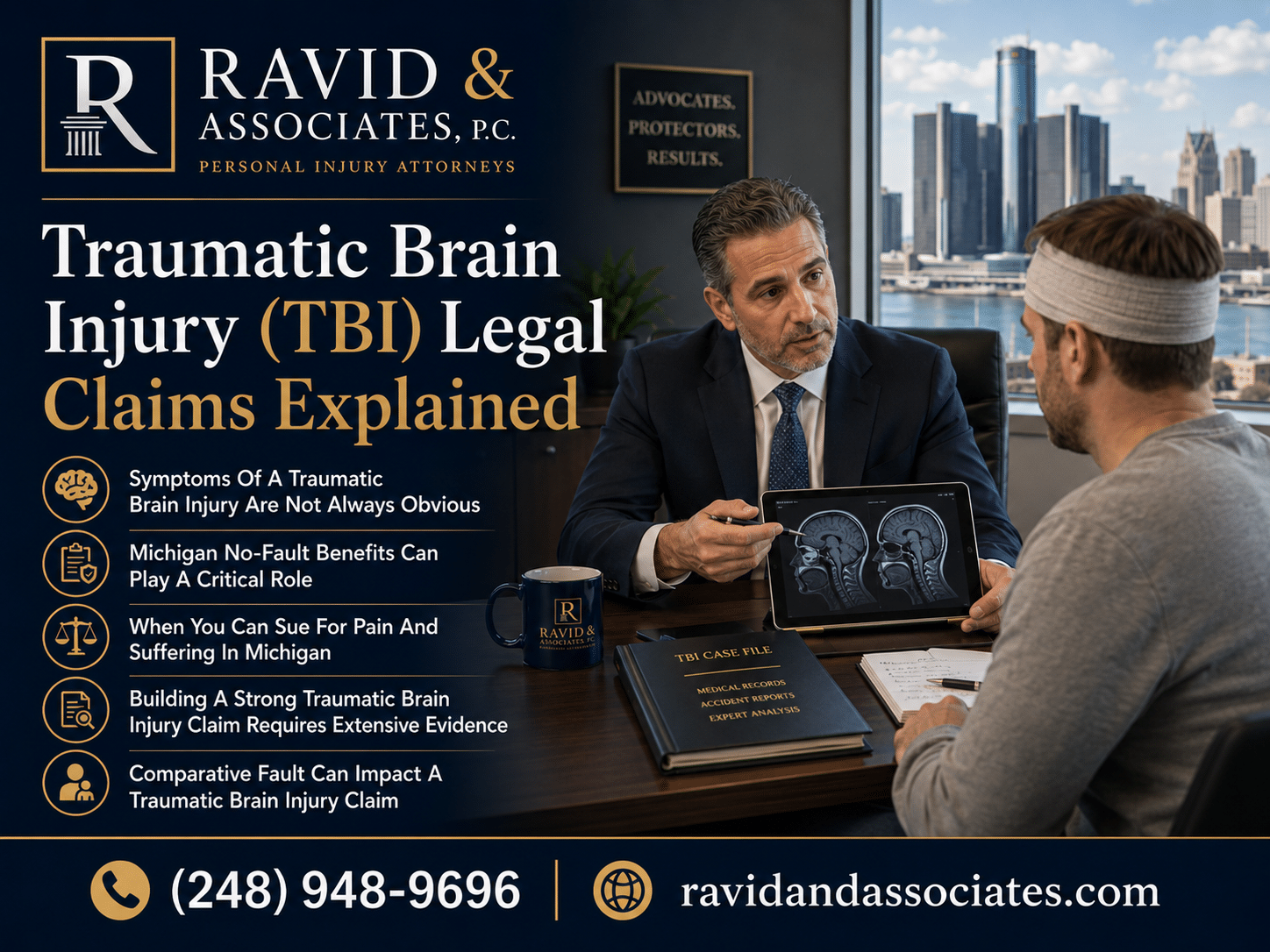
Traumatic brain injuries are some of the most serious cases we handle in Michigan because they can change almost every part of a person’s life. Unlike a broken bone or a visible wound, brain injuries are often hidden and can affect thinking, emotions, memory, focus, personality, and physical abilities. Some people get better over time, but others have symptoms that last for years or never go away. Even a mild concussion can turn into a problem that makes it hard to work, maintain relationships, or handle daily tasks.
Many people with traumatic brain injuries leave the emergency room thinking they will recover quickly, but weeks later they may find themselves dealing with headaches, dizziness, tiredness, memory loss, and trouble focusing. Often, family members notice these changes before the injured person does. These symptoms can make work and home life very difficult. Michigan law lets injury victims seek compensation if someone else’s negligence caused the brain injury, but insurance companies often challenge these cases.
We help people in Detroit and across Michigan build strong claims for traumatic brain injuries by showing both the short-term and long-term effects. Since brain injuries can be hard to measure and explain, these cases need solid medical evidence and a clear picture of how the injury has changed someone’s life.
What Is A Traumatic Brain Injury?
A traumatic brain injury happens when a sudden force or impact disrupts how the brain works. These injuries can be as mild as a concussion or as severe as brain trauma that causes permanent disability.
Car accidents often cause traumatic brain injuries because the head and neck move violently during a crash. Even if the head does not hit anything, the brain can move inside the skull and get hurt. Quick stops and starts can stretch and damage the brain’s delicate tissue.
Car accidents are not the only cause of traumatic brain injuries. We also see them in truck and motorcycle crashes, pedestrian and bicycle accidents, slip-and-fall incidents, workplace accidents involving others, and cases where property owners are responsible.
Some traumatic brain injuries appear immediately, while others develop gradually over time. This delayed onset often creates challenges because insurance companies may argue that symptoms are unrelated to the accident.
Symptoms Of A Traumatic Brain Injury Are Not Always Obvious
One of the hardest things about traumatic brain injuries is that symptoms can be subtle at first. Someone may look healthy but still struggle with serious thinking or memory problems.
Common symptoms are ongoing headaches, dizziness, memory issues, confusion, sensitivity to light or noise, tiredness, trouble sleeping, irritability, anxiety, depression, and trouble focusing. Some people also notice changes in their personality that affect their relationships with family, friends, and coworkers.
Many victims become frustrated because they no longer feel like themselves. Activities that once seemed easy may suddenly become overwhelming. Some people struggle to multitask, forget appointments, or have difficulty finding the right words during conversations.
These symptoms can dramatically affect a person’s ability to work, maintain relationships, and enjoy everyday life. Because of this, brain injury cases often involve damages that extend far beyond immediate medical treatment.
Michigan No-Fault Benefits Can Play A Critical Role
Michigan’s No-Fault Insurance Act, MCL 500.3101, provides important benefits for individuals who suffer traumatic brain injuries in motor vehicle accidents.
Personal Injury Protection benefits may cover medical expenses, wage loss benefits, replacement services, and attendant care. These benefits can become especially important in brain injury cases because treatment often continues for months or years after the accident.
Traumatic brain injury treatment may involve neurologists, neuropsychologists, occupational therapists, speech therapists, cognitive rehabilitation specialists, and mental health professionals. The costs associated with this care can become substantial.
Unfortunately, insurance companies frequently challenge these claims because brain injuries often require extensive and expensive treatment plans. They may question whether certain therapies are necessary or argue that ongoing symptoms are unrelated to the accident.
We work to build strong medical evidence that clearly demonstrates the connection between the injury and the need for continued treatment.
When You Can Sue For Pain And Suffering In Michigan
Michigan’s No-Fault system limits when an injured person can pursue pain and suffering damages against an at-fault driver. Under MCL 500.3135, an injured person generally must establish death, permanent serious disfigurement, or a serious impairment of body function.
Traumatic brain injuries frequently satisfy the serious impairment threshold because they directly affect one of the most important body functions: the brain itself. However, proving the extent of the impairment often requires substantial evidence.
Insurance companies sometimes argue that mild traumatic brain injuries are temporary or exaggerated because many symptoms cannot be seen on traditional imaging studies. They may point to normal CT scans or MRI results as evidence that the person has recovered.
This is why comprehensive medical evaluations become so important. Neuropsychological testing, physician opinions, treatment records, and testimony from family members can all help establish how the injury has changed a person’s normal life. The law focuses on how the injury affects daily functioning, not simply whether imaging studies reveal visible damage.
Building A Strong Traumatic Brain Injury Claim Requires Extensive Evidence
Traumatic brain injury cases are often more complex than other personal injury claims because the effects can be difficult to quantify. Insurance companies may challenge every aspect of the case, from diagnosis to future treatment needs.
We focus on documenting how the person’s life changed after the accident. Medical records provide a foundation, but additional evidence is often necessary to tell the full story. Employment records may demonstrate reduced productivity or lost earning capacity. Family members can describe changes in personality, memory, and behavior. Treating physicians can explain how symptoms interfere with normal activities.
Many clients benefit from keeping a daily journal documenting headaches, fatigue, memory lapses, emotional struggles, and limitations throughout the recovery process. Over time, these records can become powerful evidence.
Consistency also matters. Following treatment recommendations and attending appointments can help establish the seriousness of the injury.
Comparative Fault Can Impact A Traumatic Brain Injury Claim
Michigan follows a modified comparative fault system under MCL 600.2959. If an injured person shares responsibility for an accident, their compensation may be reduced by their percentage of fault.
Insurance companies often attempt to assign blame to reduce their financial exposure. They may argue that a driver was speeding, distracted, or otherwise contributed to the collision.
If an injured person is found more than 50 percent responsible, they may be barred from recovering non-economic damages such as pain and suffering. Because traumatic brain injury cases can involve substantial damages, comparative fault arguments frequently become a major issue.
Early investigation, witness statements, electronic vehicle data, and accident reconstruction can help protect a claim from unfair fault allegations.
Frequently Asked Questions About Traumatic Brain Injury Claims In Michigan
Can A Concussion Become A Serious Traumatic Brain Injury?
Yes. Not every concussion is minor. Some people continue experiencing symptoms for months or years after the accident. Persistent headaches, memory problems, concentration issues, and emotional changes can substantially affect a person’s life and ability to work.
What If My CT Scan Was Normal?
A normal CT scan does not necessarily mean you do not have a traumatic brain injury. Many brain injuries do not appear on traditional imaging studies. Physicians often rely on symptoms, neurological examinations, and neuropsychological testing to make diagnoses.
Does A Traumatic Brain Injury Qualify For Pain And Suffering Damages In Michigan?
Often, yes. Under MCL 500.3135, many traumatic brain injuries qualify because they create a serious impairment of body function. Every case depends on its specific facts and medical evidence.
How Long Can Traumatic Brain Injury Symptoms Last?
Recovery timelines vary significantly. Some people improve within weeks, while others experience symptoms for years. Severe injuries may result in permanent impairments that require lifelong treatment and support.
What Damages Can I Recover In A Traumatic Brain Injury Case?
Depending on the circumstances, compensation may include medical expenses, future medical treatment, lost wages, loss of earning capacity, pain and suffering, emotional distress, and long-term disability.
How Long Do I Have To File A Lawsuit In Michigan?
Michigan generally imposes a three-year statute of limitations under MCL 600.5805 for personal injury lawsuits. Certain insurance deadlines may arise much sooner, so acting quickly is important.
Talk To Ravid & Associates, P.C. About Your Michigan Traumatic Brain Injury Claim
Traumatic brain injuries can permanently alter the course of a person’s life. We work to build strong cases that account for both the immediate and future consequences these injuries create. Our team carefully documents every aspect of the injury so clients can pursue compensation that reflects the true impact on their lives.
If you suffered a traumatic brain injury because of someone else’s negligence, call our Detroit car accident TBI attorneys at Ravid & Associates, P.C. today by calling (248) 948-9696 to receive your free consultation. We represent injury victims in Detroit and throughout the entire state of Michigan from our office locations in Southfield, Michigan. Let us help protect your rights and pursue the compensation you deserve.

