
Michigan Wrongful Death Laws Explained
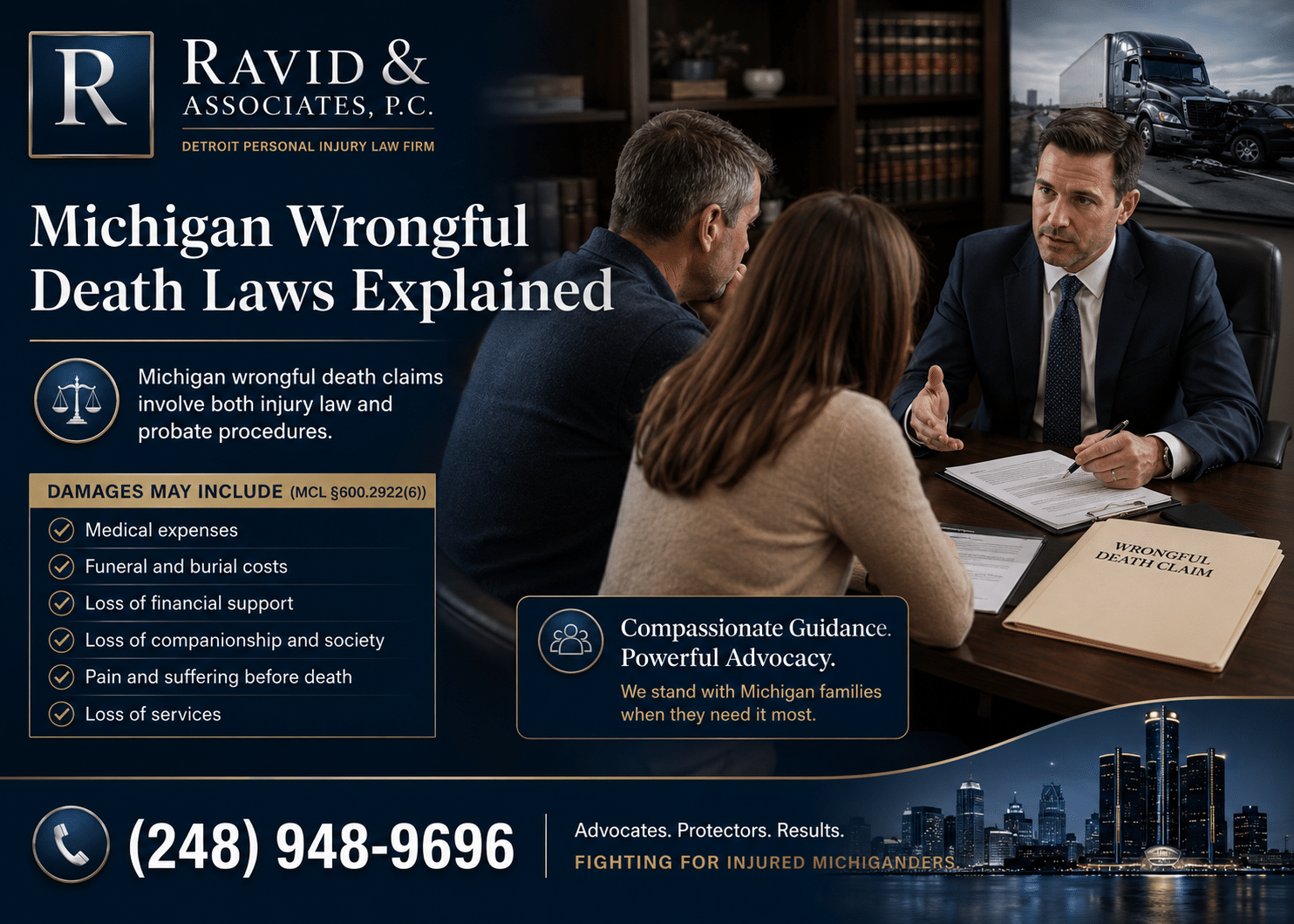
Losing a loved one due to another person’s careless or reckless actions can leave a family emotionally and financially devastated. In Detroit, wrongful death laws allow surviving family members to pursue compensation when a death results from negligence, a wrongful act, or misconduct. These claims often arise after fatal car accidents, truck crashes, motorcycle collisions, medical malpractice, and dangerous property conditions.
We understand how difficult this process can be for grieving families. Many people are unsure about who can file a claim, what compensation may be available, or how Michigan law applies to their situation. Wrongful death claims involve both personal injury law and probate procedures, which can become complicated without legal guidance. Michigan law imposes strict deadlines and requirements on these cases, making early action essential.
What Is Considered A Wrongful Death Under Michigan Law?
Michigan’s wrongful death law is governed by the Michigan Wrongful Death Act, MCL §600.2922. Under this statute, a wrongful death claim may arise when a person dies because of another party’s negligence, wrongful act, or failure to act.
In car accident cases, wrongful death claims commonly involve:
- Drunk driving accidents
- Distracted driving crashes
- Speeding or reckless driving
- Commercial truck accidents
- Fatal pedestrian collisions
- Motorcycle accidents caused by negligent drivers
The purpose of a wrongful death claim is to compensate surviving family members for the losses resulting from the death.
Who Can File A Wrongful Death Lawsuit In Michigan?
Under Michigan law, the wrongful death lawsuit must be filed by the personal representative of the deceased’s estate. This representative is usually appointed through probate court.
Although the representative files the lawsuit, compensation may be recovered on behalf of surviving family members, including spouses, children, grandchildren, parents, grandparents, siblings, and other individuals are entitled to inherit under Michigan law.
The probate court may ultimately determine how compensation is distributed among eligible family members.
What Damages Can Be Recovered?
Michigan law allows several forms of compensation in wrongful death cases. Under MCL §600.2922(6), damages may include:
- Medical expenses related to the final injury or illness.
- Funeral and burial costs.
- Loss of financial support.
- Loss of companionship and society.
- Pain and suffering experienced before death.
- Loss of services the deceased provided to the family.
The value of a wrongful death case often depends on factors such as the deceased person’s age, earning capacity, health, and role within the family.
How Michigan’s No-Fault Law Impacts Fatal Car Accident Claims
Michigan’s No-Fault insurance system also affects wrongful death cases arising from motor vehicle accidents. Under MCL §500.3101, certain benefits may be available regardless of fault, including survivor’s loss benefits and funeral expense coverage.
However, surviving family members may also pursue a third-party wrongful death claim against the at-fault driver when negligence caused the fatal crash. These claims are separate from No-Fault insurance benefits and may provide compensation for pain and suffering and financial losses.
Insurance companies often dispute liability or attempt to minimize damages in fatal accident cases. Proper investigation and evidence collection are critical.
The Importance Of Proving Negligence
To succeed in a wrongful death claim, the estate must prove that another party’s negligence caused the death. This generally requires showing:
- The defendant owed a duty of care.
- The defendant breached that duty.
- The breach caused the fatal injury.
- The surviving family suffered damages as a result.
Evidence may include police reports, crash scene photographs, witness statements, surveillance footage, medical records, and accident reconstruction analysis.
Michigan follows a modified comparative fault system under MCL §600.2959. If the deceased was partially at fault, compensation may be reduced by their percentage of fault.
Time Limits For Filing A Wrongful Death Claim
Michigan law places strict deadlines on wrongful death lawsuits. Under MCL §600.5805, most wrongful death claims must be filed within three years of the date of death.
Certain exceptions may apply depending on the circumstances, but waiting too long can result in losing the right to pursue compensation entirely. Early investigation is important because evidence can disappear over time, and witness memories may fade.
Why Wrongful Death Cases Require Careful Legal Handling
Wrongful death claims are emotionally difficult and legally complex. They may involve probate court, insurance disputes, medical evidence, and financial analysis. Families often face these issues while grieving.
We handle every aspect of the case, including investigation, evidence preservation, insurance negotiations, and litigation if needed. Our goal is to protect the family’s rights and pursue accountability.
Frequently Asked Questions About Michigan Wrongful Death Laws
What Is The Difference Between A Wrongful Death Claim And A Criminal Case?
A wrongful death claim is a civil lawsuit seeking financial compensation for surviving family members. A criminal case is brought by the government to punish the person responsible for the death. Even if no criminal charges are filed, a wrongful death lawsuit may still proceed in civil court.
Who Receives The Money From A Wrongful Death Settlement In Michigan?
Compensation is distributed to eligible surviving family members according to Michigan law and probate court approval. The court may consider financial dependence, emotional loss, and family relationships when determining distribution.
Can A Wrongful Death Claim Be Filed After A Fatal Car Accident?
Yes. Fatal car accidents are one of the most common causes of wrongful death claims in Michigan. If another driver’s negligence caused the crash, surviving family members may have the right to pursue compensation through the estate.
What If The Deceased Person Was Partially At Fault?
Michigan follows modified comparative fault rules under MCL §600.2959. If the deceased person shared responsibility for the accident, compensation may be reduced based on their percentage of fault. However, the claim may still proceed depending on the circumstances.
Are There Limits On How Long We Have To File A Claim?
Yes. Most wrongful death lawsuits must be filed within three years under MCL §600.5805. Missing the filing deadline may permanently bar recovery. Certain situations may involve shorter deadlines or exceptions.
Do Michigan No-Fault Benefits Apply After A Fatal Accident?
Yes. Survivor’s loss benefits and funeral expense coverage may be available through Michigan No-Fault insurance policies. These benefits are separate from a wrongful death lawsuit against the at-fault party.
Call Our Detroit Wrongful Death Attorneys For Your Free Consultation
Wrongful death cases require immediate attention, detailed investigation, and strong legal advocacy. We work with families throughout Michigan to pursue compensation and hold negligent parties accountable after fatal accidents. Every case deserves careful preparation and compassionate representation.
If your loved one lost their life in a Detroit accident, contact our Detroit wrongful death attorneys at Ravid & Associates, P.C. today by calling (248) 948-9696 to receive your free consultation. We represent families in Detroit and throughout Michigan from our Southfield, Michigan, office. Let us help protect your family’s rights during this difficult time.

