
Injured By Falling Building Materials Near Construction Sites
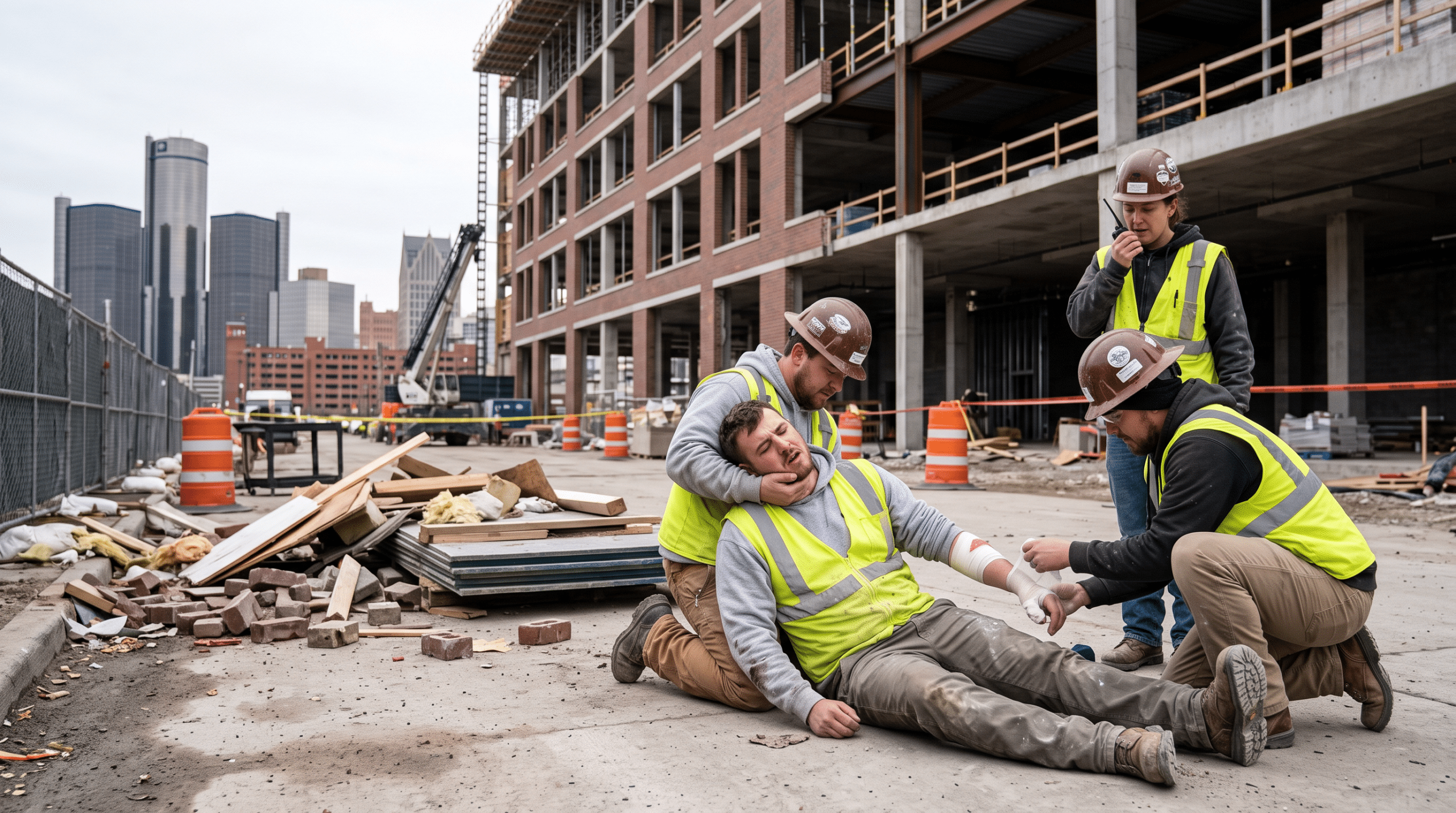
Construction is a common sight in Detroit and other Michigan cities, often happening just a few feet from sidewalks, streets, parking lots, businesses, and homes. Pedestrians and drivers usually cannot control how tools, bricks, wood, metal, or other materials are secured above them. If these materials fall, the injuries can be severe. People can suffer head injuries, spinal damage, broken bones, facial injuries, or even permanent disabilities in just a moment. If a contractor, property owner, subcontractor, or another party fails to manage a construction hazard, Michigan law may let the injured person seek compensation.
We look into falling-object accidents to find out how the material left the work area and who was responsible for stopping it. Since several companies may be working at the same site, it is important to keep evidence and identify everyone who might be responsible.
How Falling Construction Materials Cause Serious Injuries
Construction sites often have objects that can cause serious injuries if dropped, even from a low height. Bricks, roofing materials, tools, wood, scaffolding parts, concrete pieces, metal pipes, fasteners, and equipment can hit people walking by or fall onto cars with people inside.
The weight of the object is just one risk. The height and speed at which it falls make the impact much stronger. Even a small object dropped from several stories up can cause serious, life-changing injuries.
People hurt by falling materials may have skull fractures, brain injuries, spinal cord damage, shoulder injuries, broken bones, internal injuries, eye injuries, or deep cuts. Some need surgery and long recovery times. Others may not be able to go back to their old jobs or do things they used to do on their own.
Michigan Construction Safety Rules May Help Establish What Went Wrong
Michigan construction sites are subject to safety requirements administered through the Michigan Occupational Safety and Health Administration, commonly known as MIOSHA. Michigan’s construction safety standards include specific parts addressing Handling and Storage of Materials, Cranes and Derricks, Scaffolds and Scaffold Platforms, Guarding of Walking and Working Areas, Signals, Signs, Tags and Barricades, and Fall Protection.
These regulations are designed primarily to protect workers, but the circumstances surrounding a regulatory violation may also provide important evidence when we investigate why an object fell from a worksite.
For example, our investigation may focus on whether materials were improperly stacked, whether equipment used to lift materials was maintained properly, whether scaffolding was adequately secured, or whether barriers should have kept pedestrians away from a dangerous area.
A safety violation does not automatically decide every personal injury case, but evidence showing that reasonable safety precautions were ignored can become highly significant.
Who May Be Liable For Falling Building Materials?
One of the first questions we address is which company or individual controlled the activity that caused the injury.
Depending on the circumstances, potentially responsible parties may include the general contractor, subcontractors, construction managers, property owners, equipment operators, material suppliers, or companies responsible for maintaining construction equipment.
There may also be more than one responsible defendant. A subcontractor might improperly store materials, while a general contractor may have failed to enforce site safety requirements. In another situation, defective lifting equipment could shift some responsibility toward a manufacturer or maintenance company.
We examine construction contracts, safety procedures, work assignments, inspection records, photographs, surveillance footage, and witness testimony to determine which parties controlled the hazard.
Premises Liability May Apply To Certain Construction Site Accidents
Some falling-object cases can also involve Michigan premises liability principles. A property owner or possessor may face liability when a dangerous property condition causes an injury and the circumstances establish the legal requirements for a premises liability claim.
Construction activity can temporarily create conditions that did not previously exist. Materials may be stored overhead, sidewalks may run underneath scaffolding, or pedestrians may be routed directly beside active construction areas.
Whether the property owner, contractor, or another party had possession and control of the dangerous area becomes an important question. We look beyond the name on the property deed and determine who actually controlled the site and had authority to correct the condition.
What If A Construction Worker Was Injured By Falling Materials?
A construction employee injured on the job may have rights under Michigan’s workers’ compensation system. However, workers’ compensation is not always the only possible source of recovery.
Under MCL 418.827, an injured employee may pursue a third-party injury claim when someone other than the employer or a qualifying co-worker is legally responsible for causing the injury.
For example, an electrician injured by materials dropped by employees of an unrelated subcontractor may have a potential third-party claim in addition to workers’ compensation benefits. Third-party claims can be particularly important because they may permit recovery of damages that workers’ compensation does not fully provide.
How Comparative Fault Can Affect A Michigan Injury Claim
Defendants and insurance companies may argue that the injured person contributed to the accident. They might claim a pedestrian ignored barricades, entered a restricted construction zone, or failed to observe posted warnings.
Michigan follows comparative fault rules under MCL 600.2958 and MCL 600.2959. A plaintiff’s own negligence does not automatically eliminate the claim. Instead, recoverable damages may be reduced according to the percentage of fault attributed to the injured person.
If the plaintiff’s percentage of fault is greater than 50 percent, Michigan law prevents recovery of noneconomic damages.
We therefore examine whether warnings were actually present, visible, understandable, and positioned where an ordinary pedestrian would see them.
Evidence That Can Strengthen A Falling Material Injury Claim
Construction sites change rapidly. The condition that caused an injury may disappear within hours. Materials can be moved, barricades replaced, scaffolding modified, and equipment removed.
We may seek surveillance video from nearby buildings, construction site photographs, incident reports, inspection records, employee statements, equipment maintenance records, subcontractor agreements, project safety plans, and photographs taken immediately after the accident.
Early preservation of this evidence can make a substantial difference when responsibility is disputed.
Compensation After A Falling Construction Material Injury
A serious falling-object accident may create both immediate and long-term financial losses. Depending on the facts and applicable Michigan law, an injured person may seek compensation for medical expenses, future treatment, rehabilitation, lost wages, diminished earning ability, pain and suffering, permanent disability, scarring, and other losses caused by the injury.
Under MCL 600.5805, Michigan generally provides a three-year limitations period for actions seeking damages for personal injury. Some claims, particularly those involving governmental entities or other unusual circumstances, may have additional requirements or shorter notice periods. We encourage injured people to investigate their options promptly rather than assuming the general deadline will apply in every situation.
Frequently Asked Questions About Falling Building Material Injury Claims
Who Is Responsible If Construction Materials Fall Onto A Sidewalk And Injure Me?
Responsibility depends on who controlled the work and what caused the material to fall. A general contractor, subcontractor, property owner, equipment operator, or another business may be responsible. Some accidents involve several companies. We investigate which party stored, moved, lifted, or controlled the material and which parties had responsibility for site safety.
Can I File A Claim If I Was Walking Past The Construction Site And Was Not A Worker?
Yes. You do not have to be employed at the site to have a potential personal injury claim. Pedestrians, customers, motorists, neighboring property occupants, delivery drivers, and other members of the public may have claims when negligent construction activity causes injuries. The legal issues will depend on where the accident happened and which party controlled the hazard.
What If A Falling Object Hit My Car While I Was Inside It?
You may have a claim against the party responsible for allowing construction material to fall into the roadway or parking area. If you suffered injuries inside the vehicle, Michigan automobile insurance laws may also affect available benefits. We examine both the construction-related liability claim and any automobile insurance coverage that may apply.
What If There Were Warning Signs Near The Construction Site?
Warning signs do not automatically eliminate liability. We consider where the signs were located, whether they were visible, what they said, whether barriers were present, and whether pedestrians had a reasonable alternative route. The defendant may raise comparative fault, but Michigan law does not automatically bar a claim merely because some type of warning existed.
Can I Sue If I Am A Construction Worker Who Was Hit By Falling Materials?
Possibly. Workers’ compensation may provide benefits when you are injured in the course of employment. However, MCL 418.827 also permits certain claims against third parties whose negligence caused a workplace injury. If another contractor, equipment company, property owner, or other unrelated party caused the accident, we may investigate whether a separate third-party lawsuit is available.
How Quickly Should We Investigate A Falling Construction Material Accident?
We generally want to investigate as soon as possible because construction sites change constantly. Surveillance recordings may be erased, equipment may leave the site, materials may be moved, and contractors may complete the portion of the project connected to the accident. Preserving photographs, video, witness information, safety records, and company records early can make it much easier to establish what happened.
Speak With Ravid & Associates, P.C. About A Falling Construction Material Injury
Being struck by falling building material can leave an injured person facing surgery, lost income, lengthy rehabilitation, and permanent physical limitations. These cases often involve several contractors, insurance companies, and competing arguments about who controlled the dangerous activity.
At Ravid & Associates, P.C., we investigate serious personal injury claims to determine how the accident happened, which parties may be responsible, and what compensation may be available under Michigan law. We understand that important evidence at a construction site can disappear quickly, so we work to identify and preserve that evidence as part of building the claim.
If you were injured by falling building materials near a construction site in Detroit or elsewhere in Michigan, call our Detroit injury lawyers at Ravid & Associates, P.C. today at (248) 948-9696 to receive your free consultation.

