
How Michigan No-Fault Insurance Works After An Accident
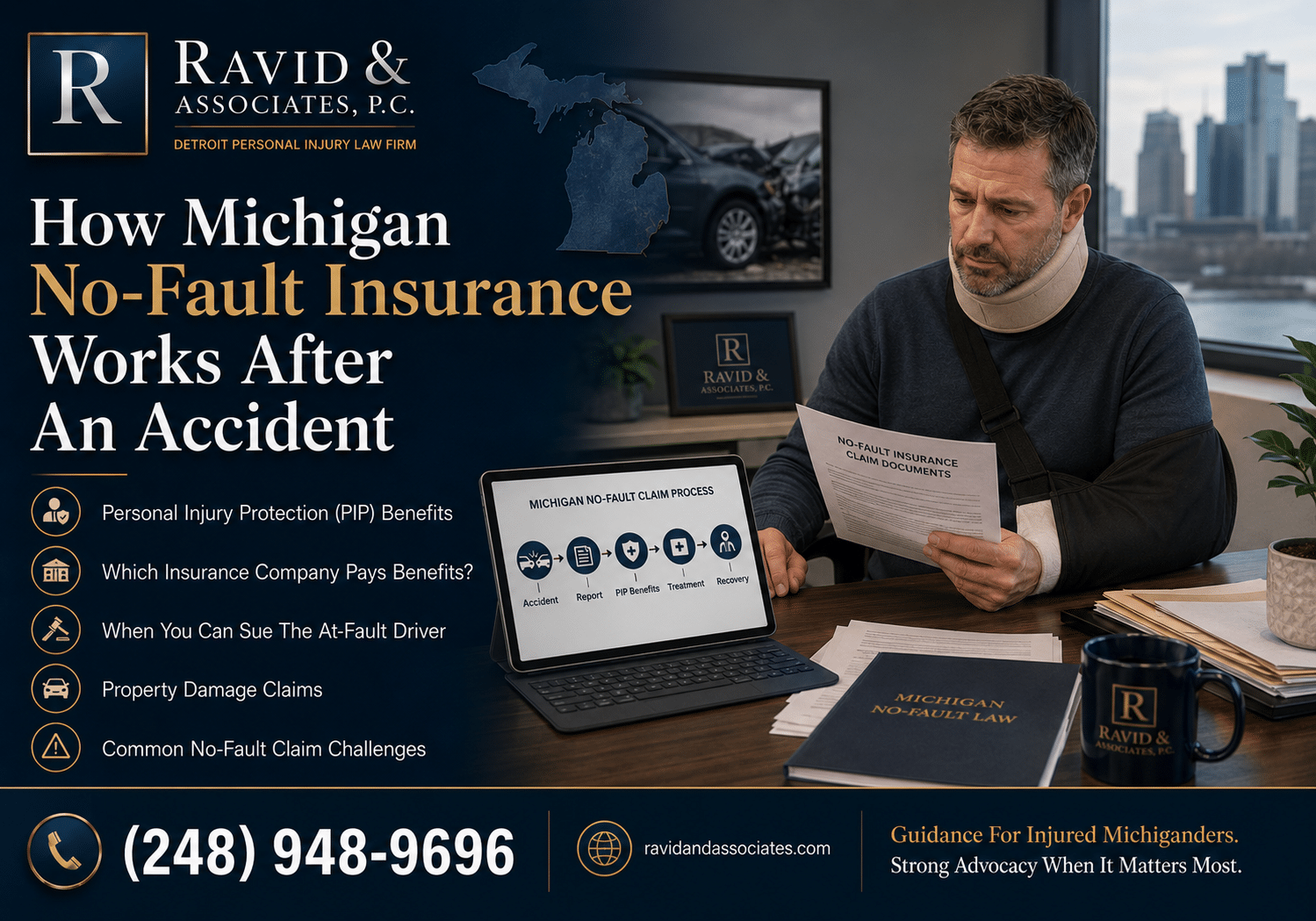
A car accident can bring unexpected medical bills, lost wages, and car repairs, leaving you unsure of what to do next. Michigan’s auto insurance system is different from most states, which can be confusing after a crash. Many people think the at-fault driver always pays for everything, but Michigan’s No-Fault rules work differently. Knowing your rights and what to do after an accident is important, since mistakes can affect your ability to get benefits. We help people in Detroit and across Michigan understand how No-Fault laws apply to their situation and what steps to take to protect their claims.
Understanding Michigan’s No-Fault Insurance System
Michigan’s No-Fault Insurance Act is primarily found in MCL 500.3101. Under this system, your own auto insurance company generally pays certain benefits after an accident regardless of who caused the crash.
The purpose of the No-Fault system is to provide prompt payment of medical expenses and wage loss benefits without requiring lengthy litigation over fault. This means that even if another driver caused the accident, you will usually first seek benefits through your own insurance policy.
All Michigan drivers must have No-Fault insurance. If you don’t keep your insurance up to date, you could face serious legal and financial problems after an accident.
What Personal Injury Protection Benefits Cover
A key part of Michigan No-Fault insurance is Personal Injury Protection, or PIP benefits. These can help cover your costs after a crash and may include:
- Medical expenses related to accident injuries.
- Lost wages if injuries prevent you from working.
- Replacement services for household tasks you cannot perform.
- Attendant care for individuals who require assistance.
- Survivor’s loss benefits in fatal accident cases.
Under MCL 500.3107, eligible accident victims may receive these benefits regardless of fault. However, strict requirements and deadlines apply. Insurance companies frequently review claims carefully and may dispute certain expenses or treatment plans.
Because of these challenges, documenting injuries, medical treatment, and financial losses is critical from the beginning.
Determining Which Insurance Company Pays Benefits
Michigan law contains a priority system that determines which insurer is responsible for paying benefits. In many situations, an injured person first turns to their own auto insurance company.
If the injured person does not have their own policy, coverage may come through:
- A spouse’s policy
- A resident relative’s policy
- The insurer of the vehicle involved
- The Michigan Assigned Claims Plan, in certain situations
The applicable rules are found in MCL 500.3114 and related provisions. Determining the proper insurer can become complicated when multiple vehicles, household members, or insurance policies are involved.
We often help clients identify the correct source of benefits when insurers dispute responsibility.
When You Can Sue The At-Fault Driver
While Michigan is a No-Fault state, accident victims may still pursue claims against an at-fault driver under certain circumstances.
Under MCL 500.3135, an injured person may seek compensation for pain and suffering if they have suffered:
- Death
- Permanent serious disfigurement
- Serious impairment of body function
A serious impairment of body function generally requires showing that the injury affects the person’s ability to lead their normal life.
These claims are commonly called third-party claims and may allow recovery for damages not covered by No-Fault benefits, including pain and suffering and certain excess economic losses.
Property Damage Claims After A Michigan Accident
Michigan’s No-Fault system treats vehicle damage differently from bodily injury claims.
Under Michigan law, vehicle damage claims often depend on the circumstances of the accident and available insurance coverage. Drivers may pursue coverage through collision insurance, mini tort claims, or other applicable provisions.
Michigan’s mini tort law, found in MCL 500.3135(3)(e), allows eligible vehicle owners to seek limited reimbursement for vehicle damage not otherwise covered by insurance.
Understanding which options apply often requires a careful review of insurance policies and accident facts.
Important Deadlines After A Michigan Car Accident
Time limits can significantly affect your rights.
Under MCL 500.3145, accident victims generally must provide timely notice and comply with filing requirements to preserve claims for No-Fault benefits.
Michigan also imposes statutes of limitation on personal injury lawsuits. Missing important deadlines can result in the loss of valuable legal rights.
Seeking legal guidance soon after an accident can help ensure compliance with these requirements and preserve evidence needed to support a claim.
Common Challenges In Michigan No-Fault Claims
Insurance companies do not automatically approve every claim submitted after an accident. Common disputes involve:
- Whether treatment is medically necessary
- Whether injuries are related to the accident
- The amount of wage loss benefits owed
- The need for future medical care
- Eligibility for attendant care benefits
These disputes can create financial stress for injured individuals and their families. Proper documentation and legal representation often play a significant role in obtaining the benefits available under Michigan law.
Frequently Asked Questions About Michigan No-Fault Insurance
What Does No-Fault Insurance Mean In Michigan?
Michigan’s No-Fault system means that your own insurance company generally pays certain benefits after an accident, regardless of who caused the crash. These benefits may include medical expenses, wage loss, replacement services, and other covered losses. The purpose is to provide prompt access to benefits without requiring fault to be determined before treatment and compensation begin.
Can I Receive Benefits If I Caused The Accident?
Yes. One of the primary features of Michigan’s No-Fault system is that benefits may be available regardless of fault. Even if you were responsible for the collision, you may still qualify for Personal Injury Protection benefits under your policy, provided you meet applicable legal and policy requirements.
What Is A Serious Impairment Of Body Function?
Under MCL 500.3135, a serious impairment of body function is an injury that affects an important body function and influences the person’s ability to live their normal life. Whether an injury meets this standard depends on the specific facts of the case and the impact the injury has on daily activities, employment, and quality of life.
How Long Do I Have To File A No-Fault Claim?
Michigan law imposes important notice requirements and filing deadlines. Under MCL 500.3145, failing to act within the required time periods may limit or eliminate your ability to recover benefits. Because these deadlines can be complex, it is important to review your situation promptly after an accident.
What If The Insurance Company Denies My Claim?
A denial does not necessarily mean the claim lacks merit. Insurance companies may dispute medical treatment, wage loss claims, causation, or other issues. In many situations, denied claims can be challenged through negotiations or litigation. Supporting medical records and other evidence often play an important role in resolving disputes.
Can I Sue For Pain And Suffering After A Michigan Car Accident?
Yes, but only under certain circumstances. Michigan law permits lawsuits against at-fault drivers when injuries meet the statutory threshold established in MCL 500.3135. This typically requires proof of death, permanent serious disfigurement, or a serious impairment of body function.
Talk To Ravid & Associates, P.C. About Your Michigan No-Fault Insurance Claim
Michigan’s No-Fault laws can be difficult to understand, especially when injuries, medical bills, and insurance disputes begin to pile up after an accident. We help injured individuals protect their rights, pursue available benefits, and seek compensation when serious injuries occur. Our team works closely with clients throughout every stage of the claims process and fights to hold insurance companies accountable when benefits are wrongfully delayed or denied.
If you have questions about Michigan No-Fault insurance after a car accident, call our Detroit car accident attorneys at Ravid & Associates, P.C. today by calling (248) 948-9696 to receive your free consultation. We represent accident victims in Detroit and throughout the entire state of Michigan from our office locations in Southfield, Michigan. Let us help you pursue the benefits and compensation available under Michigan law.

