
What If The Driver Claims We Were Outside The Crosswalk?
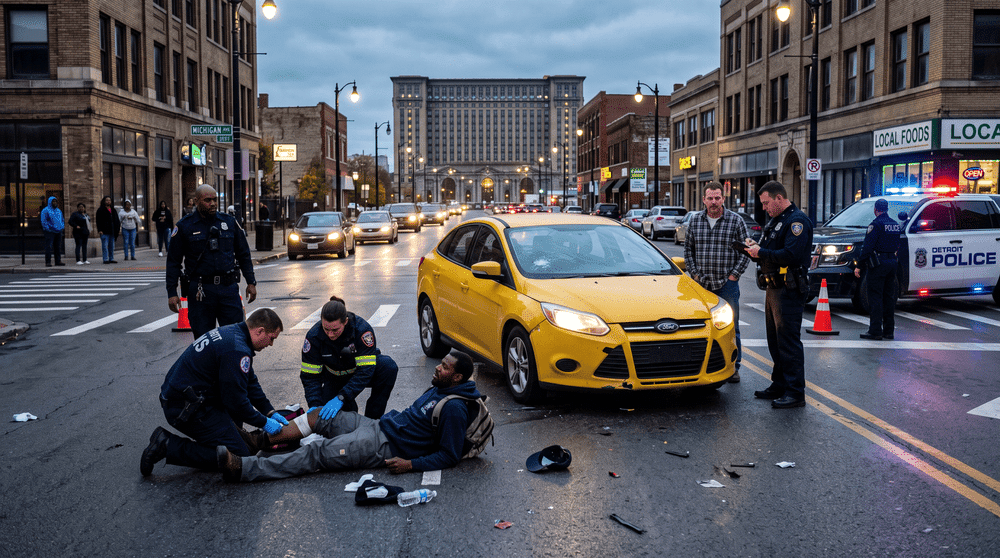
Getting hit by a vehicle can lead to serious injuries, and questions about where the pedestrian was walking often come up right away. Sometimes, a driver or insurance company will say you were outside the crosswalk and blame you for the accident. While that claim might seem serious, it does not automatically end your Michigan pedestrian accident case. Fault depends on what happened, including what you and the driver were doing, the traffic signals, visibility, speed, and whether either person could have avoided the crash. We look into all these details instead of letting the insurance company use one disputed fact to deny your claim.
When we help someone who was hit by a vehicle in Detroit or anywhere in Michigan, we know the driver’s insurance company will look into whether the pedestrian played a part in the accident. Michigan’s comparative fault laws can affect how much compensation you get, but sharing some responsibility does not always end your case. Evidence that the driver was careless can still be very important, even if there is a question about where the pedestrian was.
Being Outside A Marked Crosswalk Does Not Automatically End Your Case
One of the first things we check is whether the insurance company means you were outside a marked crosswalk or outside any legally recognized crossing area. These are not always the same.
Michigan law expressly recognizes both marked and unmarked crosswalks in certain traffic-control situations. Under MCL 257.613, pedestrians facing a green traffic indication may proceed across the roadway within a marked or unmarked crosswalk. When a pedestrian signal displays “walk,” pedestrians proceeding in the direction of that signal are entitled to the right of way.
Details like the exact location, intersection design, signals, and markings all matter. We do not take an insurance adjuster’s claim that someone was “not in the crosswalk” as the final answer.
The Driver’s Conduct Still Matters
A pedestrian’s location does not give a motorist permission to drive carelessly. We examine whether the driver was speeding, distracted, impaired, making an unsafe turn, failing to maintain a proper lookout, or otherwise operating the vehicle negligently.
At signalized intersections, MCL 257.612 specifically requires turning motorists in several circumstances to yield to pedestrians and bicyclists who are lawfully within an adjacent crosswalk. The statute also regulates where motorists must stop when facing red and yellow traffic signals.
A driver who was looking at a cellphone, accelerating through an intersection, turning without watching for pedestrians, or traveling too fast for conditions may bear substantial responsibility for a collision. The physical location of the pedestrian is only one part of that analysis.
Michigan Comparative Fault Can Become A Major Issue
The driver’s insurance company may argue that crossing outside the proper location made you partly responsible for the accident. Michigan law addresses situations involving shared fault.
Under MCL 600.2957, fault may be allocated among the people whose conduct contributed to an injury. MCL 600.2958 provides that a plaintiff’s contributory fault does not automatically bar recovery, subject to Michigan’s comparative fault rules.
Under MCL 600.2959, damages are reduced according to the injured person’s percentage of fault. If the injured person’s fault is greater than the combined fault of the other responsible persons, economic damages are reduced according to that percentage and noneconomic damages cannot be recovered.
For example, an insurer might contend that a pedestrian was 30 percent responsible because of where the person crossed while the driver was 70 percent responsible for speeding and failing to pay attention. A finding of partial pedestrian fault would not necessarily eliminate the claim, although it could reduce the available recovery.
That is why percentage-of-fault disputes can have major financial consequences.
Evidence Can Show Where The Collision Actually Happened
We do not have to accept the driver’s version of events. Pedestrian accidents frequently occur quickly, and drivers may have an incomplete or inaccurate recollection of where the pedestrian was positioned.
We may investigate surveillance recordings from nearby businesses, traffic cameras, dashboard cameras, vehicle data, photographs, witness accounts, physical debris, skid marks, vehicle damage, and police documentation.
Cellphone evidence may also become important when distracted driving is suspected. In serious cases, crash reconstruction evidence may help establish the vehicle’s speed, direction of travel, braking, and point of impact.
The evidence can sometimes show that the pedestrian was closer to the crossing area than the driver claims or that the driver had enough time and distance to see the pedestrian and avoid the collision.
Pedestrian Injuries Can Lead To Significant Damages
A person struck by a vehicle has little physical protection. Even a relatively low-speed collision can result in fractures, traumatic brain injuries, spinal injuries, torn ligaments, internal injuries, nerve damage, or permanent mobility problems.
Michigan’s automobile insurance laws may provide access to Personal Protection Insurance benefits in qualifying cases. The priority rules can become more complicated when the injured person was not occupying a motor vehicle. MCL 500.3115, for example, addresses PIP claims involving people injured while not occupying a motor vehicle.
We also evaluate whether the injured pedestrian can pursue damages from the negligent driver. Under MCL 500.3135, a motor-vehicle injury victim may pursue noneconomic damages when the statutory requirements are satisfied, including cases involving death, permanent serious disfigurement, or serious impairment of body function.
Statements Made After The Accident Can Affect The Claim
We caution injured pedestrians against guessing about their location when speaking with an insurance adjuster. A person who has just been struck may be injured, frightened, confused, or unable to remember the precise point where the collision occurred.
An adjuster may ask questions such as, “You weren’t actually inside the painted lines, were you?” A casual answer can later be presented as an admission.
We prefer to investigate the physical evidence before conclusions are made about fault. Where you were standing, where you entered the roadway, where the impact occurred, and what the driver could see are factual questions that should be supported by evidence.
Do Not Assume You Have No Case Because You Were Outside The Crosswalk
Pedestrian accident cases are highly fact-specific. Crossing location matters, but so do driver speed, distraction, traffic signals, lighting, visibility, turning movements, roadway design, and the opportunity to avoid the collision.
When an insurance company blames the pedestrian, we investigate both sides of the accident. The question is not simply whether paint was underneath your feet. The real issue is whose conduct caused the collision and how Michigan law allocates responsibility.
FAQs About Pedestrians Accused Of Being Outside The Crosswalk
Can I Still Sue If I Was Not Inside A Marked Crosswalk?
Possibly. Being outside a marked crosswalk does not automatically eliminate a Michigan personal injury claim. Michigan uses comparative fault principles, which means responsibility can be divided between the pedestrian and driver. We examine whether the driver was speeding, distracted, failed to see what was plainly visible, made an unsafe turn, ignored a signal, or otherwise contributed to the collision. The location of the pedestrian is important, but it is not necessarily the only factor determining liability.
What If The Driver Says I Suddenly Stepped Into Traffic?
That allegation must be investigated rather than simply accepted. We look for surveillance footage, witnesses, vehicle damage, photographs, crash-scene evidence, traffic signals, and other information that can establish how long you were visible before impact. A driver’s statement may conflict with independent evidence. If the driver had sufficient time to see you and react but failed to do so because of distraction, excessive speed, or another negligent act, that evidence can significantly affect the allocation of fault.
What If There Were No Painted Crosswalk Lines?
The absence of painted lines does not necessarily mean that no legally recognized crossing area existed. MCL 257.613 specifically refers to pedestrians proceeding within marked or unmarked crosswalks in certain signal-controlled situations. We examine the intersection itself, traffic controls, road configuration, and applicable laws rather than relying solely on whether white lines were painted on the pavement.
Will My Compensation Be Reduced If I Was Partly Responsible?
It can be. Under MCL 600.2959, damages are reduced according to the injured person’s percentage of comparative fault. The percentage assigned therefore matters greatly. If an insurer attempts to place most of the blame on you, we can investigate the evidence and challenge an unsupported fault assessment. A difference of even 10 or 20 percentage points can have a substantial effect in a serious injury case.
Can I Recover Compensation If I Suffered Serious Injuries?
Depending on the circumstances, you may have claims involving medical expenses, wage loss, pain and suffering, disability, loss of normal life activities, and other damages. Michigan’s No-Fault Act and MCL 500.3135 can affect which damages are available after a motor vehicle strikes a pedestrian. We evaluate the applicable insurance coverage, severity of the injuries, liability evidence, and long-term consequences when assessing a claim.
Talk To Ravid & Associates, P.C. About A Michigan Pedestrian Accident
If a driver struck you and now claims you were outside the crosswalk, we do not believe the insurance company’s accusation should be the final word. We can investigate the collision, preserve evidence, examine the driver’s conduct, evaluate comparative fault, and determine what compensation may be available under Michigan law. Pedestrian collisions often produce severe injuries, making it especially important to establish what actually happened before evidence disappears.
If you were hit by a vehicle in Detroit or anywhere in Michigan, call our Detroit pedestrian accident attorneys at Ravid & Associates, P.C. today at (248) 948-9696 to receive your free consultation. We represent injured pedestrians and other accident victims in Detroit and throughout the entire state of Michigan from our office location in Southfield, Michigan. We can review the circumstances of the collision, explain how comparative fault may affect your case, and pursue compensation from those responsible for your injuries.

