
Partial Paralysis Claims After Motor Vehicle Accidents
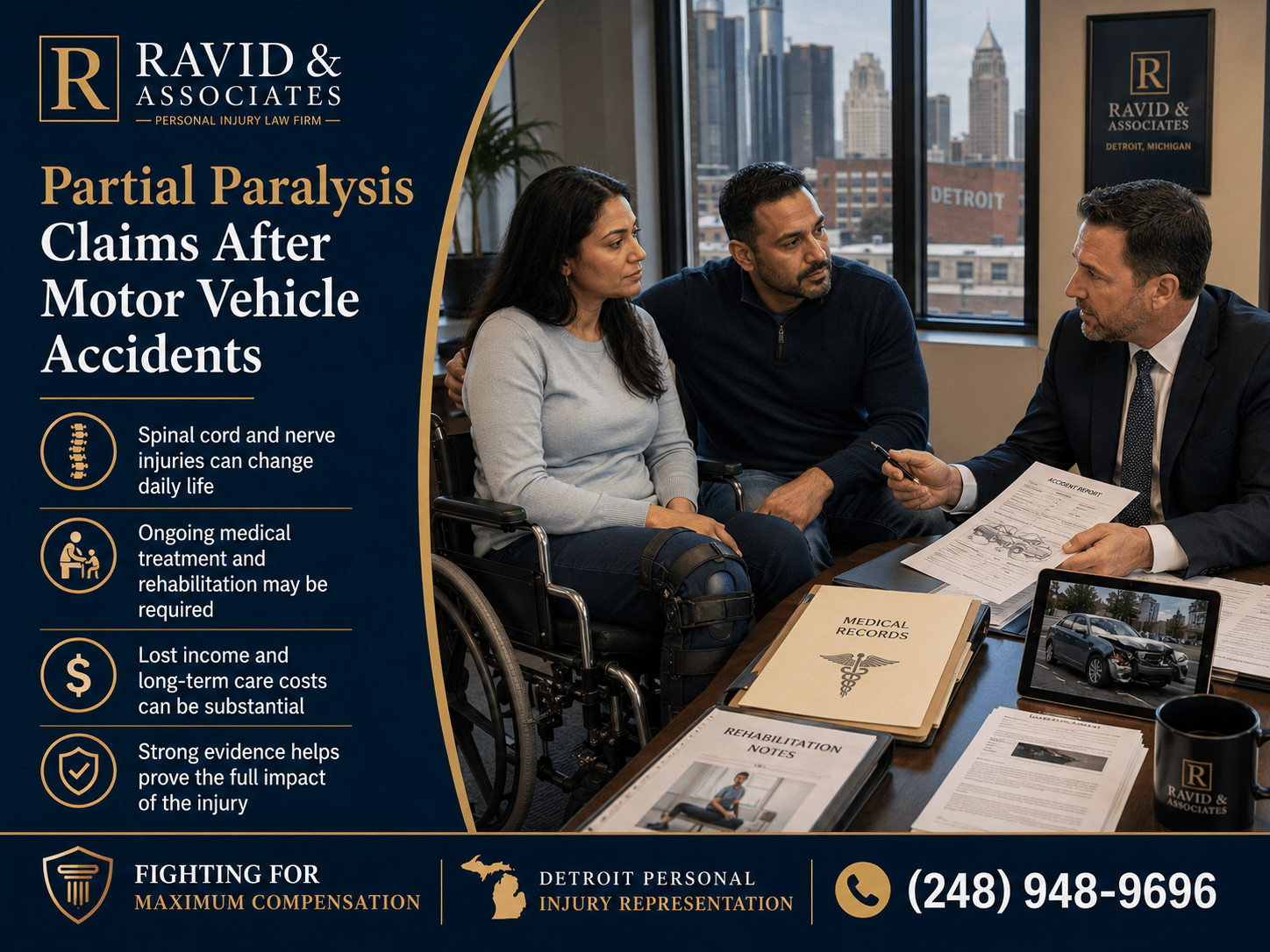
A car accident can turn your life upside down in a moment. While some people walk away with broken bones or concussions, others face much more serious injuries. Partial paralysis is one of the most severe outcomes of a car, truck, motorcycle, or pedestrian accident. It can impact every part of your life, from your job and independence to your relationships and long-term health.
If someone else’s carelessness causes partial paralysis, Michigan law gives you options to seek compensation. These cases often mean high medical bills, ongoing treatment, lost income, and pain and suffering. We help injury victims in Detroit understand their rights and go after the compensation Michigan law allows. Since these injuries often need lifelong care, it’s important to look at both current and future losses when making a claim.
Understanding Partial Paralysis After A Motor Vehicle Accident
Partial paralysis happens when an injury causes you to lose muscle function, feeling, or movement in part of your body. Unlike complete paralysis, you may still have some movement or sensation. These injuries usually involve damage to the spinal cord, nerves, brain, or nervous system.
Common forms of partial paralysis include monoplegia affecting one limb, hemiplegia affecting one side of the body, paraplegia involving partial loss of lower body function, and partial quadriplegia affecting all four limbs to varying degrees.
Car accidents are one of the main causes of serious spinal cord injuries in the United States. High-speed crashes, rollovers, motorcycle accidents, and truck collisions often create enough force to injure the spinal cord or nervous system.
How Motor Vehicle Accidents Cause Partial Paralysis
The spinal cord sends messages between your brain and the rest of your body. If it or the nearby areas are injured, these signals can get interrupted.
Common accident-related causes of partial paralysis include spinal cord compression, herniated discs causing nerve damage, fractured vertebrae, traumatic brain injuries affecting motor function, and severe nerve injuries.
Sometimes, paralysis symptoms don’t show up right after an accident. Numbness, weakness, trouble with coordination, or less mobility should always be checked by a doctor as soon as possible.
Michigan No-Fault Benefits For Partial Paralysis Victims
Michigan’s No-Fault Insurance Act, MCL 500.3101, provides important protections for individuals injured in motor vehicle accidents. Depending on the applicable insurance policy and coverage selections, injured individuals may be entitled to Personal Injury Protection (PIP) benefits.
These benefits may include:
- Medical expenses
- Rehabilitation services
- Attendant care
- Replacement services
- Wage loss benefits
- Transportation expenses for medical treatment
Partial paralysis cases often involve extensive rehabilitation, home modifications, mobility equipment, and long-term care needs. Properly documenting these expenses is critical when pursuing benefits.
Pursuing A Third-Party Injury Claim In Michigan
While No-Fault benefits provide important financial assistance, they may not fully compensate an individual for the losses caused by a catastrophic injury. Michigan law permits injured individuals to pursue a third-party claim against the at-fault driver in certain circumstances.
Under MCL 500.3135, an injured person may seek compensation for pain and suffering when the injury results in:
- Death
- Permanent serious disfigurement
- Serious impairment of body function
Partial paralysis frequently satisfies the serious impairment threshold because it affects a person’s ability to lead a normal life. These claims may provide compensation beyond what No-Fault benefits cover.
Damages Available In Partial Paralysis Cases
Partial paralysis often results in significant economic and non-economic damages. The value of these claims depends on the severity of the injury, future medical needs, and the impact on daily life.
Potential damages may include:
- Past medical expenses
- Future medical treatment
- Rehabilitation costs
- Lost wages
- Loss of future earning capacity
- Pain and suffering
- Emotional distress
- Home modification expenses
- Mobility equipment costs
Many individuals with partial paralysis face permanent limitations that affect employment opportunities and personal independence. Future damages often represent a substantial portion of the overall claim.
Comparative Fault And Michigan Injury Claims
Michigan follows a modified comparative fault system under MCL 600.2959. If an injured person is partially responsible for the accident, compensation may be reduced by that person’s percentage of fault.
For example, if a jury determines that an injured person is 20 percent responsible for a crash, the damage award may be reduced by 20 percent. Insurance companies often attempt to increase a victim’s fault percentage to reduce payouts, making a thorough investigation essential.
Why Evidence Matters In Partial Paralysis Cases
The success of a paralysis claim often depends on strong medical evidence. Diagnostic imaging, neurological evaluations, treatment records, and testimony from medical providers help establish the extent of the injury and future care needs.
We work to document not only the immediate effects of the injury but also the long-term consequences. The goal is to present a complete picture of how the paralysis affects the injured person’s life, employment, independence, and future medical requirements.
Frequently Asked Questions About Partial Paralysis Claims After Motor Vehicle Accidents
Can Partial Paralysis Develop After The Accident Occurs?
Yes. While some paralysis symptoms appear immediately after a collision, others may develop over time as swelling, inflammation, or nerve damage progresses. Any numbness, weakness, tingling, or loss of mobility following an accident should be evaluated by a medical professional as soon as possible. Early diagnosis can improve treatment outcomes and strengthen a potential legal claim.
Does Michigan No-Fault Insurance Cover Partial Paralysis Injuries?
Michigan No-Fault benefits may provide coverage for medical treatment, rehabilitation, attendant care, wage loss benefits, and other necessary services related to the injury. The amount of available coverage depends on the applicable insurance policy and the facts of the case. Because paralysis often requires extensive long-term care, it is important to fully evaluate all available benefits.
Can I File A Lawsuit Against The Driver Who Caused My Paralysis?
Yes. Under MCL 500.3135, individuals who suffer a serious impairment of body function may pursue a third-party claim against the at-fault driver. Partial paralysis often qualifies because it substantially affects the injured person’s ability to live their normal life. These claims may seek compensation for pain and suffering and other damages not covered by No-Fault benefits.
How Much Is A Partial Paralysis Case Worth?
There is no standard value for a paralysis case. Factors that affect compensation include the severity of the injury, future medical needs, lost earning capacity, age, occupation, and the overall impact on quality of life. Cases involving permanent disabilities frequently involve substantial damages because of lifelong care requirements.
What If I Was Partially Responsible For The Accident?
Michigan’s comparative fault law may still allow recovery even if you share some responsibility for the crash. However, compensation may be reduced according to your percentage of fault. Insurance companies often use comparative fault arguments to minimize claims, making a thorough investigation critical.
How Long Do I Have To File A Paralysis Injury Lawsuit In Michigan?
Generally, Michigan personal injury claims must be filed within three years under MCL 600.5805. However, deadlines can vary depending on the facts of the case and the parties involved. Delaying action may jeopardize important legal rights and evidence.
Ravid & Associates, P.C. Helps Victims Suffering From Partial Paralysis
Partial paralysis can affect every aspect of life, from daily activities and employment to long-term health and financial stability. We work with injured individuals and their families to pursue compensation for medical expenses, future care needs, lost income, and the physical and emotional impact of these catastrophic injuries. Our goal is to hold negligent parties accountable and help clients secure the resources they need moving forward.
If you or a loved one suffered partial paralysis following a motor vehicle accident, call our Detroit accident injury attorneys at Ravid & Associates, P.C. today by calling (248) 948-9696 to receive your free consultation. We represent injury victims in Detroit and throughout the entire state of Michigan from our office locations in Southfield, Michigan. Let us help you protect your rights and pursue the compensation available under Michigan law.

