
When Not To Settle Your Injury Case
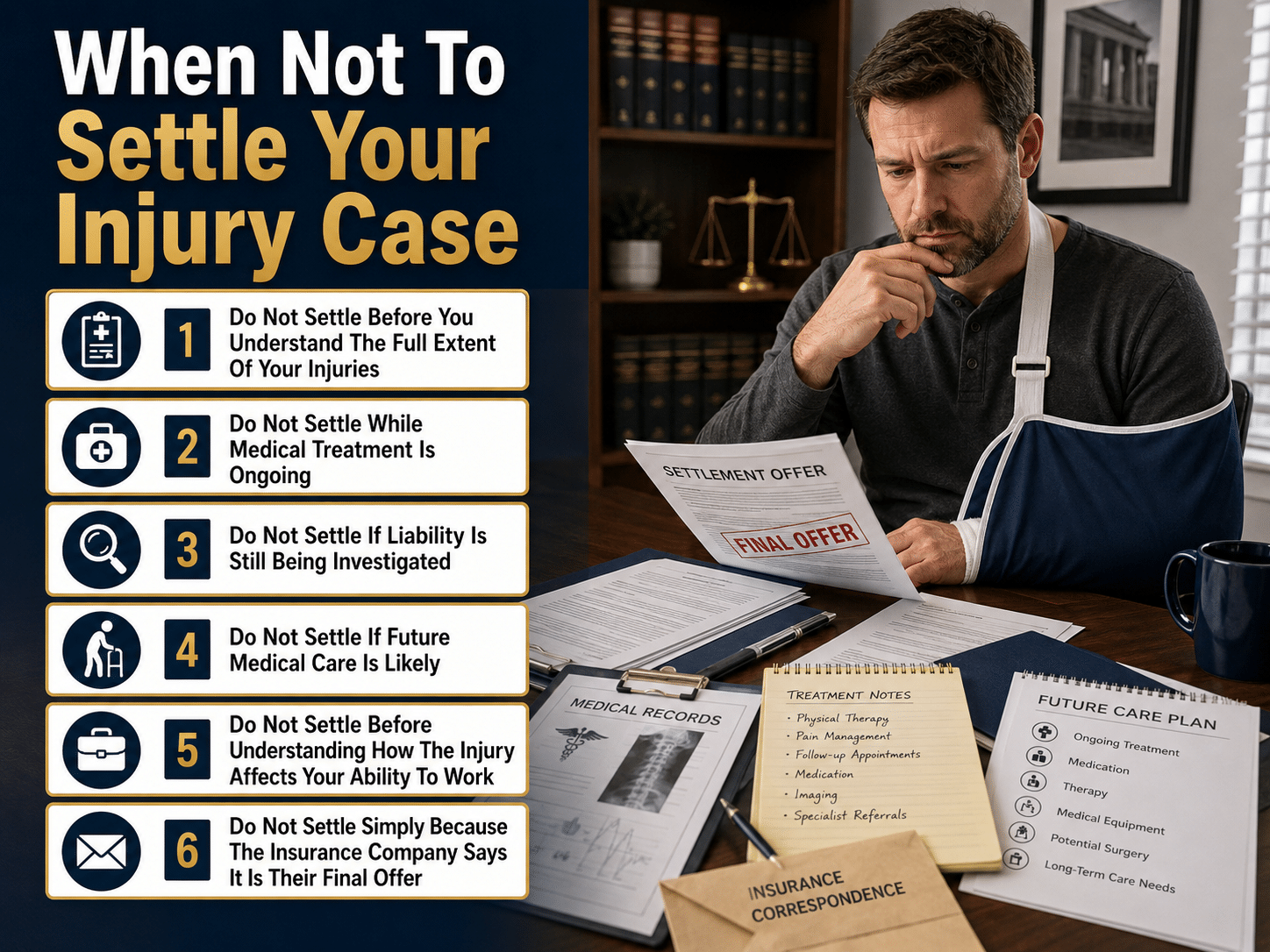
After a serious accident in Detroit, it makes sense to want closure quickly. Medical bills start piling up, missing work adds financial stress, and not knowing what will happen with your claim can be overwhelming. Insurance companies are aware of this. They often make settlement offers before you know how serious your injuries are, hoping you will accept before you understand what your claim is really worth. While settling is often the right choice, taking an offer too soon can end up costing you.
We often talk to people who get settlement offers soon after an accident and are unsure if they should accept. The right answer depends on your situation, how serious your injuries are, and how the accident might affect your life in the long run. Once you sign a settlement agreement, your case is usually closed. You typically cannot ask for more money later if new medical problems come up.
Do Not Settle Before You Understand The Full Extent Of Your Injuries
A common mistake is settling before doctors know the full extent of your injuries. Some injuries are clear right away, but others take time to show up. Problems like herniated discs, brain injuries, nerve damage, chronic pain, and some bone or joint injuries might not show their full effects until weeks or months after the accident.
Insurance companies often act fast because uncertainty helps them. An early settlement offer might seem fair when your treatment is just starting. But if you end up needing more procedures, surgery, or long-term therapy, the costs can be much higher than you first thought.
We generally encourage clients to understand their diagnosis, prognosis, and future treatment needs before making decisions about settlement. A claim should account not only for current medical expenses but also for future care, lost earning capacity, and long-term limitations.
Do Not Settle While Medical Treatment Is Ongoing
Ongoing treatment often means important questions remain unanswered. If a physician has not yet determined whether surgery will be required, whether permanent restrictions will exist, or whether maximum medical improvement has been reached, calculating the value of a case becomes difficult.
Many accident victims assume that because they are feeling somewhat better, the recovery process is nearly complete. Unfortunately, that is not always true. Some injuries improve initially, only to worsen later. Others require additional procedures after conservative treatment fails.
Settling during this period creates significant risk. Once a release is signed, the insurance company generally has no obligation to pay future medical expenses or compensate for complications that arise later. Waiting until treatment has progressed far enough to provide a clearer picture often results in a more accurate evaluation of damages.
Do Not Settle If Liability Is Still Being Investigated
There are situations where an insurance company disputes fault and uses that uncertainty to justify a low settlement offer. Michigan follows a modified comparative fault system under MCL 600.2959, which means compensation may be reduced based on an injured person’s percentage of fault.
Insurance companies sometimes assign blame prematurely before all evidence has been gathered. Witnesses may not have been interviewed, surveillance footage may not have been obtained, and accident reconstruction analysis may not have been completed. Accepting a settlement before the investigation is finished may prevent important evidence from coming to light.
We often find that liability becomes much clearer after a thorough investigation. Police reports, vehicle data, witness testimony, photographs, and expert analysis can significantly strengthen a claim and increase settlement value.
Do Not Settle If Future Medical Care Is Likely
Future medical expenses are frequently overlooked when injury victims evaluate settlement offers. A fracture that appears healed may later require additional treatment. A back injury may result in future injections or surgery. A traumatic brain injury may require ongoing neurological care and rehabilitation.
Michigan law allows injury victims to seek compensation for reasonably anticipated future damages when supported by evidence. If future treatment is likely, it should be considered before resolving the claim.
We carefully review medical records and consult with treating physicians to determine whether additional care is expected. These future expenses can represent a substantial portion of the overall value of a case and should not be ignored during negotiations.
Do Not Settle Before Understanding How The Injury Affects Your Ability To Work
Lost wages are often only part of the economic impact of an injury. Some people recover and return to work without significant restrictions. Others find that their injuries permanently limit their ability to perform their previous job duties.
This issue is particularly important for individuals employed in physically demanding occupations. Construction workers, nurses, factory workers, mechanics, delivery drivers, and many others depend on their physical abilities to earn a living. A permanent restriction may force a career change, reduce earning capacity, or limit advancement opportunities.
Before settling a claim, it is important to understand whether the injury will affect future employment. A settlement should account for both present and future economic losses.
Do Not Settle Simply Because The Insurance Company Says It Is Their Final Offer
Insurance adjusters sometimes describe an offer as “final” in an effort to encourage quick acceptance. In reality, settlement negotiations are often an ongoing process. The strength of the evidence, medical documentation, and legal arguments frequently influence whether an insurer increases its offer.
A low offer does not necessarily reflect the actual value of a claim. Insurance companies are businesses, and one of their primary goals is minimizing payouts. Evaluating an offer requires a careful review of liability, medical evidence, future damages, and the overall impact of the injury.
Accepting an inadequate settlement may leave an injured person responsible for future expenses that should have been covered by the claim.
Understanding Michigan’s No-Fault System Before Settling
Michigan’s No-Fault Insurance Act, MCL 500.3101, provides certain benefits regardless of fault following a motor vehicle accident. These benefits may include medical expenses, wage loss benefits, replacement services, and attendant care benefits.
In addition to these No-Fault benefits, injured individuals may have a separate third-party claim for pain and suffering under MCL 500.3135 if they satisfy Michigan’s serious impairment threshold. Understanding how these claims interact is important before accepting a settlement.
Resolving one aspect of a case without fully understanding all available claims can result in missed opportunities for compensation.
Frequently Asked Questions About Settling A Michigan Injury Case
How Do I Know If A Settlement Offer Is Too Low?
A settlement offer may be too low if it fails to account for future medical expenses, ongoing treatment, lost earning capacity, pain and suffering, or permanent limitations. Many early offers are based on incomplete information and may not reflect the full impact of the injury. Evaluating an offer requires a complete understanding of both current and future damages.
Should I Accept The First Settlement Offer From The Insurance Company?
Not necessarily. Initial settlement offers are often made before the full extent of an injury is known. While every case is different, accepting the first offer without carefully evaluating medical treatment, future needs, and liability issues can be risky.
What Happens After I Sign A Settlement Agreement?
In most cases, signing a settlement agreement ends the claim permanently. You generally cannot return later and request additional compensation if your condition worsens or unexpected medical expenses arise. This is why it is important to fully understand the consequences before settling.
Can I Settle My Case While I Am Still Receiving Treatment?
You can, but doing so may create problems if future treatment becomes necessary. Ongoing medical care often means important questions about recovery and long-term outcomes remain unanswered. Waiting until your condition is better understood often allows for a more accurate evaluation of the claim.
Does Michigan Law Allow Recovery For Future Damages?
Yes. Michigan law permits recovery for future medical expenses, future lost earnings, and other anticipated damages when supported by evidence. Future damages can be significant in cases involving serious injuries, permanent impairments, or long-term treatment needs.
Can A Lawyer Help Negotiate A Higher Settlement?
Yes. A lawyer can gather evidence, evaluate damages, address liability disputes, and negotiate with the insurance company. Insurance carriers often take claims more seriously when they are supported by detailed evidence and a clear legal strategy.
Talk To Ravid & Associates, P.C. Before Accepting A Settlement Offer
A settlement may be the right resolution for many injury claims, but timing matters. Accepting an offer before understanding the full impact of an injury can create financial problems that last for years. We help injury victims evaluate settlement offers, assess future damages, and determine whether a proposed resolution truly reflects the value of the claim.
If you have received a settlement offer after an accident, contact our Detroit personal injury attorneys at Ravid & Associates, P.C. today by calling (248) 948-9696 to receive your free consultation. We represent injury victims in Detroit and throughout the entire state of Michigan from our office locations in Southfield, Michigan. Let us review your case and help you make an informed decision before giving up your legal rights.

