
How Social Media Can Hurt Your Personal Injury Case
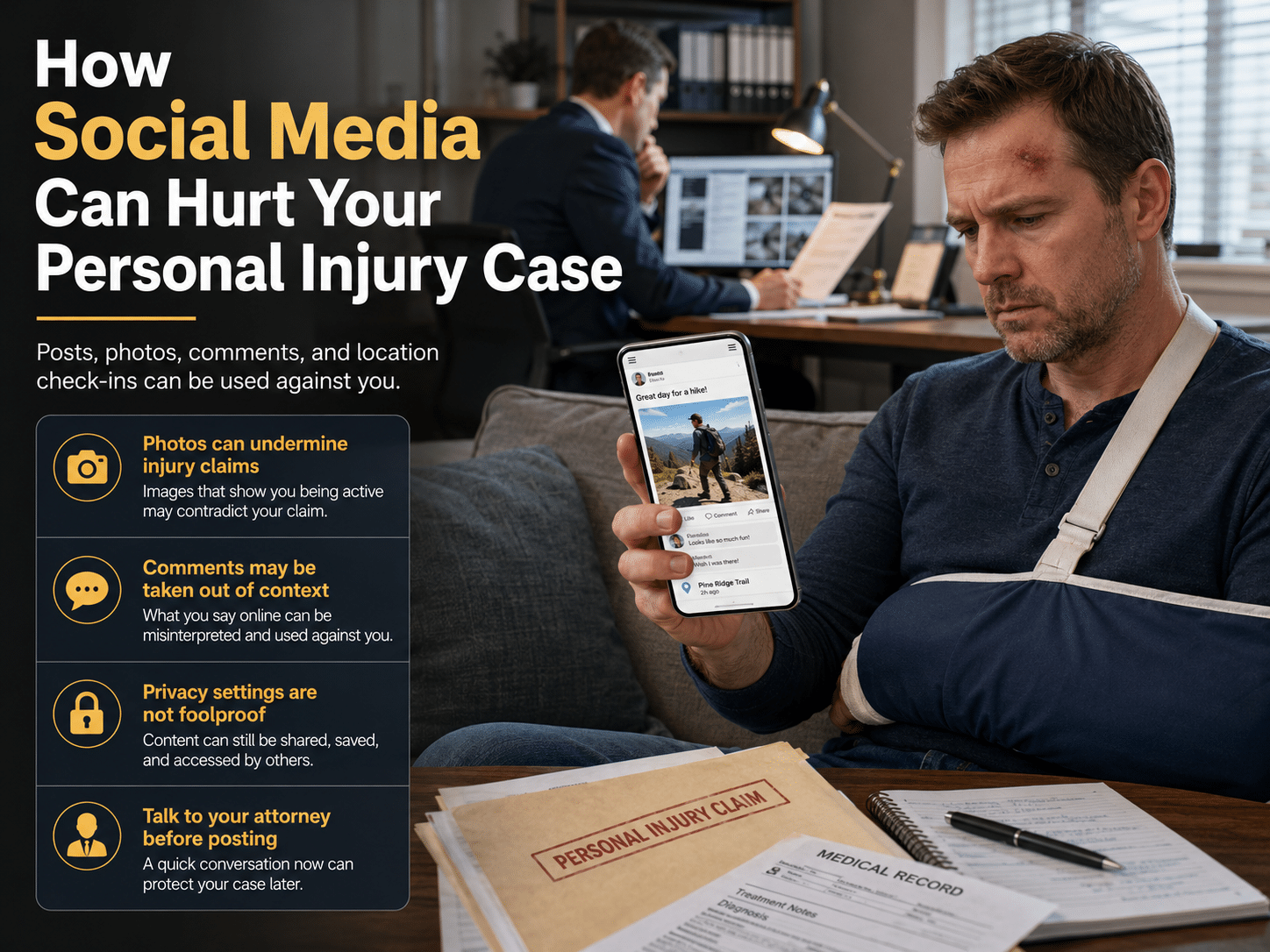
Social media has become a part of everyday life for most people. Whether posting photos, sharing updates, commenting on events, or communicating with friends and family, many individuals use social media platforms multiple times each day without giving much thought to how those posts could affect a legal claim. After an accident, however, social media activity can become a valuable source of evidence for insurance companies and defense attorneys seeking to reduce or deny compensation. Even innocent posts can be taken out of context and used against an injury victim.
Many people think private accounts keep them safe, but that’s not always true. Courts can sometimes access online posts during a lawsuit, including photos, comments, videos, and location data. We always tell clients to be very careful with social media while a personal injury claim is ongoing, since even harmless posts can affect the outcome.
Insurance Companies Frequently Monitor Social Media Accounts
Insurance companies mainly want to pay as little as possible on injury claims. They often check social media for evidence. Adjusters and defense lawyers may look at public profiles, photos, comments, videos, and other online posts to find anything that might go against your claim.
For example, a person may post a smiling photograph from a family gathering while continuing to experience significant pain. The insurance company may attempt to present that image as evidence that the person is not truly suffering or that their injuries are less severe than claimed. A short video clip showing someone walking, attending an event, or engaging in a recreational activity can be used in a similar manner, even when it fails to reflect the person’s actual physical condition before or after the image was captured.
Social media is risky because posts only show a brief moment in someone’s life. One photo might capture just a few seconds, leaving out the pain, treatment, or recovery that happens before or after. Still, insurance companies often use these moments to question your honesty and lower your claim.
Innocent Posts Can Create Serious Problems
A common misunderstanding is that only clearly harmful posts cause legal trouble. In fact, even posts that seem completely innocent can create problems in a personal injury case.
Consider a person who claims that a broken leg has limited their ability to enjoy normal activities. If that individual later posts a photograph attending a sporting event, the defense may attempt to suggest that the injury has not significantly affected their lifestyle. Similarly, comments about vacations, social activities, exercise, hobbies, or household projects may be scrutinized for inconsistencies.
Many injury victims also underestimate the impact of comments made by friends and family members. Tagged photographs, comments from others, and shared content may all become relevant. Even when a person exercises caution, someone else may inadvertently post content that creates questions about the severity of the injuries being claimed.
The issue is not necessarily whether the content proves anything. Rather, it creates opportunities for insurance companies to raise doubts, challenge credibility, and complicate settlement negotiations.
Social Media Evidence Can Affect Michigan Personal Injury Claims
Michigan personal injury claims often depend heavily on proving the extent of an injury and its effect on daily life. In motor vehicle accident cases, an injured person seeking pain and suffering damages must generally satisfy the serious impairment of body function standard found in MCL 500.3135.
Because these cases often focus on how an injury affects a person’s ability to lead their normal life, social media content can become a focal point during litigation. Defense attorneys may compare posts, photographs, and videos against medical records, deposition testimony, and other evidence.
Michigan courts generally allow parties to obtain relevant evidence during the discovery process. While not every social media account is automatically open to inspection, courts may require the production of relevant content when it relates to disputed issues in the lawsuit. This means that posts thought to be private may ultimately become part of the case.
The reality is that social media evidence often becomes less about the actual content and more about credibility. If a defense attorney can convince a jury that an injury victim exaggerated symptoms or limitations, it may negatively impact the entire claim.
Deleted Posts Can Create Additional Legal Issues
Some people react to these concerns by deleting photographs, comments, or entire social media accounts. While limiting future activity may be wise, deleting existing content after litigation becomes likely can create serious problems.
Courts generally expect parties to preserve potentially relevant evidence. Destroying or deleting evidence after an accident may lead to allegations of spoliation. In certain situations, courts may impose sanctions or allow opposing parties to argue that the deleted evidence would have been unfavorable.
For this reason, we generally advise clients not to delete existing content without first discussing the issue with legal counsel. Every situation is different, and taking action without understanding the potential consequences can create unnecessary complications.
Protecting Your Personal Injury Case During Litigation
The safest approach after a serious accident is to assume that anything posted online may eventually be reviewed by an insurance company, a defense attorney, a judge, or a jury. Limiting social media activity while a case is pending can reduce the risk of misunderstandings and misinterpretations.
We often recommend avoiding discussions about the accident, injuries, medical treatment, settlement negotiations, physical activities, vacations, or other matters that could become relevant to the claim. Privacy settings should also be reviewed, although they should never be viewed as a guarantee that content will remain private.
A personal injury case should be built upon medical evidence, witness testimony, and documented losses rather than social media posts that may create confusion or invite unnecessary disputes.
Frequently Asked Questions About Social Media And Michigan Personal Injury Cases
Can The Insurance Company Really Look At My Social Media Accounts?
Yes. Insurance companies and defense attorneys frequently review publicly available social media content. They often search for photographs, comments, videos, and other information that they believe may help reduce the value of a claim. Even content that seems unrelated to the accident can become part of their investigation.
Should I Make My Social Media Accounts Private?
Adjusting privacy settings is generally a good idea, but it is not a complete solution. Private accounts may still contain information that becomes discoverable during litigation if the court determines it is relevant. Privacy settings can help limit public access, but they do not guarantee that content will never be reviewed.
Can A Photo Of Me Smiling Hurt My Case?
Potentially, yes. Insurance companies sometimes attempt to use photographs to argue that a person is not suffering as claimed. A single image rarely tells the complete story, but defense attorneys often use such evidence to challenge the severity of injuries and the credibility of the injured person.
Should I Delete Old Posts After An Accident?
Generally, deleting existing content can create problems if litigation is pending or reasonably anticipated. Courts expect parties to preserve potentially relevant evidence. Removing content without understanding the legal implications may lead to allegations that evidence was intentionally destroyed.
Can Posts Made By Friends Or Family Members Affect My Claim?
Yes. Tagged photographs, comments, shared posts, and other content created by third parties may become relevant during litigation. Even if you personally avoid posting, information shared by others may still be reviewed by insurance companies and defense attorneys.
Should I Stop Using Social Media Entirely During My Case?
Every situation is different, but many injury victims benefit from significantly reducing their social media activity while a claim is pending. Avoiding discussions about the accident, injuries, treatment, or physical activities can help prevent unnecessary disputes and protect the integrity of the claim.
Talk To Ravid & Associates, P.C. About Protecting Your Michigan Injury Claim
Social media has become one of the most commonly overlooked risks in personal injury litigation. A single photograph, comment, or video can create challenges that affect settlement negotiations and trial presentation. We help clients understand how insurance companies evaluate claims and work to protect their rights throughout the legal process.
If you were injured in an accident and have questions about protecting your claim, contact our Detroit personal injury lawyers at Ravid & Associates, P.C. today by calling (248) 948-9696 to receive your free consultation. We represent injury victims in Detroit and throughout the entire state of Michigan from our office locations in Southfield, Michigan. Let us help protect your case and pursue the compensation you deserve.

