
What Happens When A Motor Vehicle Accident Causes Permanent Vision Loss?
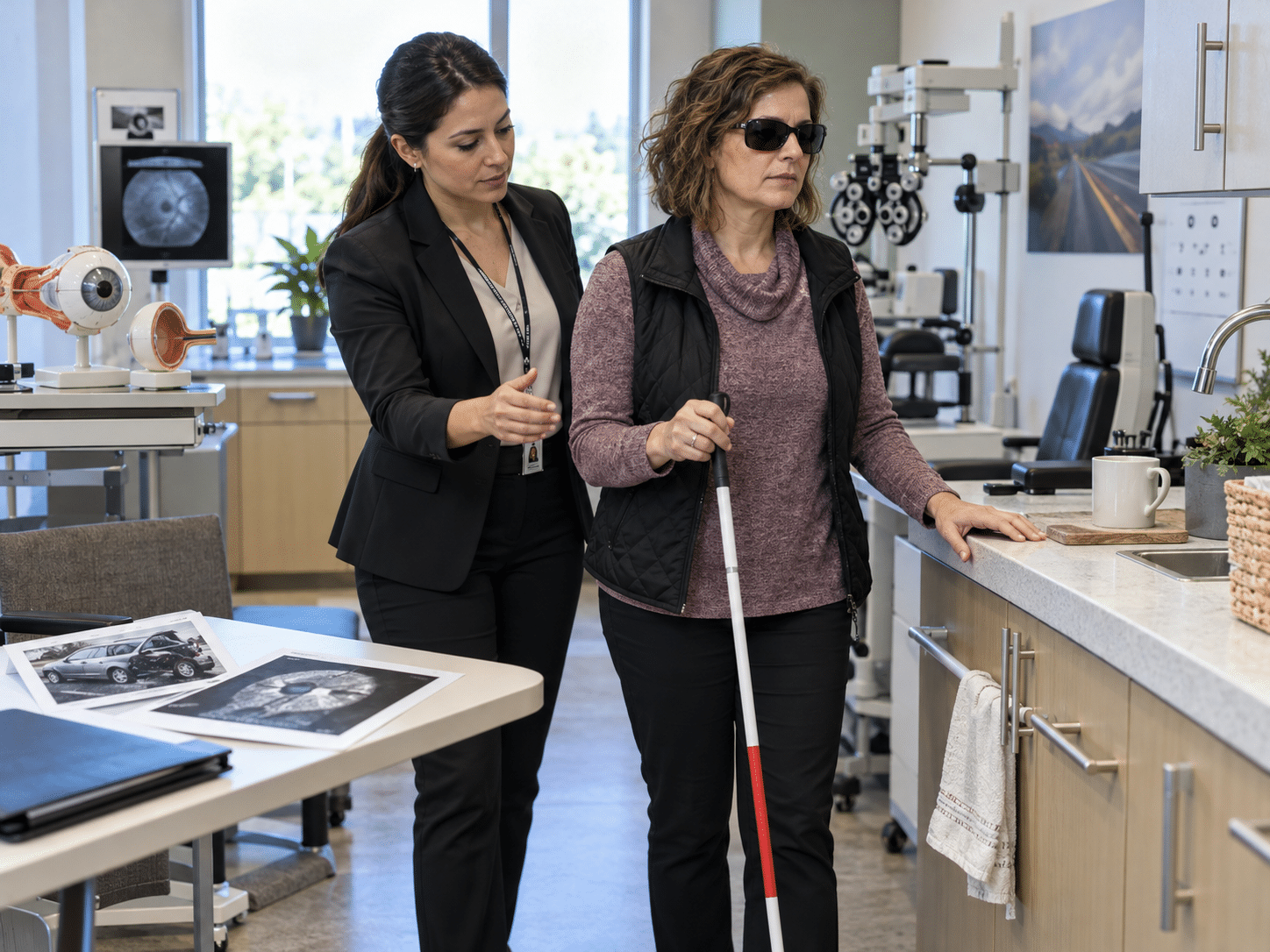
Permanent vision loss from a car accident can affect almost every part of a person’s life. Someone who could work, drive, read, care for family, and live independently before the crash may suddenly face lasting challenges. Vision can be harmed by direct injury to the eye, broken facial bones, optic nerve damage, brain injuries, or other trauma from the crash. Some people lose sight in one eye, while others have serious problems with both eyes. If another driver’s negligence leads to permanent vision loss, Michigan law may allow you to recover financial losses and compensation for the personal impact.
We consider both the medical and everyday effects of permanent vision injuries. The diagnosis is important, but so are the ways the injury affects work, getting around, independence, family duties, hobbies, and future plans. A strong vision-loss claim in Detroit should include these changes, not just the medical bills from right after the accident.
How Motor Vehicle Accidents Can Cause Permanent Vision Loss
Eye and vision injuries can happen in many ways during a crash. Broken glass or debris might directly injure the eye. Someone’s face could hit the steering wheel, dashboard, airbag, window, or other parts inside the car. Serious facial or eye socket fractures can harm the area around the eye, and brain injuries can affect how the brain processes what you see.
Injuries to the optic nerve are especially serious because this nerve sends visual signals from the eye to the brain. Other problems like retinal detachment, globe rupture, bleeding inside the eye, and traumatic optic neuropathy can also cause partial or total vision loss.
Some vision problems are apparent immediately. Others develop or worsen after the crash. Blurred vision, double vision, flashes of light, loss of peripheral vision, dark areas in the visual field, severe eye pain, or sudden changes in sight require prompt medical attention.
Permanent Vision Loss And Michigan’s Serious Injury Threshold
Michigan’s No-Fault law limits when an injured person may recover noneconomic damages from an at-fault driver. Under MCL 500.3135, a person may pursue tort damages for noneconomic loss when the accident causes death, permanent serious disfigurement, or serious impairment of body function.
Michigan law defines serious impairment by looking at whether there is an objectively manifested impairment of an important body function and whether that impairment affects the injured person’s general ability to lead a normal life. The analysis is specific to the injured person and requires comparison of life before and after the accident.
Loss of vision can present especially compelling evidence of serious impairment. MCL 257.58c expressly identifies loss of an eye or loss of use of an eye among the conditions included within the definition of serious impairment of a body function.
We still develop evidence showing exactly what the loss means for our client. Permanent blindness in one eye may affect depth perception, peripheral vision, driving, work tasks, reading, sports, household responsibilities, and many other activities.
Michigan No-Fault Benefits After A Serious Eye Injury
A person injured in a Michigan motor vehicle accident may also have a claim for Personal Injury Protection benefits. Under MCL 500.3107, PIP benefits can include reasonable charges for reasonably necessary products, services, and accommodations related to an injured person’s care, recovery, or rehabilitation, subject to the applicable No-Fault coverage and statutory limitations.
For someone with permanent vision loss, medical needs can extend well beyond emergency treatment. Care may involve ophthalmologists, retinal physicians, neurologists, rehabilitation professionals, occupational therapy, assistive devices, and training designed to help the person adapt to limited vision.
MCL 500.3107 also provides qualifying work-loss benefits for income the injured person would have earned during the first three years following the accident, subject to statutory requirements and limitations. Replacement-service benefits may also apply when an injury prevents someone from performing ordinary and necessary services that they previously performed for themselves or their dependents.
Loss Of Earning Capacity Can Become A Major Part Of The Claim
Permanent vision loss can have serious employment consequences. A person may be unable to return to a job that requires commercial driving, operating machinery, detailed visual inspection, working at heights, precise hand-eye coordination, or other visually demanding tasks.
The issue is not always whether the injured person can work at all. A person may remain employed but be forced into a lower-paying occupation, reduced hours, or a position with fewer opportunities for advancement.
We evaluate the person’s education, employment history, earnings, career trajectory, physical restrictions, and future occupational options. In severe cases, vocational and economic testimony may be necessary to demonstrate how much income the person is likely to lose over the remainder of a working life.
Pain And Suffering Damages Reflect More Than The Loss Of Eyesight
Permanent vision loss affects far more than financial earnings. A person who loses sight may lose the ability to drive independently, enjoy familiar hobbies, comfortably read, participate in certain sports, or perform activities that were once routine.
Michigan motor vehicle injury claims may allow recovery of non-economic damages when the statutory threshold is satisfied. These damages can address physical pain, disability, loss of normal life activities, emotional effects, and other consequences associated with a permanent injury.
We consider the person rather than simply assigning a value to a diagnosis. Losing sight at age 30 while raising young children may create different consequences than the same injury experienced under different circumstances. Both are serious, but the evidence needed to explain the losses may differ substantially.
Frequently Asked Questions About Permanent Vision Loss After An Accident
Can I Sue An At-Fault Driver If I Permanently Lose Vision In One Eye?
Potentially, yes. Michigan’s motor vehicle injury law permits claims for noneconomic damages when an injury meets the requirements of MCL 500.3135. Michigan law also expressly identifies loss of an eye or loss of use of an eye as an example of serious impairment of body function under MCL 257.58c. We would still document how the loss affects your work, independence, driving, household activities, recreation, and overall ability to live your normal life.
What If I Can Still See But Have Permanent Partial Vision Loss?
Complete blindness is not required before a vision injury can support a substantial personal injury claim. Permanent loss of peripheral vision, reduced acuity, double vision, impaired depth perception, or other measurable visual deficits may significantly affect important body functions. We look at objective medical findings along with the actual effect the impairment has on your daily life.
Can I Recover Lost Income If My Vision Injury Prevents Me From Returning To My Career?
Lost income may become an important component of the case. Michigan PIP coverage may provide qualifying work-loss benefits during the first three years after an accident under MCL 500.3107. A third-party claim may also involve economic losses beyond available No-Fault benefits when permitted by Michigan law. Permanent loss of earning capacity can be especially significant when the injured person can no longer perform a skilled or well-paying occupation.
What If The Accident Made A Pre-Existing Eye Condition Worse?
A pre-existing eye problem does not necessarily prevent a claim. The important issue may be whether the motor vehicle accident caused a new injury or aggravated an existing condition. We review records from before and after the collision, diagnostic findings, physician opinions, and changes in visual function to establish what harm can reasonably be attributed to the crash.
How Do We Prove That Vision Loss Is Permanent?
Medical evidence is central to proving permanency. Ophthalmology records, imaging, visual-field testing, acuity measurements, operative reports, and physician opinions may establish the nature and expected duration of the impairment. We also document the practical consequences of the injury because permanent vision loss is not simply a medical measurement. Its real impact can be seen in whether a person can drive, work, read, perform household tasks, and participate in activities that were part of life before the collision.
Talk To Ravid & Associates, P.C. About Permanent Vision Loss After A Motor Vehicle Accident
Permanent vision loss deserves to be evaluated as the life-changing injury it is. We examine immediate medical expenses, future care, lost income, reduced earning capacity, physical limitations, and the ways the injury has changed our client’s daily life. When another driver is legally responsible, we work to develop the evidence necessary to pursue the compensation available under Michigan law.
If you or a family member suffered permanent or significant vision loss in a motor vehicle accident, contact our Detroit auto accident attorneys at Ravid & Associates, P.C. today by calling (248) 948-9696 to receive your free consultation. We represent injured people in Detroit and throughout the entire state of Michigan from our office location in Southfield, Michigan. We can review what happened, examine the available insurance coverage, and explain the legal options for pursuing compensation after a serious vision injury.

