
What Happens When A Commercial Truck Hits A Passenger Vehicle In Detroit?
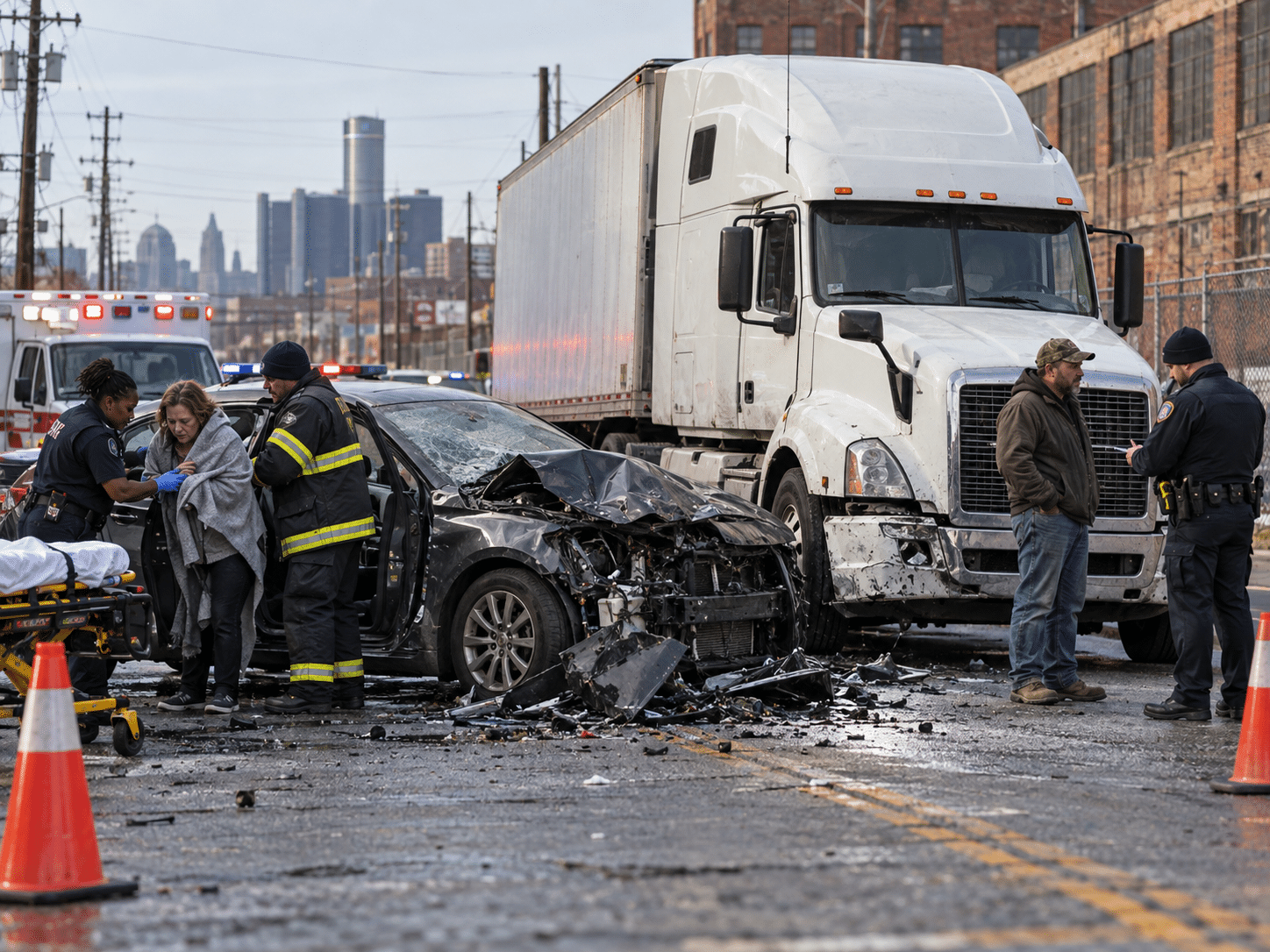
A crash between a commercial truck and a passenger car can change someone’s life in an instant. Because trucks like tractor-trailers, box trucks, and delivery vehicles are much bigger and heavier than regular cars, people in passenger vehicles often suffer the worst injuries. These accidents can cause traumatic brain injuries, spinal injuries, broken bones, internal injuries, permanent disability, or even death. They also bring legal challenges that are often more complex than a typical Detroit car accident. When we investigate a serious truck crash in Detroit, we look at more than just the driver’s actions. The trucking company, vehicle owner, maintenance contractor, shipper, or other businesses might also be responsible.
Commercial Truck Accident Claims Can Involve Several Responsible Parties
The first issue we examine is exactly why the collision occurred and who contributed to it. A truck driver may cause a crash by speeding, following too closely, making an unsafe lane change, driving while distracted, operating while fatigued, or failing to adjust to traffic and weather conditions. Michigan law prohibits reckless driving under MCL 257.626 and careless or negligent operation under MCL 257.626b.
Commercial trucking cases often involve more than just the driver’s actions. We may look into whether the trucking company hired an unqualified driver, failed to supervise them, overlooked a bad driving record, pressured the driver to work too long, or put an unsafe vehicle on the road. Maintenance companies, cargo loaders, and other contractors can also be involved if mechanical problems or poorly loaded cargo played a role in the crash.
This matters because finding everyone who is responsible can increase the insurance coverage available and help us fully understand how the crash happened.
Federal Trucking Regulations May Become Important Evidence
Commercial trucking companies that operate across state lines must follow Federal Motor Carrier Safety Regulations. These rules often become important after a serious truck accident.
For example, 49 C.F.R. Part 395 regulates hours of service for many commercial drivers. These rules are intended to limit excessive driving time and require periods of rest. Driver fatigue can become a central issue when a trucker falls asleep, fails to recognize slowing traffic, drifts from a lane, or reacts too slowly to avoid a collision.
Federal rules also cover driver qualifications (49 C.F.R. Part 391), safe driving (Part 392), required equipment (Part 393), and inspection, repair, and maintenance duties (Part 396). Breaking these rules does not automatically prove a Michigan injury claim, but records showing violations can be important evidence of negligence and the causes of the crash.
Trucking Evidence Should Be Preserved Quickly
Truck accident cases often involve evidence you won’t find in a regular car crash. We might look for electronic log records, driver qualification files, dispatch and maintenance records, inspection reports, bills of lading, cell phone records, camera footage from the truck, and data stored in the truck’s electronic systems.
Some of this evidence is only kept for a short time because of company rules or laws. That’s why we often send requests early in the case, telling the trucking company and others not to destroy important records.
We also look at physical evidence from the crash. Photos of the vehicles, skid marks, debris, surveillance videos, police reports, witness statements, and electronic data from the vehicles can help us figure out how the crash happened and if the truck driver could have avoided it.
Michigan No-Fault Benefits May Cover Immediate Losses
Michigan’s No-Fault Insurance Act provides an important source of benefits after motor vehicle accidents. Under MCL 500.3107, Personal Injury Protection benefits may include reasonably necessary medical treatment, rehabilitation expenses, work-loss benefits for qualifying lost income, and limited replacement-service expenses, subject to the applicable policy and statutory requirements.
These benefits are separate from a negligence claim against the commercial truck driver or trucking company. An injured person therefore may have both a no-fault claim for certain economic losses and a third-party liability claim against parties responsible for causing the collision.
Because Michigan drivers may have different levels of PIP medical coverage, we review the insurance policies and available benefits rather than assuming every injured person has identical coverage.
Serious Injuries May Support A Claim Against The Trucking Company
Under MCL 500.3135, a person injured in a motor vehicle accident may pursue certain noneconomic damages when the accident results in death, permanent serious disfigurement, or a serious impairment of body function.
Commercial truck collisions frequently produce injuries capable of meeting that threshold. A person who undergoes spinal surgery, suffers a traumatic brain injury, experiences serious fractures, develops permanent physical restrictions, or loses the ability to perform normal daily activities may have a substantial third-party claim.
We look closely at how the injury has affected the person’s life rather than focusing only on the medical diagnosis. The ability to work, walk, drive, care for family members, sleep comfortably, participate in recreation, and perform ordinary household activities may all be relevant when documenting the consequences of a serious injury.
Damages Can Extend Far Beyond The First Hospital Bill
The financial consequences of a major truck collision may continue for years. An injured person may require surgery, rehabilitation, medication, mobility equipment, injections, additional procedures, or long-term care. Some victims cannot return to their previous occupations or must accept lower-paying work because of permanent restrictions.
Depending on the circumstances, a third-party claim may seek compensation for pain and suffering, disability, loss of enjoyment of life, and economic losses that are recoverable outside applicable no-fault benefits. Future medical and vocational evidence may also become important when the injury is expected to produce permanent limitations. We therefore try to understand the long-term prognosis before evaluating whether a settlement fairly addresses the client’s losses.
Frequently Asked Questions About Detroit Commercial Truck Accidents
Who Can Be Sued After A Commercial Truck Accident In Michigan?
The truck driver may be one responsible party, but the investigation should not necessarily stop there. Depending on the facts, potential defendants can include the motor carrier, trucking company, vehicle owner, maintenance contractor, cargo-loading company, or another business whose conduct contributed to the collision. We examine employment relationships, ownership records, contracts, maintenance history, driver records, and the circumstances surrounding the trip before determining which parties may bear responsibility.
Can We Obtain The Truck Driver’s Electronic Logbook After A Crash?
Electronic logging device information can be important in cases involving driver fatigue or possible hours-of-service violations. We may seek driving-time records, duty-status information, dispatch communications, and other records showing how long the driver had been working before the collision. Because preservation of electronic information can become an issue, we generally want these records identified as early as possible.
What If The Truck Driver Says The Passenger Car Caused The Accident?
The driver’s statement is only one piece of evidence. We may compare that account with vehicle damage, witness testimony, photographs, video, electronic data, police records, and trucking-company documents. Michigan comparative-fault law can affect compensation, so determining what actually happened is important before accepting an allegation that the injured driver shared responsibility.
Does Michigan No-Fault Insurance Still Apply When A Semi-Truck Caused The Crash?
Yes, Michigan’s no-fault system may still provide PIP benefits to an eligible injured person even when a commercial truck caused the collision. Those benefits may address qualifying medical treatment, wage loss, rehabilitation, and other covered expenses. A separate claim may also be available against the responsible truck driver, motor carrier, or other parties for damages recoverable under Michigan tort law.
Speak With Ravid & Associates, P.C. After A Serious Detroit Truck Accident
A commercial truck accident can involve severe injuries, multiple insurance policies, corporate defendants, and state and federal safety requirements. We investigate how the collision occurred, preserve important trucking records, identify potentially responsible parties, and document how the injuries have affected our client’s health, work, finances, and everyday life.
Our role is to build the claim around the actual evidence rather than simply accepting the trucking company’s explanation of the crash.
If you were injured when a commercial truck, tractor-trailer, delivery truck, or other large commercial vehicle struck your car, contact our Detroit trucking accident lawyers at Ravid & Associates, P.C. today by calling (248) 948-9696 to receive your free consultation. We represent injured people in Detroit and throughout the entire state of Michigan from our office location in Southfield, Michigan.

