
T-Bone Car Accident Injury Claims In Michigan
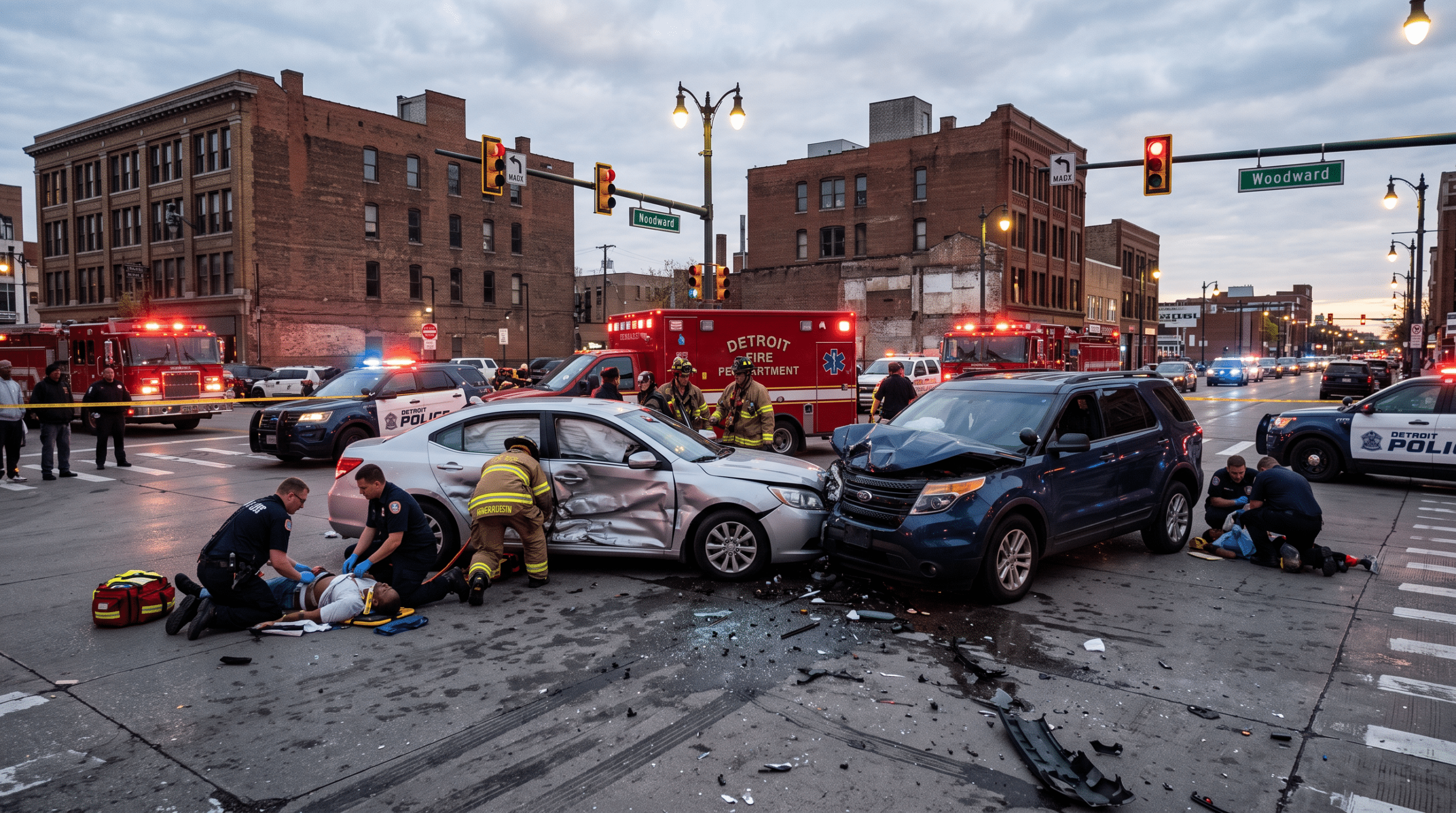
T-bone collisions are among the most severe car accidents in Detroit. They often happen at intersections when a driver runs a red light, ignores a stop sign, or does not yield. The sides of cars offer less protection than the front or back, so people inside can be seriously hurt. Victims may need surgery, long rehabilitation, and ongoing medical care. If another driver’s negligence caused the crash, Michigan law may let you seek compensation through No-Fault insurance and a personal injury lawsuit against the driver at fault.
Why T-Bone Accidents Often Cause Catastrophic Injuries
The human body is particularly vulnerable during a side-impact collision. Although modern vehicles include side-impact airbags and reinforced door panels, these safety features cannot absorb all of the energy generated during a crash. The driver or passenger sitting closest to the point of impact often suffers the most severe injuries.
After T-bone crashes, we often see injuries like fractured hips, broken ribs, brain injuries, spinal injuries, shoulder injuries, and damage to internal organs. These injuries usually mean hospital stays, surgery, physical therapy, and time away from work. Some people never fully recover their abilities from before the accident.
Even after a fracture heals, pain, limited movement, and lasting problems can continue for years. This is why you should understand the long-term effects of your injuries before agreeing to any settlement.
How Most T-Bone Collisions Happen
Most side-impact crashes are entirely preventable. They usually occur because one driver violates a traffic law or fails to pay attention to surrounding traffic.
Running red lights is a top cause of T-bone accidents in Michigan. Other causes include not stopping at stop signs, unsafe left turns, distracted or aggressive driving, speeding, and driving under the influence. Sometimes, a driver only checks one direction before entering an intersection and misses another car until it is too late.
Every Michigan driver has a legal duty to operate a vehicle with reasonable care. When that duty is breached, and another person suffers injuries, the negligent driver may be held financially responsible.
Michigan No-Fault Benefits After A Side-Impact Crash
Michigan’s No-Fault Insurance Act, MCL 500.3101, provides important protections for people injured in motor vehicle accidents regardless of who caused the collision.
Depending on the available coverage, Personal Injury Protection (PIP) benefits may pay for medical treatment, surgery, rehabilitation, wage loss, attendant care, and replacement services while an injured person recovers. These benefits are intended to provide financial support without requiring the injured person to first prove fault.
Because T-bone accidents often produce significant injuries, PIP benefits frequently become an important source of financial assistance during recovery.
When You May File A Personal Injury Lawsuit
While No-Fault benefits cover many accident-related expenses, they do not compensate victims for pain and suffering or other noneconomic losses.
Under MCL 500.3135, an injured person may pursue a claim against the negligent driver if the injuries involve death, permanent serious disfigurement, or a serious impairment of body function. Many victims injured in T-bone collisions meet this legal threshold because the injuries substantially affect their ability to work, care for themselves, participate in family activities, or enjoy everyday life.
Determining whether the threshold has been satisfied requires a careful review of the medical evidence and the practical effect the injuries have had on the victim’s normal life.
Establishing Liability After A T-Bone Collision
Although many intersection crashes appear straightforward, insurance companies frequently dispute liability. They may argue that both drivers entered the intersection simultaneously, that one driver was speeding, or that poor weather contributed to the crash.
We investigate every available source of evidence to determine exactly how the collision occurred. Police reports often provide a starting point, but they are only one piece of the investigation. We also examine photographs, surveillance video, traffic camera footage, witness statements, vehicle damage, and electronic crash data whenever available.
Michigan follows a modified comparative fault system under MCL 600.2959. If an injured person shares some responsibility for the collision, compensation may be reduced by that percentage of fault. When liability is disputed, presenting strong evidence early can make a significant difference in the outcome of the claim.
Compensation Available After A Serious T-Bone Accident
Every injury case is unique, but victims may be entitled to recover compensation that reflects both the financial and personal consequences of the collision.
Depending upon the circumstances, damages may include medical expenses, future medical care, lost income, diminished earning capacity, pain and suffering, emotional distress, permanent disability, and loss of enjoyment of life. Serious orthopedic injuries, traumatic brain injuries, and spinal injuries often require future treatment that should be considered when evaluating any settlement offer.
Insurance companies often attempt to resolve claims before the full extent of an injury becomes known. We encourage injured individuals to understand their long-term prognosis before making decisions that permanently affect their legal rights.
Why Prompt Action Can Strengthen Your Claim
Time is one of the most important factors in a personal injury case. Witnesses become harder to locate, surveillance footage may be erased, and physical evidence can disappear.
Michigan generally requires personal injury lawsuits arising from motor vehicle accidents to be filed within the time limits established by MCL 600.5805. Waiting too long may jeopardize your ability to recover compensation.
Seeking medical treatment promptly, preserving evidence, and documenting how your injuries affect your daily life can significantly strengthen your claim.
FAQs About T-Bone Car Accident Injury Claims In Michigan
Can A T-Bone Accident Cause Permanent Injuries?
Yes. Side-impact collisions frequently result in injuries that permanently affect mobility, strength, cognitive function, and overall quality of life. Hip fractures, spinal injuries, traumatic brain injuries, and pelvic fractures often require surgery and extensive rehabilitation. Even after treatment is complete, many victims continue to experience chronic pain or physical limitations that interfere with work and daily activities.
Who Is Usually Responsible For A T-Bone Accident?
Responsibility depends on the facts of the collision. Many T-bone crashes occur because a driver runs a red light, ignores a stop sign, or fails to yield while turning left. However, insurance companies often dispute liability. A thorough investigation is necessary to determine exactly what happened and identify all responsible parties.
Can I Recover Compensation If I Was Partially At Fault?
Possibly. Michigan follows a modified comparative fault system under MCL 600.2959. If you were partially responsible for the collision, your compensation may be reduced by your percentage of fault. If you are found to be more than 50 percent responsible, Michigan law limits recovery of certain noneconomic damages.
Will Michigan No-Fault Insurance Pay For My Medical Treatment?
In many situations, yes. Personal Injury Protection benefits available under Michigan’s No-Fault Act may cover medical care, rehabilitation, wage loss, attendant care, and replacement services regardless of who caused the accident. The available benefits depend on the applicable insurance coverage and the specific facts of the claim.
How Much Is A T-Bone Accident Case Worth?
There is no standard settlement amount because every case involves different injuries, medical expenses, lost income, and long-term effects. Cases involving surgery, permanent disability, traumatic brain injuries, or significant impairment generally have greater value than claims involving temporary injuries. A careful evaluation of both current and future damages is necessary before determining the value of any claim.
Should I Accept The Insurance Company’s First Settlement Offer?
Many initial settlement offers are made before the full extent of an injury is known. Accepting an offer too early may prevent you from recovering compensation for future medical treatment, ongoing pain, or permanent disability. Before accepting any settlement, it is important to understand the full impact your injuries will have on your health, finances, and future.
Talk To Ravid & Associates, P.C. About Your T-Bone Car Accident Claim
A serious T-bone collision can affect every aspect of your life. Medical bills, lost income, physical pain, and uncertainty about the future can quickly become overwhelming. We work to investigate the crash, preserve critical evidence, deal with the insurance companies, and pursue the full compensation available under Michigan law. Our goal is to protect your rights while you focus on your recovery.
If you were injured in a T-bone car accident, call our Detroit accident injury lawyers at Ravid & Associates, P.C. today by calling (248) 948-9696 to receive your free consultation. We represent injury victims in Detroit and throughout the entire state of Michigan from our office locations in Southfield, Michigan. Let us review your case, explain your legal options, and fight for the compensation you deserve.

