
Side-Impact Collision Concussion Injury Claims
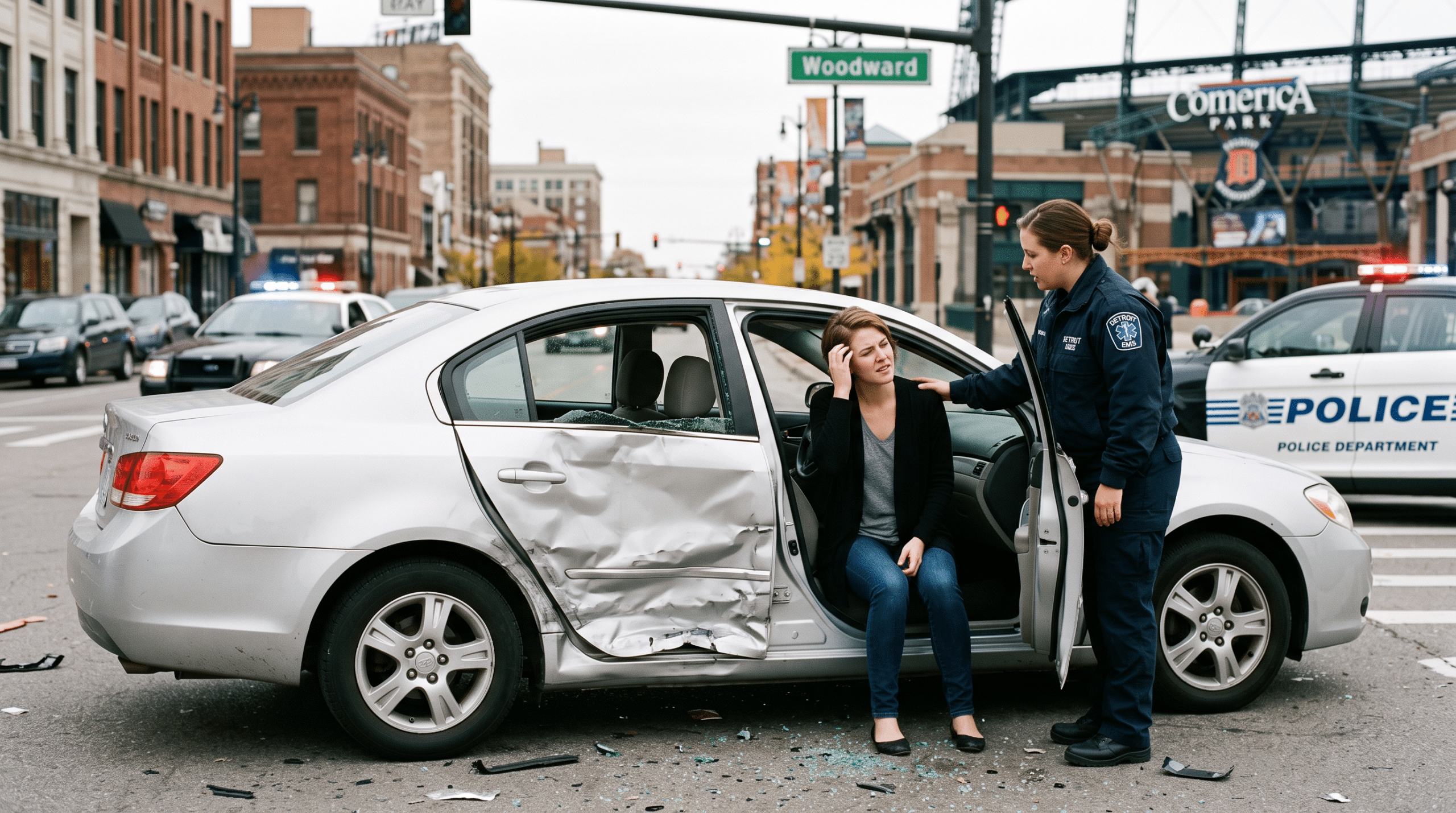
A side-impact crash in Detroit can subject your head and brain to strong forces in just seconds. Unlike front-end collisions, there is often less protection between you and the impact when another car hits the side of your vehicle. Your head might hit the window, door frame, pillar, headrest, or another part of the car, but you do not need to be struck directly to get a concussion. Quick movements like sudden stops or twists of the head can also cause brain injuries. What starts as a headache or brief confusion can turn into symptoms that make it hard to work, drive, sleep, focus, or handle daily tasks.
We treat concussion claims with care because a brain injury can have serious effects even if there is no visible wound. Michigan law makes it especially important to have strong medical records and proof of how the injury affects your life if you want compensation beyond No-Fault benefits. To build a strong claim, we need to show both how the crash happened and how the concussion changed your daily life.
Why Side-Impact Collisions Can Cause Concussions
Side-impact crashes, also known as T-bone collisions, often happen at intersections when a driver runs a red light, ignores a stop sign, fails to yield, or turns in front of another car. The person sitting closest to the impact can be thrown sideways, causing the head and neck to move suddenly and forcefully.
You can get a concussion even if you never lose consciousness. Symptoms might include headaches, dizziness, nausea, confusion, memory issues, trouble focusing, sleep problems, sensitivity to light or noise, irritability, and balance issues. Some symptoms show up right away, while others may not appear until hours or days later.
Since concussion symptoms can change, we encourage you to tell your doctor about all your symptoms and keep following their treatment advice.
Establishing Fault For The Side-Impact Collision
Before seeking damages from another driver, we look into who was at fault for the crash. Intersection accidents often lead to disagreements because each driver may have a different story about what happened.
We use things like traffic light records, police reports, witness statements, dash-cam videos, surveillance footage, photos, vehicle damage, and event data recorders to help figure out who was at fault. Sometimes, where and how badly the car was damaged can also show how the crash happened.
Michigan’s comparative fault statute, MCL 600.2959, provides for damages to be reduced according to the injured person’s percentage of comparative fault. In motor vehicle tort cases, MCL 500.3135 also contains comparative-fault provisions affecting recovery. For that reason, an insurance company’s attempt to shift even part of the blame to an injured driver can have real financial consequences.
Michigan No-Fault Benefits After A Concussion
An injured motorist may have access to Personal Injury Protection benefits under Michigan’s No-Fault system. Under MCL 500.3107, PIP benefits can include allowable expenses consisting of reasonable charges for reasonably necessary products, services, and accommodations for an injured person’s care, recovery, or rehabilitation, subject to Michigan’s No-Fault laws and the applicable coverage.
A concussion might mean you need emergency care, neurological exams, tests, rehab, therapy, and follow-up visits. Some people also have to miss work because headaches, dizziness, tiredness, or thinking problems make it hard or unsafe to do their usual jobs.
We examine every available source of No-Fault coverage and the applicable policy terms when determining what benefits may be available.
When A Concussion May Support A Pain And Suffering Claim
PIP benefits and a lawsuit against the negligent driver serve different purposes. An injured person seeking noneconomic damages from an at-fault motorist generally must satisfy Michigan’s tort threshold.
Under MCL 500.3135, a person may pursue noneconomic damages arising from the ownership, maintenance, or use of a motor vehicle when the person has suffered death, permanent serious disfigurement, or a serious impairment of body function.
Michigan law defines a serious impairment of body function as an objectively manifested impairment of an important body function that affects the person’s general ability to lead their normal life. A concussion is therefore not automatically worth a particular amount, nor does the diagnosis alone resolve the legal question.
We focus on the medical evidence and what changed after the accident. A concussion that prevents someone from working normally, driving safely, caring for children, exercising, reading for extended periods, sleeping normally, or participating in usual activities can present a substantially different claim from a short-lived injury with a complete recovery.
Proving A Concussion When Imaging Is Normal
One challenge in concussion litigation is that insurance companies may argue that the injury cannot be serious because standard imaging did not reveal structural brain damage. That argument does not resolve whether a person sustained a concussion or whether the impairment satisfies Michigan’s legal requirements.
Medical documentation may include emergency room records, neurological examinations, cognitive assessments, therapy records, symptom histories, and observations made by treating providers. Changes in work performance and daily activities can also help establish how the injury affected the person’s normal life.
Consistency matters. We want the medical history to accurately reflect when symptoms began, how they progressed, and what limitations followed.
Calculating Damages In A Concussion Injury Claim
The value of a concussion case depends heavily on the individual circumstances. We consider the duration and severity of symptoms, treatment received, time away from work, impact on employment, restrictions on daily activities, prognosis, and whether lasting cognitive or neurological problems remain.
A third-party claim may seek compensation for noneconomic losses such as pain and suffering when Michigan’s statutory threshold is satisfied. Depending on the circumstances and available No-Fault benefits, other economic losses may also become part of the claim.
We do not evaluate a brain injury solely from the initial diagnosis. The course of recovery often tells us much more about the true effect of the injury.
Do Not Let A Concussion Claim Go Undocumented
One of the greatest problems in a concussion case is a lack of documentation. A person may attempt to work through headaches or cognitive difficulties without obtaining treatment, only to discover weeks later that the symptoms are not resolving.
Insurance companies can use significant gaps in medical treatment to challenge causation, severity, or both. Prompt treatment also matters because some head injury symptoms warrant immediate medical attention.
Michigan also places deadlines on injury claims. Under MCL 600.5805, the general limitations period for an action seeking damages for injury to a person is three years after the injury, although different rules and additional deadlines can apply depending on the type of claim. Claims for overdue No-Fault PIP benefits are subject to separate provisions under MCL 500.3145.
Talk To Ravid & Associates, P.C. About Your Side-Impact Concussion Claim
A concussion after a side-impact collision can affect far more than the first few days following the crash. Persistent headaches, memory problems, concentration difficulties, dizziness, fatigue, and other symptoms can disrupt employment, family responsibilities, driving, and everyday life. We investigate the collision, document the medical consequences, address insurance disputes, and pursue the compensation available under Michigan law.
If you suffered a concussion or another serious injury in a side-impact collision, contact our Detroit auto accident attorneys at Ravid & Associates, P.C. by calling (248) 948-9696 to receive your free consultation. We represent injured clients in Detroit and throughout the entire state of Michigan from our office locations in Southfield, Michigan. We can review what happened, explain which insurance claims may apply, and discuss your legal options for pursuing compensation.

