
Recovering Attendant Care Expenses After A Serious Detroit Car Accident
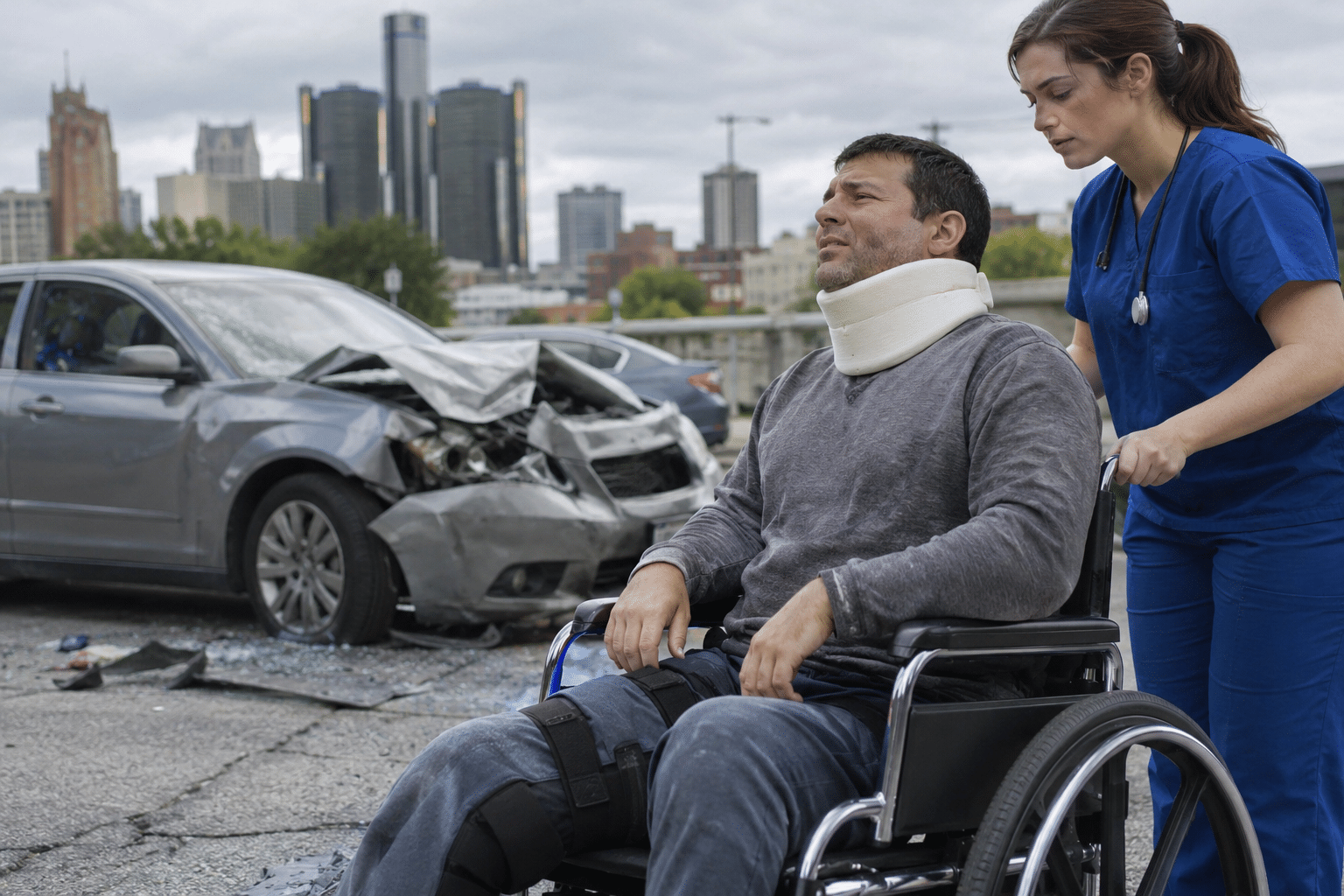
A serious car accident in Detroit can leave an injured person unable to perform basic daily activities without help. Someone who suffers a traumatic brain injury, spinal cord damage, multiple fractures, serious orthopedic injuries, or another disabling condition may need assistance with dressing, bathing, medication, mobility, eating, supervision, and other personal needs. That care may be provided by a professional caregiver, home health agency, spouse, parent, adult child, or another person.
Michigan’s no-fault insurance system may provide benefits for medically necessary attendant care when the need results from injuries sustained in a motor vehicle accident. We help injured people and their families understand what attendant care may be covered, how the benefit is documented, and what can be done when an insurance company refuses to pay the amount that is owed.
What Is Attendant Care After A Michigan Car Accident?
Attendant care generally refers to personal assistance and supervision that an injured person reasonably needs because of accident-related injuries. Unlike ordinary household services, attendant care addresses the injured person’s physical, medical, or supervisory needs.
Someone with a spinal cord injury might need help moving from bed to wheelchair, bathing, dressing, using the bathroom, or handling medical equipment. A person with a serious brain injury might be able to do some things physically but still need supervision because of memory issues, confusion, impulsive actions, seizure risks, or poor judgment. Others may need help for a while as they recover from surgery, broken bones, or trouble moving.
The amount and type of care required depend on the person’s injuries and medical condition. Some people need assistance for several hours each day. Others with catastrophic injuries may require around-the-clock care.
Michigan No-Fault Law Can Cover Attendant Care
Michigan’s No-Fault Act provides Personal Injury Protection benefits for certain expenses arising from motor vehicle injuries. Under MCL 500.3107(1)(a), PIP benefits include reasonable charges incurred for reasonably necessary products, services, and accommodations for an injured person’s care, recovery, or rehabilitation.
Attendant care can qualify as an allowable expense when it is reasonably necessary because of injuries caused by the accident. The need for care should generally be supported by medical documentation. Physicians, rehabilitation professionals, or other treating providers may identify the tasks the injured person cannot safely perform alone and the number of hours of assistance required.
Coverage is also affected by the injured person’s applicable PIP medical coverage. Michigan drivers may have different PIP medical limits depending upon the coverage selected under their auto policy. For people with catastrophic injuries, the available coverage can therefore become a major issue when long-term attendant care is required.
Family Members May Be Paid For Providing Attendant Care
A common misconception is that attendant care benefits are available only when a licensed home health agency provides the assistance. Michigan law allows certain care provided by family members and other qualifying individuals to be compensable when the care is reasonably necessary and actually performed.
This can be particularly important after a catastrophic crash. A spouse may leave work or reduce working hours to care for an injured husband or wife. Parents may assume responsibility for an adult child who suffered a traumatic brain injury. Other family members may spend substantial portions of every day helping with medications, mobility, hygiene, meals, supervision, and safety.
Under MCL 500.3157, however, an important limitation applies to certain in-home attendant care provided by relatives, household members, or people who had a business or social relationship with the injured person before the accident. For care subject to this provision, an insurer generally is not required to reimburse more than 56 hours per week of that family or related in-home attendant care.
The 56-hour rule does not mean that a seriously injured person can receive only 56 hours of medically necessary attendant care each week. When more care is reasonably necessary, additional care may be provided by an outside professional provider. An insurer may also contract with a relative or other qualifying caregiver to provide care beyond the statutory 56-hour amount.
Medical Documentation Is Critical To An Attendant Care Claim
We cannot assume that an insurance company will simply accept a family’s statement that care is required. Strong attendant care claims usually begin with clear medical documentation explaining why assistance is medically necessary.
The treating physician may prescribe attendant care and identify the activities for which help is required. The medical record should reflect the injured person’s functional limitations, safety concerns, cognitive problems, or physical restrictions. When an injury changes over time, updated prescriptions or evaluations may be necessary.
We also encourage accurate documentation of the care actually provided. Caregiver logs can identify the date, number of hours, type of assistance, and person providing the services. Consistent records become especially important when an insurer questions whether services were actually performed or disputes the number of hours claimed.
Insurance Companies May Dispute Attendant Care Benefits
Attendant care claims can become contentious because severe injuries may require substantial care for months, years, or even permanently. An insurance company may question the medical necessity of the care, the number of hours prescribed, the hourly rate, or whether specific services qualify as attendant care.
An insurer may also request an independent medical examination under Michigan no-fault law. The carrier may use the resulting opinion to argue that fewer hours are needed or that care is no longer medically necessary.
We examine these disputes carefully because the consequences can be serious. Cutting off attendant care can leave a severely injured person without the assistance needed to live safely at home. Medical records, treating-provider opinions, caregiver documentation, rehabilitation evaluations, and testimony concerning the injured person’s daily limitations can all become important evidence.
Attendant Care Is Different From Replacement Services
Michigan law distinguishes attendant care from replacement services. The distinction matters because different rules apply.
Attendant care addresses the injured person’s personal care, medical needs, supervision, or rehabilitation. Replacement services generally involve ordinary tasks that the injured person previously performed for themselves or their dependents, such as housekeeping or other routine household responsibilities.
Under MCL 500.3107(1)©, Michigan no-fault benefits may provide up to $20 per day for certain reasonably incurred replacement services during the first three years following an accident. Attendant care is not governed by that $20 daily replacement-service limit. When severe injuries require extensive personal assistance, correctly identifying and documenting attendant care can therefore make a substantial financial difference.
Deadlines Matter When Attendant Care Benefits Are Unpaid
Michigan’s no-fault claim deadlines require careful attention. Under MCL 500.3145, an action seeking unpaid PIP benefits generally cannot be commenced more than one year after the accident unless proper written notice of the injury was provided within one year or the insurer previously paid PIP benefits for the injury.
When proper notice has been provided or benefits have been paid, additional timing rules apply to unpaid expenses. The statute also contains a one-year-back limitation on recovering older unpaid benefits, subject to statutory tolling when a specific claim has been submitted and later formally denied.
Because attendant care expenses can accumulate week after week, delaying action when benefits are disputed can put significant amounts of compensation at risk. We therefore encourage families to address denied, reduced, or unpaid attendant care benefits promptly rather than allowing disputed bills to accumulate.
Protecting A Serious Injury Victim’s Right To Attendant Care
A serious motor vehicle injury can change the responsibilities of an entire family. When an injured person needs daily assistance, attendant care may become essential to safety, independence, and recovery. We work to determine what coverage applies, document the care that is medically necessary, evaluate the proper payment rate, and challenge insurance company decisions that improperly reduce or terminate benefits.
The strongest claims usually include consistent medical treatment, clear prescriptions, accurate caregiver records, and detailed evidence showing what the injured person can and cannot safely do without assistance. When an insurer disputes those benefits, we can pursue the legal remedies provided by Michigan’s No-Fault Act.
Frequently Asked Questions About Michigan Attendant Care Benefits
Can My Spouse Be Paid For Taking Care Of Me After A Detroit Car Accident?
Yes. A spouse can sometimes get paid for providing necessary attendant care after accident-related injuries. Just because a husband or wife gives the care does not mean it cannot be compensated. The care must be medically necessary, actually provided, and well documented. Michigan’s 56-hour weekly limit may apply to some family-provided in-home care, but if more care is needed, it may still be available through an outside provider or by agreement with the insurer.
What Types Of Activities Can Qualify As Attendant Care?
Attendant care can include assistance with bathing, dressing, toileting, mobility, transfers, medication, medical equipment, eating, wound care, and supervision. A traumatic brain injury victim may also require monitoring because cognitive impairment creates safety concerns even when the person appears physically independent. Whether a particular service qualifies depends on the person’s injuries and medical needs. We generally look for medical documentation connecting the requested assistance directly to limitations caused by the motor vehicle accident.
Can Someone Receive Twenty-Four-Hour Attendant Care After A Car Accident?
Yes, when around-the-clock care is reasonably necessary because of the person’s injuries. The 56-hour limitation applying to certain family-provided attendant care does not establish a 56-hour maximum on the injured person’s total medical need. Additional hours may potentially be provided by professional caregivers, and insurers may enter agreements allowing qualifying family caregivers to provide additional hours. Severe brain injuries, spinal cord injuries, paralysis, and other catastrophic conditions can sometimes justify continuous supervision or assistance.
What Happens If The Insurance Company Stops Paying For Attendant Care?
We first determine why payment was stopped and examine the medical evidence supporting continued care. The insurer may rely on an examination, dispute the prescription, challenge the number of hours, or question the documentation submitted. Depending on the circumstances, additional medical evidence or litigation for unpaid PIP benefits may be appropriate. Because Michigan law imposes strict timing rules on no-fault claims, we do not recommend ignoring a denial or allowing significant unpaid attendant care expenses to accumulate.
How Do We Prove That Family Attendant Care Was Actually Provided?
Detailed records are extremely important. Caregiver logs should accurately show when the care was provided, how many hours were spent providing it, what assistance was performed, and who provided the services. Those records should be consistent with physician prescriptions and the injured person’s documented limitations. We may also rely on medical records, rehabilitation evaluations, testimony, and other evidence demonstrating why the person could not safely perform certain activities independently.
Talk To Ravid & Associates, P.C. After A Serious Accident
When a serious car accident leaves someone dependent on others for daily care, the financial consequences can affect the entire household. We help injured clients and their families pursue Michigan no-fault benefits for medically necessary attendant care and challenge insurers that improperly deny, reduce, or terminate those benefits. We examine the applicable insurance coverage, medical evidence, caregiver documentation, and the long-term needs created by the injury so that the claim reflects what the injured person actually requires.
If you or a family member sustained injuries in a serious Detroit car accident, contact our Detroit auto accident attorneys at Ravid & Associates, P.C. today by calling (248) 948-9696 to receive your free consultation. We represent injured people in Detroit and throughout the entire state of Michigan from our office location in Southfield, Michigan. We can review the attendant care claim, explain the available Michigan no-fault benefits, and take action when an insurance company refuses to pay benefits that should be covered.

