
Pedestrian Accidents Caused By Speeding Drivers In Detroit
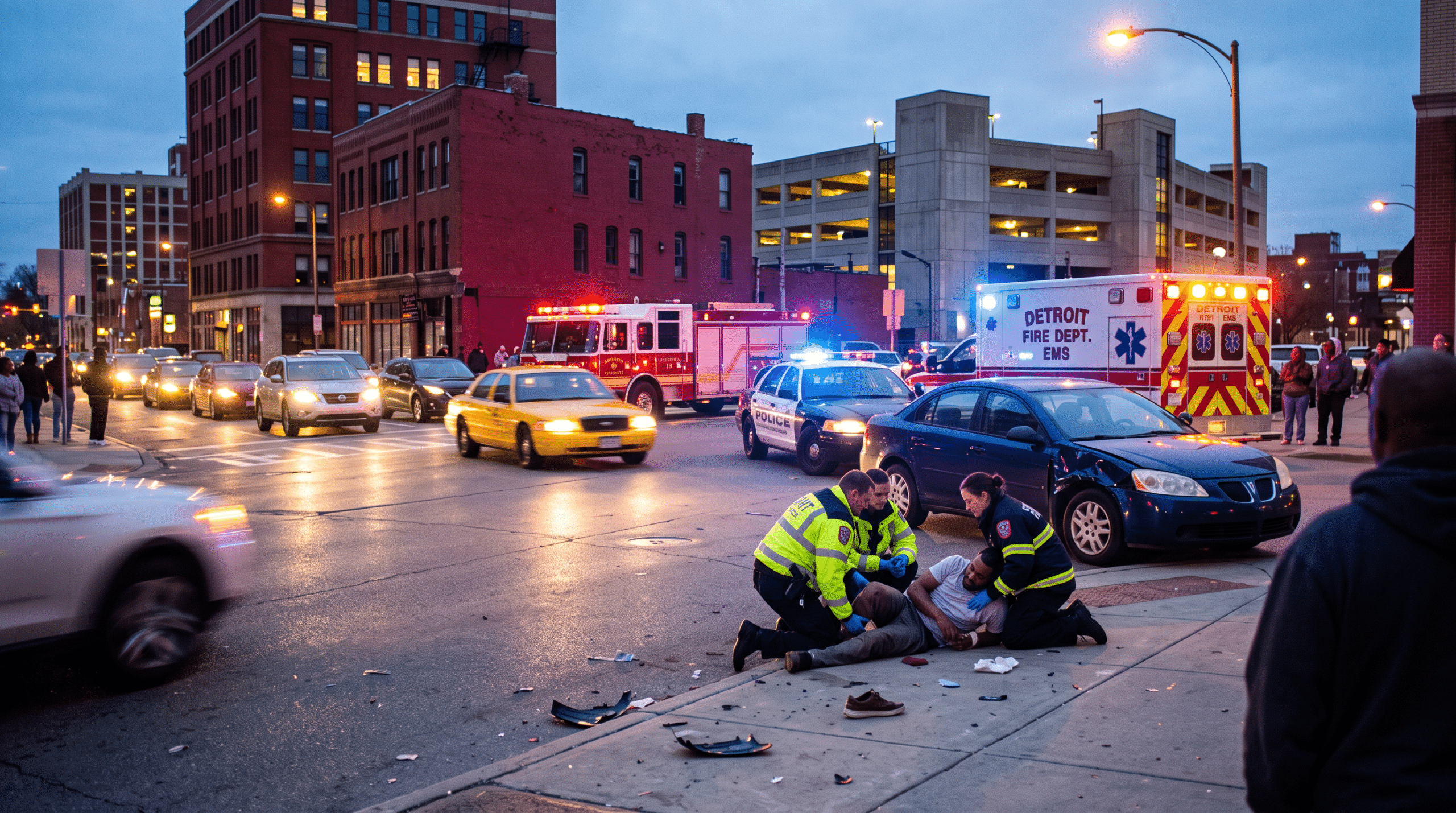
A pedestrian has almost no physical protection when struck by a speeding vehicle. Even a collision that might cause modest damage between two cars can leave a person on foot with fractures, brain injuries, spinal damage, internal injuries, or permanent disabilities. Speed matters because a driver traveling too fast has less time to notice a pedestrian, react to danger, and stop. In Detroit, pedestrians regularly share busy roads with passenger vehicles, commercial traffic, rideshare drivers, delivery vehicles, and commuters entering or leaving major streets and freeways. When excessive speed contributes to a pedestrian collision, we investigate not only whether the driver exceeded the posted limit but whether the driver was traveling too fast for the conditions.
Michigan law provides injured pedestrians with important rights following a motor vehicle collision. Depending on the circumstances, compensation may come through Michigan No-Fault benefits as well as a liability claim against the negligent driver.
How Speeding Increases The Risk Of A Serious Pedestrian Accident
Speed influences both the chance of a crash and how serious the injuries are. A driver going too fast has less time to see a pedestrian entering a crosswalk, walking through an intersection, getting out of a parked car, or crossing near a business.
Detroit streets can be even more dangerous at night, in bad weather, near construction, or where cars are parked along the road. Safe drivers adjust their speed for these conditions instead of just following the posted speed limit.
Michigan’s basic speed law, MCL 257.627, requires motorists to operate at a careful and prudent speed that is reasonable and proper considering traffic, roadway conditions, and other circumstances. The statute also requires motorists to drive at a speed that permits them to stop within the assured clear distance ahead.
Therefore, a driver may potentially be negligent even when traveling at or below the posted limit if that speed was unsafe under the circumstances.
Pedestrian Right-Of-Way And Detroit Crosswalk Accidents
Crosswalk and intersection collisions frequently raise questions about who had the right-of-way. Under MCL 257.612, pedestrians facing a pedestrian “walk” signal may proceed across the roadway, and motorists must provide the required right-of-way.
Drivers need to watch for pedestrians even when they have a green light. A driver turning right or left might have a green light at the same time a pedestrian is allowed to cross.
Speeding makes these situations even more dangerous. If a driver comes up to an intersection too fast, they might not see the pedestrian in time to stop safely.
We look at traffic signals, how the road is designed, witness statements, video footage, vehicle damage, and other evidence to figure out exactly what happened.
Michigan No-Fault Benefits For Injured Pedestrians
A pedestrian injured by a motor vehicle may have rights under Michigan’s No-Fault Insurance Act even though the pedestrian was not occupying a vehicle.
Under MCL 500.3114, an injured person may first look to applicable coverage based on the statutory priority rules. When coverage is not available through the sources identified by law, MCL 500.3115 provides that certain individuals suffering accidental bodily injury while not occupying a motor vehicle may claim Personal Protection Insurance benefits through the Michigan Assigned Claims Plan.
Depending upon the applicable coverage and circumstances, PIP benefits can help address accident-related medical treatment and other qualifying losses.
Determining the correct insurer can become complicated after a pedestrian crash. We review available automobile policies and the facts surrounding the collision to determine where a claim should be submitted.
When A Pedestrian Can Sue The Speeding Driver
No-Fault benefits and a claim against the negligent motorist are separate issues.
Under MCL 500.3135, a person injured in a motor vehicle accident may pursue noneconomic damages against an at-fault driver when the injuries involve death, permanent serious disfigurement, or a serious impairment of body function.
Michigan defines serious impairment through several factors. The impairment must be objectively manifested, involve an important body function, and affect the person’s general ability to lead their normal life.
Pedestrian collisions frequently result in injuries capable of meeting this standard, including traumatic brain injuries, fractures, spinal injuries, torn ligaments, nerve damage, and injuries requiring surgery. We look beyond the diagnosis alone and document how the injuries have changed the client’s work, mobility, family activities, recreation, and ordinary daily life.
What Compensation May Be Available After A Pedestrian Accident
A serious pedestrian accident can create losses that extend far beyond the first hospital bill. Some victims require surgery, rehabilitation, physical therapy, mobility equipment, future medical treatment, or assistance with activities they previously performed independently.
A third-party claim may seek compensation for pain and suffering and other legally recoverable damages. Depending on the facts, claims may also involve allowable economic losses that are not otherwise compensated through No-Fault insurance.
When injuries are permanent, we consider how the accident is likely to affect the person’s future rather than evaluating the claim only on expenses already incurred.
How Comparative Fault Can Affect A Pedestrian Injury Claim
Insurance companies sometimes respond to pedestrian claims by blaming the injured person. They may argue that the pedestrian crossed outside a crosswalk, entered the street unexpectedly, ignored a traffic signal, wore dark clothing, or failed to pay attention.
Michigan’s comparative fault statute, MCL 600.2959, generally reduces damages according to the injured person’s percentage of fault. If the injured person’s percentage of fault is greater than the combined fault of the other persons involved, noneconomic damages are unavailable.
That makes liability evidence extremely important. We do not assume an insurer’s version of the accident is correct. A driver’s excessive speed may have prevented the driver from avoiding a collision even when the pedestrian’s conduct is disputed.
Why Serious Pedestrian Accident Claims Require Early Investigation
Pedestrian cases can depend heavily on evidence that exists only briefly. A nearby business may erase surveillance footage. Vehicles can be repaired or destroyed. Witnesses may become difficult to locate. Electronic vehicle information may also disappear.
We work to identify and preserve evidence before those opportunities are lost. Establishing speed, visibility, right-of-way, reaction time, and stopping distance can significantly affect the outcome of a claim.
Ravid & Associates, P.C. Represents Victims Of Detroit Pedestrian Accidents
When a speeding driver strikes a pedestrian, the consequences can follow the injured person and family for years. We investigate how the collision happened, identify applicable insurance coverage, document the full extent of the injuries, and pursue compensation from the parties responsible. When insurers attempt to blame the pedestrian or minimize serious injuries, we work to develop the evidence necessary to challenge those arguments.
If you or a family member was hit by a speeding driver in Detroit or elsewhere in Michigan, contact our Detroit pedestrian accident attorneys at Ravid & Associates, P.C. today by calling (248) 948-9696 to receive your free consultation. We represent injured pedestrians in Detroit and throughout the entire state of Michigan from our office location in Southfield, Michigan. We can review what happened, determine which insurance claims may be available, and pursue accountability from the driver responsible for the collision.

