
Lane Change Motorcycle Accidents In Michigan
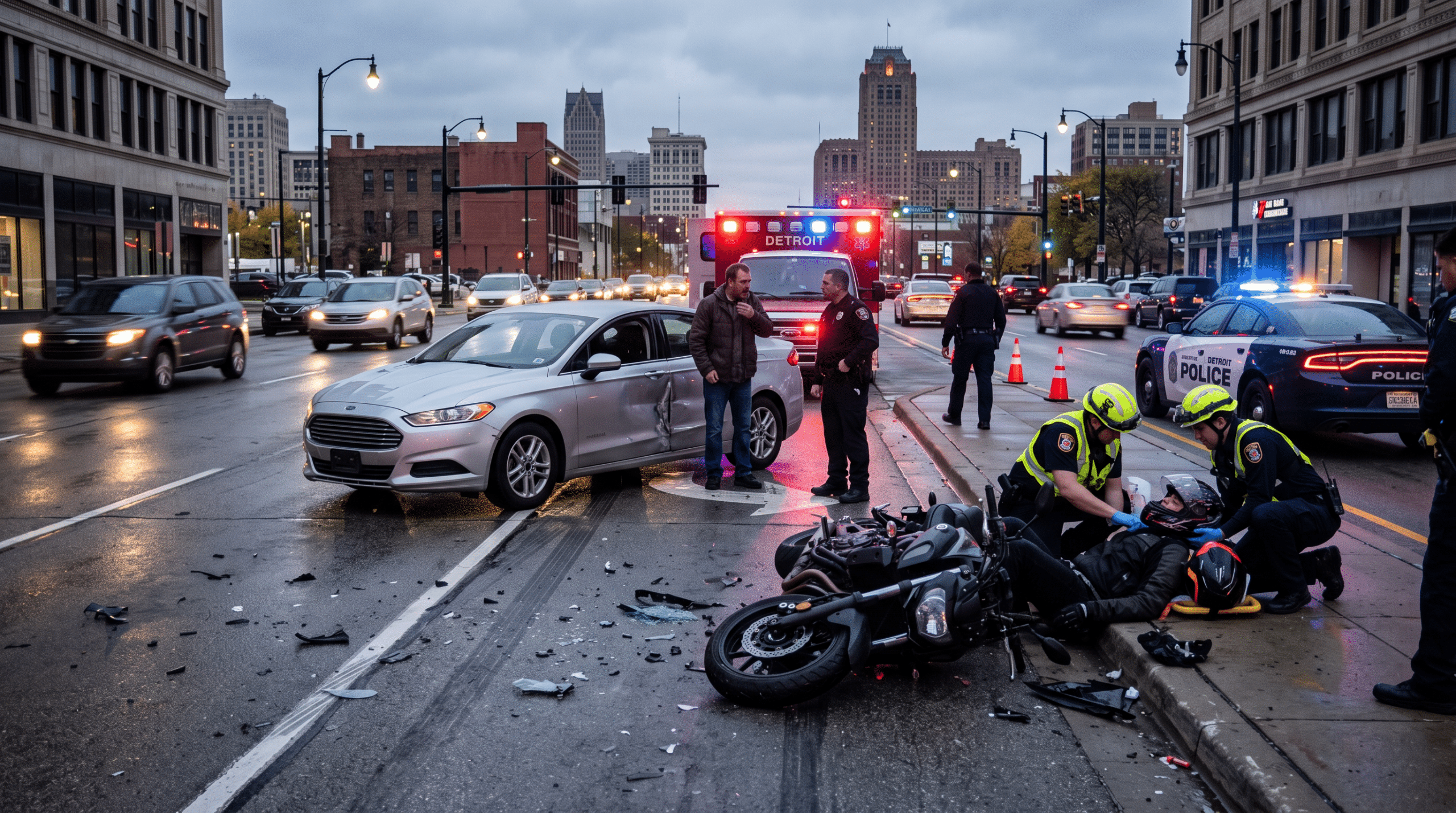
A motorcycle rider can be badly hurt in just a few seconds if another driver changes lanes without checking for traffic. Because motorcycles are smaller than cars, a driver who only glances in the mirror might not see a rider next to them. If a car, SUV, or truck moves into a lane that is already occupied, the motorcyclist might get hit or have to swerve off the road to avoid a crash. These accidents in Detroit often lead to broken bones, head and spinal injuries, road rash, internal injuries, and lasting physical problems. We help injured riders by finding out how the lane change happened, figuring out who broke Michigan traffic laws, and working to get the compensation Michigan law allows.
Michigan Law Requires Drivers To Make Safe Lane Changes
Michigan law places specific responsibilities on motorists before they move from one lane into another. Under MCL 257.642(1)(a), a vehicle traveling on a roadway divided into marked lanes must remain as nearly as practicable within a single lane and must not move from that lane until the driver has first determined that the movement can be made safely.
This rule matters even more when motorcycles are nearby. A driver cannot avoid blame just by saying the motorcycle was hard to see. We check if the driver used mirrors, looked over their shoulder, used a turn signal, paid attention to the road, and had enough space to move safely into the next lane.
Michigan’s signaling law can also be important. Under MCL 257.648, drivers must use their turn signal before turning or changing lanes if it could affect other traffic. If a driver changed lanes suddenly or did not signal, that evidence can help us show how the crash happened.
How Lane Change Motorcycle Accidents Commonly Happen
Many lane-change crashes happen when a driver does not see a motorcycle in the next lane. Blind spots can play a role, but drivers are still responsible for making sure the lane is clear before moving over.
We often look into crashes where a driver changes lanes while distracted, merges onto the highway without enough space, crosses several lanes at once, or moves over to avoid a slower car without checking for motorcycles. These accidents can also happen when drivers enter or leave highways or suddenly notice they might miss an exit.
A motorcycle rider might not actually hit the other vehicle. If a careless lane change makes the rider swerve, lose control, and crash, the driver who caused the situation may still be responsible. We look at what made the rider take action, not just whether the vehicles touched.
Serious Injuries Can Result From A Lane Change Collision
Motorcycles offer little protection when a collision occurs. A rider may strike another vehicle, pavement, a guardrail, or another fixed object. The initial impact can be followed by additional injuries as the rider slides or is thrown from the motorcycle.
We commonly see claims involving traumatic brain injuries, spinal cord injuries, fractured arms and legs, broken hips and pelvises, shoulder injuries, severe road rash, nerve damage, and internal trauma. Some riders require multiple surgeries and months of rehabilitation. Others are left with permanent disabilities that affect their employment and independence.
When we evaluate a claim, we consider not only current medical bills but also future treatment, rehabilitation, lost earning capacity, permanent restrictions, and the effect that the injury has had on the rider’s normal life.
Michigan’s Serious Impairment Standard May Apply
Michigan motorcycle injury cases can involve the state’s motor vehicle tort rules. Under MCL 500.3135, a person may pursue noneconomic damages arising from the ownership, maintenance, or use of a motor vehicle when the injured person suffers death, permanent serious disfigurement, or a serious impairment of body function.
A serious impairment involves an objectively manifested impairment of an important body function that affects the injured person’s general ability to lead their normal life. We therefore document more than a diagnosis. We examine how the injuries interfere with work, walking, driving, sleeping, household responsibilities, recreation, family activities, and other parts of everyday life.
Severe motorcycle injuries frequently create substantial changes in a person’s normal activities, but every claim depends on its particular medical and factual evidence.
Comparative Fault Can Affect A Motorcycle Injury Claim
Insurance companies often attempt to shift responsibility toward the motorcyclist. They may claim that the rider was speeding, traveling in a blind spot, passing improperly, or could have avoided the collision.
Michigan law uses comparative fault principles. Under MCL 500.3135 and related comparative-fault statutes, compensation can be affected by the percentage of responsibility assigned to each party. A finding that an injured person was more than 50 percent at fault can prevent recovery of noneconomic damages in a motor vehicle tort claim.
We therefore take allegations against the rider seriously. Video footage, vehicle positions, skid marks, witness accounts, motorcycle damage, electronic vehicle information, and crash reconstruction can help establish what actually happened rather than allowing an insurance company’s assumption to determine fault.
Evidence Can Establish An Unsafe Lane Change
Lane-change crashes sometimes become disputes over who entered whose lane. Physical evidence can be particularly important when the drivers provide different versions of the accident.
We may examine police reports, photographs, nearby surveillance cameras, dashcam recordings, eyewitness accounts, damage patterns, roadway markings, and available electronic vehicle data. We also look for statements the other driver made at the scene, including admissions that the motorcycle was not seen before the lane change.
Preserving evidence early can make a major difference. Video may be erased, vehicles may be repaired, and witnesses can become more difficult to locate as time passes.
Compensation After A Michigan Lane Change Motorcycle Accident
A rider who suffers serious injuries because of another driver’s unsafe lane change may have claims for both economic and noneconomic losses, depending on the facts and applicable insurance coverage.
We may pursue compensation for medical expenses that are legally recoverable from the responsible party, lost income, diminished earning capacity, pain and suffering, disability, scarring, disfigurement, and other accident-related losses. Motorcycle insurance issues can differ from those involving occupants of passenger vehicles, so identifying every available insurance policy is an important part of our investigation.
The value of a claim depends on the severity and permanence of the injury, available coverage, fault, medical evidence, future care needs, and the effect of the injuries on the rider’s life.
Frequently Asked Questions About Lane Change Motorcycle Accidents In Michigan
Who Is At Fault When A Car Changes Lanes And Hits A Motorcycle?
We examine whether the motorist complied with MCL 257.642, which requires a driver to determine that a lane movement can be made safely before leaving the existing lane. When a driver moves into a motorcycle’s occupied lane without making sure the lane is clear, that evidence can strongly support negligence. However, fault is not automatically determined by the type of collision. We review witness testimony, photographs, vehicle damage, video recordings, roadway evidence, and the actions of both drivers. Insurance companies may try to assign some responsibility to the motorcyclist, so we work to establish the sequence of events with objective evidence whenever possible.
Can We Bring A Claim If The Car Never Actually Hit The Motorcycle?
Potentially, yes. Direct physical contact is not necessarily required for another driver’s negligence to cause a motorcycle crash. A driver might suddenly enter the rider’s lane, forcing the rider to swerve onto the shoulder, strike another object, or lay the motorcycle down to avoid being hit. In these situations, we investigate whether the driver’s unsafe movement created the emergency that caused the rider to crash. Dashcam footage, eyewitnesses, nearby cameras, and vehicle identification information can become especially important when there was no physical contact between the vehicles.
What If The Driver Says The Motorcycle Was In A Blind Spot?
A blind spot does not automatically excuse an unsafe lane change. Michigan law requires a driver to determine that a movement from one lane to another can be made safely. We may investigate whether the driver properly checked mirrors, looked over their shoulder, signaled, and maintained a reasonable lookout before changing lanes. We also examine the motorcycle’s location and movement immediately before the crash. A statement that the driver “never saw the motorcycle” may become significant because the central question can be why the motorcycle was not seen before the lane change began.
Can We Recover Compensation If We Were Partially At Fault?
Possibly. Michigan’s comparative-fault rules allow responsibility to be divided between the parties. A rider’s damages may be reduced according to the percentage of fault assigned to the rider, and being more than 50 percent at fault can bar recovery of noneconomic damages in a motor vehicle tort action. Because even a partial-fault allegation can substantially affect compensation, we investigate claims that the rider was speeding, passing improperly, or otherwise contributed to the collision rather than accepting an insurer’s percentage without examining the evidence.
What Should We Do After A Lane Change Motorcycle Accident?
We encourage injured riders to obtain appropriate medical treatment and make sure their injuries are properly documented. When possible, preserving photographs, witness information, the police report, motorcycle damage, helmet and riding gear, and any available video can help establish how the accident happened. We also recommend caution when communicating with the other driver’s insurance company because statements made before all of the facts are known may later be used to dispute liability or minimize injuries. Early investigation gives us a better opportunity to preserve evidence before it disappears.
Talk To Ravid & Associates, P.C. About Your Michigan Motorcycle Accident Claim
A lane-change motorcycle accident can leave a rider facing surgeries, rehabilitation, lost income, and permanent changes to everyday life. We investigate the actions of the driver, preserve evidence, analyze applicable insurance coverage, document our client’s injuries, and pursue compensation from the parties responsible for the crash. When an insurance company attempts to place unfair blame on the rider or minimize serious injuries, we work to establish what the evidence actually shows.
If you were injured because a driver changed lanes into your motorcycle or forced you off the road, call our Detroit motorcycle crash attorneys at Ravid & Associates, P.C. today at (248) 948-9696 to receive your free consultation. We represent motorcycle accident victims in Detroit and throughout the entire state of Michigan from our office location in Southfield, Michigan. We can review the circumstances of the collision, explain how Michigan law may apply, identify available insurance coverage, and pursue the compensation you may be entitled to receive.

