
Injuries Caused By Drivers Following GPS Into Unsafe Traffic Movements
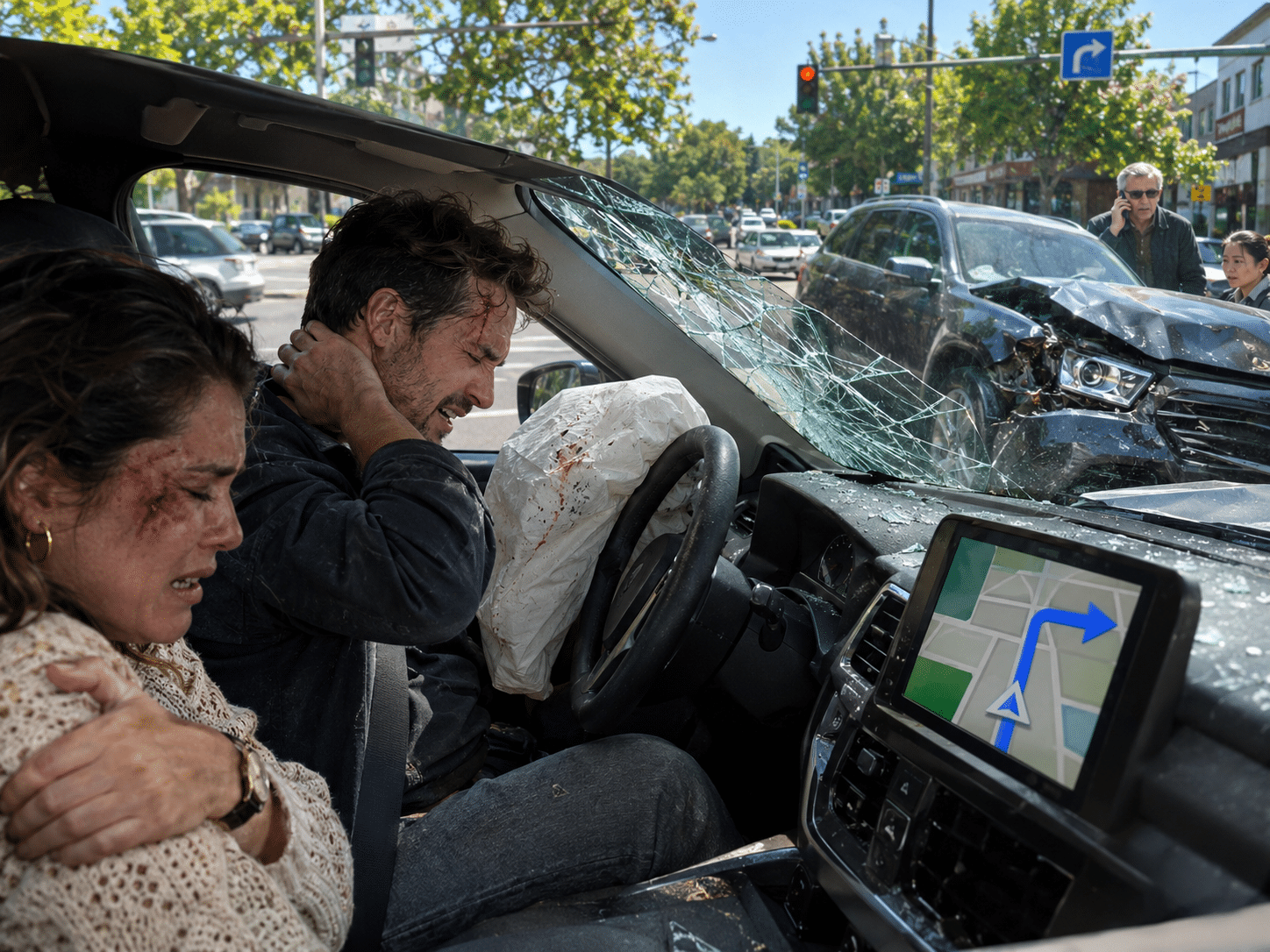
GPS directions make it easier to drive in unfamiliar places, but drivers are still responsible for making safe choices. Serious crashes in Detroit can happen when drivers focus on their navigation screens, realize too late that they need to turn, suddenly cross lanes, stop without warning, or follow GPS instructions even when it is not safe. A GPS might tell a driver to turn, take an exit, make a U-turn, or change lanes, but the driver must still follow traffic signals, signs, lane markings, and Michigan traffic laws. If a driver blindly follows GPS directions and causes a crash, the injured person may be able to seek compensation. We look at what the driver did, why it was unsafe, and whether distraction or traffic violations played a role.
A GPS Instruction Does Not Override Michigan Traffic Laws
Navigation apps give directions, but they do not give legal permission to make a move. If an app tells a driver to turn but it is not safe, the driver should keep going until it is safe to turn. This also applies if the driver misses an exit or realizes too late that they are in the wrong lane.
Under MCL 257.648, a Michigan driver must determine that stopping or turning from a direct line can be performed safely and must give the required signal. Michigan’s intersection-turning requirements under MCL 257.647 also govern how turns must be performed. A driver cannot excuse an illegal or unsafe maneuver simply by saying that GPS directions called for the turn.
We look at whether a driver made a sudden lane change, crossed traffic without warning, did not signal, ignored signs, or tried to turn without enough time or space. These actions can be important evidence of negligence in an injury claim.
Last-Second Lane Changes Can Cause Serious Collisions
A common and dangerous GPS-related behavior happens when a driver suddenly notices an exit, ramp, or turn coming up. Instead of missing it and letting the GPS recalculate, the driver might cut across several lanes of traffic.
That movement can result in side-impact collisions, highway crashes, motorcycles being forced off the road, or rear-end collisions caused by surrounding drivers suddenly braking. Under MCL 257.648, drivers must first determine that movement from a direct line can be made safely.
We investigate lane markings, vehicle positions, impact points, witness statements, dash-camera recordings, and nearby surveillance footage when determining how a sudden maneuver occurred. Navigation data and cellphone evidence may also become relevant depending on the facts.
GPS Distraction Can Become Evidence Of Negligence
The issue is not always the GPS directions. Sometimes, it is the driver’s focus on the device that leads to an accident.
Michigan’s distracted-driving statute, MCL 257.602b, restricts the use of mobile electronic devices while operating a vehicle, subject to specific statutory exceptions for permitted uses and hands-free functions. A driver who is manually interacting with a phone, holding it, typing an address, scrolling through directions, or otherwise using it unlawfully may violate Michigan law.
Even if a certain GPS use is allowed by law, drivers still have to drive safely. If a driver is so focused on directions that they miss a pedestrian, cyclist, traffic light, stopped car, or changing road conditions, they can still be considered negligent.
Unsafe Turns At Intersections Can Injure Drivers, Pedestrians, And Cyclists
GPS-related crashes frequently occur at intersections. A driver may attempt a sudden left turn after realizing the destination is on the opposite side of the road, make an unexpected right turn across a bicycle lane, or enter an intersection without properly observing approaching traffic.
Michigan’s right-of-way provisions under MCL 257.649 establish rules for vehicles entering and moving through intersections. Drivers approaching stop signs and yield signs must comply with applicable stopping and yielding requirements. Drivers cannot rely on a navigation instruction as justification for taking another road user’s right-of-way.
These accidents can be especially serious when pedestrians, cyclists, e-bike riders, or motorcyclists are hit, since they have little protection from cars.
Driving Too Fast For Conditions While Following GPS Directions
A driver who is unfamiliar with an area may also approach an unfamiliar intersection, curve, exit, or turn too quickly. Michigan’s basic speed law under MCL 257.627 requires motorists to drive at a careful and prudent speed that is reasonable for traffic, roadway conditions, and other circumstances.
Sometimes, a driver follows GPS directions at highway speed and then suddenly notices a sharp turn or exit coming up. Hard braking or a quick lane change can put everyone nearby in danger.
The issue is not whether the GPS provided the correct direction. The question is whether the motorist responded to that information as a reasonably careful driver would have responded under the circumstances.
Michigan No-Fault Benefits After A GPS-Related Accident
People injured in Michigan motor vehicle accidents may qualify for Personal Injury Protection benefits under Michigan’s No-Fault Act, including benefits authorized by MCL 500.3107. Depending on the applicable coverage and circumstances, PIP benefits may address allowable accident-related medical expenses, wage loss, replacement services, and other qualifying losses.
These benefits are different from a claim against a negligent driver. We look at all available insurance coverage because serious injuries can lead to major medical and financial problems.
Filing A Claim Against The At-Fault Driver
An injured person may also have a third-party claim against the negligent driver when Michigan’s requirements for tort recovery are satisfied. Under MCL 500.3135, a person who suffers death, permanent serious disfigurement, or serious impairment of body function may pursue noneconomic damages when the statutory requirements are met.
A crash caused by GPS use can lead to brain injuries, spinal injuries, broken bones, torn ligaments, internal injuries, and other serious problems that change a person’s life. We record not just the diagnosis but also how the injury affects work, movement, sleep, hobbies, chores, and daily life.
Comparative Fault Can Affect The Value Of The Case
Insurance companies may attempt to argue that the injured person also contributed to the collision. Michigan’s comparative-fault statute, MCL 600.2959, provides for damages to be reduced according to the injured person’s percentage of fault. If that person’s fault exceeds the aggregate fault of the other persons involved, noneconomic damages are barred under the statute.
That’s why we do not decide who is at fault just by looking at the first accident report. We review physical evidence and the whole series of events to see if the other driver’s GPS use actually caused the crash.
Frequently Asked Questions About GPS-Related Car Accidents In Michigan
Can A Driver Be Liable For Following Incorrect GPS Directions?
Yes. Drivers are still responsible for driving safely, even if GPS directions are wrong, confusing, or out of date. A navigation app does not give permission to make an illegal turn, cross lanes unsafely, ignore traffic signals, or take another driver’s right-of-way. We look at whether the driver’s actions were reasonable for the situation, not just if the GPS was correct.
What If The Driver Suddenly Crossed Several Lanes To Reach An Exit?
A sudden multi-lane maneuver can provide strong evidence in an accident investigation, especially when the movement caused another motorist to brake, swerve, or collide with the vehicle. MCL 257.648 requires a driver to determine that turning or moving from a direct line can be accomplished safely. We may use witness testimony, dash-camera footage, roadway cameras, physical damage, and other evidence to establish how the lane movement occurred.
Is Looking At GPS Considered Distracted Driving In Michigan?
It can be, depending on how the device was used. MCL 257.602b sets rules for using mobile devices while driving and lists what is allowed. Even if a driver’s GPS use is permitted, they can still be negligent if focusing on the navigation system makes them miss traffic, pedestrians, cyclists, signals, or road conditions.
Can A Pedestrian Hit By A GPS-Distracted Driver File An Injury Claim?
Yes, possibly. Pedestrians can be badly hurt if a driver makes an unexpected turn while looking at a navigation screen instead of the road or crosswalk. We look into right-of-way, traffic signals, the driver’s speed, cellphone use, witness statements, and any video. Depending on the situation, the injured pedestrian may be able to claim Michigan no-fault benefits and file a claim against the negligent driver.
How Can We Prove The Driver Was Using GPS Before The Crash?
The evidence we use varies with each case. We might look at the driver’s statements, police reports, witness accounts, dash-cam videos, vehicle infotainment data, and cellphone records if they can be legally obtained. Electronic evidence collected during a lawsuit can also help. Since digital information may not last forever, it’s especially important to save evidence early when distracted driving is suspected.
Talk To Ravid & Associates, P.C. About A GPS-Related Michigan Car Accident
Drivers are always responsible for what happens in front of them, no matter what their GPS says. If someone makes a sudden turn, unsafe lane change, improper stop, or any other risky move because of GPS directions or distraction, we look into what caused the crash and work to get you the compensation Michigan law allows. If you have serious injuries, we make sure to investigate carefully, using both traditional crash evidence and electronic information that might explain the driver’s actions.
If you were hurt because another driver followed GPS directions and made an unsafe move, contact our Detroit auto accident attorneys at Ravid & Associates, P.C. today by calling (248) 948-9696 to receive your free consultation. We help injured people in Detroit and across Michigan from our office in Southfield. We can look into what happened, find out who might be responsible and what insurance applies, save important evidence, and explain your legal options for getting compensation under Michigan law.

