
Injured By Broken Stairs At An Apartment Or Business?
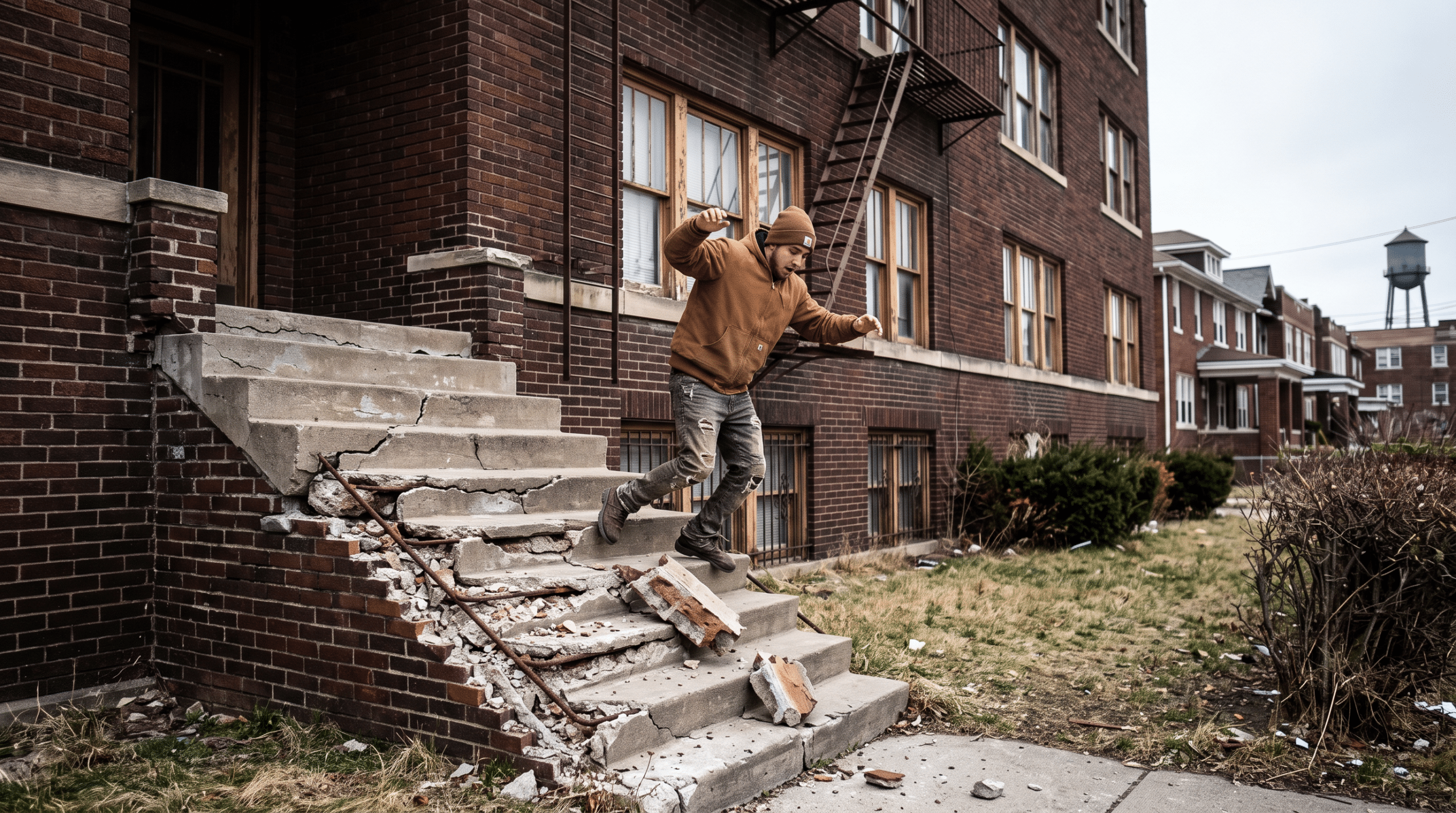
A broken stair, loose handrail, uneven step, or worn-out staircase can quickly turn a simple walk into a serious injury. We often see these accidents happen at apartment buildings, stores, restaurants, offices, hotels, parking garages, and other places across Michigan. Falling down stairs can lead to broken bones, head injuries, spinal damage, knee or shoulder injuries, and other problems that might need surgery or long-term rehab. If unsafe stairs are the result of poor maintenance or another dangerous condition, the injured person may be able to seek compensation. Michigan’s premises liability law decides when a property owner, landlord, business, or other party is legally responsible.
We think it’s important to investigate these cases quickly because the conditions that caused the fall can change fast. A broken step might get fixed, a loose railing could be replaced, and surveillance footage might be lost. Figuring out what happened and who knew about the hazard is often key to proving responsibility.
When Broken Stairs Can Lead To A Michigan Premises Liability Claim
A premises liability claim usually happens when someone is hurt because of a dangerous condition on property owned or managed by someone else. Broken stairs can cause many problems. A step might crack or give way under someone’s weight. Stairs can be uneven, or a handrail might be loose, missing, or not strong enough to help someone during a fall. We also may investigate who possessed or controlled the property, what condition existed, how long it existed, whether the responsible party knew or reasonably should have known about it, and whether reasonable action was taken to correct the danger.
For businesses open to the public, Michigan law usually requires property owners to take reasonable care of any dangerous conditions that could affect visitors. It’s especially important if there’s proof that employees reported a broken stair before, or if the problem had been there long enough that it should have been noticed.
Michigan Law Has Changed Regarding Open And Obvious Hazards
Michigan premises liability law changed significantly after the Michigan Supreme Court’s decision in Kandil-Elsayed v F & E Oil, Inc., 512 Mich 95 (2023).
Under the current framework, the fact that a dangerous condition was open and obvious does not automatically eliminate the property possessor’s duty. Instead, whether the condition was open and obvious generally relates to whether the property possessor breached the duty of reasonable care and may also be relevant to comparative fault.
This difference is important in broken stair cases. The other side might say the damaged stair was easy to see and the injured person should have avoided it. But that doesn’t automatically end the case. We look at everything, like lighting, distractions, where the problem was, if there were other ways to go, why the person used the stairs, and what the property owner should have done about the hazard.
Apartment Landlords Have Additional Duties Under Michigan Law
Claims about apartment stairways can involve extra legal responsibilities beyond regular premises liability.
Under MCL 554.139(1), residential landlords covenant that the premises and common areas are fit for their intended use and that the premises will be kept in reasonable repair during the tenancy. This statute can become especially important when dangerous stairs are located in an apartment building’s common hallway, entrance, stairwell, or another area used by tenants.
If a landlord gets complaints about a broken staircase but keeps delaying repairs, there may be serious questions about whether they met their legal duties. Things like maintenance requests, emails, inspection reports, photos, earlier complaints, and statements from other tenants can help show how long the problem was there.
Broken Staircase Injuries Can Be Severe
Falling on stairs can be much more forceful than falling on flat ground. Someone might hit several steps, a wall, a railing, or even a concrete landing before coming to a stop.
We frequently evaluate claims involving fractures of the wrist, ankle, hip, leg, ribs, or shoulder. Other cases may involve traumatic brain injuries, concussions, herniated discs, torn knee ligaments, spinal injuries, nerve damage, or significant facial injuries.
These injuries might need a hospital stay, surgery, physical therapy, injections, help with moving around, or time off work. If the injury leads to lasting problems, we also look at how it could affect the person’s ability to work and enjoy life in the future.
Evidence Can Determine Whether A Broken Staircase Claim Succeeds
We need to know exactly what the stairs looked like when the accident happened. Photos taken right after the fall can be very helpful, since repairs might remove important evidence.
Surveillance video can show how someone fell and sometimes how long the hazard was there. We also check maintenance logs, repair records, past incident reports, building inspections, employee messages, and earlier complaints about the stairs.
Witnesses are just as important. Another tenant, worker, customer, or visitor might have seen the broken step before the accident or know if complaints were already made.
Comparative Fault Can Affect Compensation
Property owners and insurance companies may argue that the injured person was looking at a phone, carrying something that obstructed the person’s view, wearing unsafe footwear, running, or otherwise failing to exercise reasonable care.
Michigan’s comparative fault statute, MCL 600.2959, generally reduces damages according to the injured person’s percentage of fault. If the injured person is found more than 50 percent at fault, recovery of non-economic damages is barred.
For that reason, we do not accept an insurance company’s allocation of blame without examining the evidence. A photograph, surveillance recording, witness statement, or maintenance record can substantially change how responsibility should be allocated.
Compensation After A Serious Stairway Fall
A successful premises liability claim may provide compensation for medical expenses, lost income, diminished earning capacity, pain and suffering, disability, and other legally recoverable losses.
Future losses can be particularly significant when a staircase accident causes permanent orthopedic or neurological damage. We consider whether additional surgery will be required, whether the injured person can return to the same occupation, and how the injury affects normal activities.
Michigan generally provides a three-year limitations period for personal injury actions under MCL 600.5805, although particular claims can involve different rules or shorter notice requirements. We prefer to investigate well before any deadline approaches because evidence preservation is often just as important as the filing deadline itself.
FAQs About Broken Stair Injury Claims In Michigan
Can We Sue An Apartment Complex If A Broken Stair Caused The Fall?
Potentially, yes. An apartment landlord or another party responsible for the premises may be liable depending on who controlled the staircase, what was wrong with it, and the circumstances surrounding the failure to repair it. MCL 554.139 also imposes duties concerning residential premises and common areas. We examine leases, maintenance responsibilities, repair records, complaints, photographs, and witness testimony to determine which parties may bear responsibility. A property management company or maintenance contractor may also need to be investigated depending on the facts.
What If The Property Owner Says We Should Have Seen The Broken Step?
That does not automatically defeat a Michigan premises liability claim. Following Kandil-Elsayed v F & E Oil, Inc., whether a condition was open and obvious is generally considered as part of the breach analysis rather than eliminating the property possessor’s duty altogether. The injured person’s conduct may also become relevant to comparative fault. We therefore examine lighting, visibility, the location of the defect, whether there was another reasonable route, and other circumstances instead of treating visibility as the end of the case.
What Should We Do If A Business Repairs The Stairs Immediately After The Accident?
We recommend preserving available evidence as quickly as possible. Photographs, video, witness information, incident reports, and surveillance recordings may document the condition before repairs occur. We may also request maintenance records, earlier photographs, inspection information, and reports of similar complaints. A repair does not necessarily eliminate a potential claim, but documenting the original condition can make proving what happened substantially easier.
Can We Recover Compensation If We Were Partially Responsible For Falling?
Possibly. Under MCL 600.2959, Michigan uses comparative fault principles. If some responsibility is assigned to the injured person, damages generally can be reduced by that percentage. If the person’s fault exceeds 50 percent, noneconomic damages are barred. Insurance carriers sometimes use comparative fault aggressively in staircase cases, so we carefully examine whether the allegations against our client are actually supported by evidence.
What If A Loose Handrail Caused The Accident?
A defective handrail can provide an important basis for investigating a premises liability claim. Stairway handrails exist to provide stability, particularly when someone loses balance. If a railing pulls away from a wall, moves unexpectedly, is missing, or cannot support normal use, we examine why the defect existed and whether reasonable inspections or maintenance should have discovered it. Photographs of the railing and prompt documentation of the condition can be particularly useful.
How Much Is A Broken Stair Injury Case Worth?
There is no standard settlement amount. We evaluate the severity and permanence of the injuries, medical treatment, surgery, lost earnings, future medical needs, disability, pain and suffering, available insurance coverage, liability evidence, and comparative fault issues. A fracture requiring surgery and permanent restrictions generally presents very different damages from an injury that resolves after limited treatment. We focus on documenting the actual effect the accident has had and is expected to have on our client’s life.
Ravid & Associates, P.C. Represents People Injured By Unsafe Stairs
A broken staircase should not be ignored until someone gets hurt. When an apartment owner, business, property manager, or another responsible party fails to address an unsafe stairway, the consequences can be severe. We investigate the condition of the property, identify potentially responsible parties, preserve evidence, review available insurance coverage, and pursue compensation for the harm our clients have suffered.
Our goal is to establish not merely that a fall happened, but why it happened, who was responsible for the property, and what reasonably should have been done to prevent the injury.
If you were injured because of broken stairs, a loose handrail, a damaged step, or another unsafe staircase condition at an apartment building or business, Call our Detroit personal injury attorneys at Ravid & Associates, P.C. today by calling (248) 948-9696 to receive your free consultation.
We represent injured clients in Detroit and throughout the entire state of Michigan from our office locations in Southfield, Michigan. We can review what happened, determine which parties may be legally responsible, and explain the options available for pursuing compensation under Michigan law.

