
Drivers Failing To Yield To Cyclists At Intersections
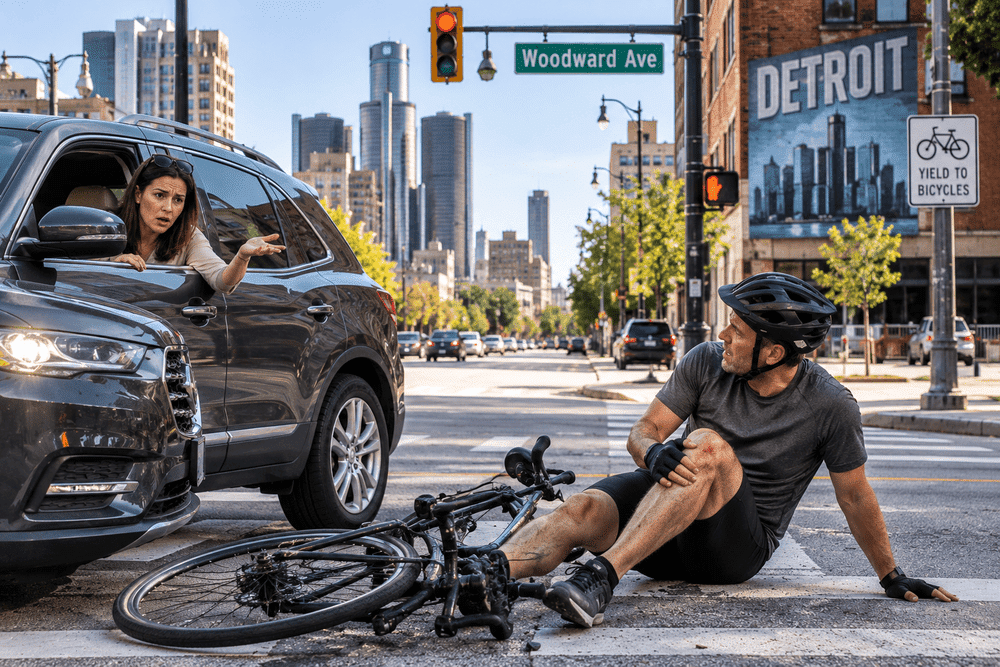
Cyclists have little protection if a car or truck fails to yield at an intersection. While a driver might only face vehicle damage, a cyclist can suffer broken bones, brain injuries, spinal damage, internal injuries, or lasting physical problems. These Detroit accidents often happen when a driver turns across a cyclist’s path, enters an intersection without looking, or sees the bike too late to stop. Figuring out who had the right-of-way is key to an injury claim. We help injured cyclists understand how the crash happened, what Michigan traffic laws required of the driver, and what compensation might be possible.
Michigan Law Gives Cyclists Important Roadway Rights
Michigan law does not treat a bicycle rider as someone who automatically has to get out of the way of motor vehicles. Under MCL 257.657, a person riding a bicycle on a roadway generally has the same rights and is subject to the same duties that apply to the driver of a vehicle, except where bicycle-specific rules apply, or a rule cannot reasonably apply to a bicycle.
This law is important in intersection cases. Cyclists who are following the rules in an intersection have legal rights that drivers must respect. Drivers cannot assume they have priority just because their vehicle is bigger or faster.
Michigan also addresses cyclists at traffic signals. Under MCL 257.612, traffic facing a green signal may proceed, but a vehicle turning right or left must yield to vehicles, pedestrians, and bicyclists lawfully within the intersection or an adjacent crosswalk.
If a driver turns directly across a cyclist’s path when the cyclist has the right-of-way, this traffic violation can be important evidence of negligence in a personal injury case.
Left-Turn Accidents Can Cause Severe Bicycle Injuries
One of the most dangerous intersection scenarios occurs when an approaching motorist turns left across a cyclist’s path. Under MCL 257.650, a driver intending to turn left must yield to approaching traffic that is already within the intersection or so close that it presents an immediate hazard.
A driver might say the bicycle was hard to see or moving faster than expected, but these excuses do not automatically justify failing to yield. We look at the driver’s view, vehicle position, traffic signals, lighting, witness statements, and any video to see if the driver had enough chance to notice the cyclist before turning.
Left-turn crashes can cause very serious injuries. The cyclist might hit the side of the turning car or be thrown onto the road after the impact.
Right-Turn Accidents Can Trap Cyclists In The Driver’s Path
Right-turn crashes are also common at intersections. Sometimes, a driver passes a cyclist and then turns right, cutting across the bike’s path. Other times, the driver and cyclist approach the intersection side by side, and the driver turns without checking if the cyclist is going straight.
Michigan’s traffic-signal statute is particularly important in these cases because MCL 257.612 requires turning drivers to yield to bicyclists lawfully within an intersection or adjacent crosswalk.
We look for traffic camera footage, business surveillance videos, dashcam recordings, eyewitness accounts, and damage to the vehicles and bicycle. This evidence helps us figure out where everyone was and what happened just before the crash.
Cyclists Using Crosswalks May Have Additional Protections
Michigan law also addresses bicycles operated on sidewalks and pedestrian crosswalks. Under MCL 257.660c, a cyclist lawfully operating in a pedestrian crosswalk generally has the rights and responsibilities applicable to a pedestrian using that crosswalk.
Not every crosswalk accident means the driver is automatically at fault. We review the traffic signals, what both the cyclist and driver did, local rules, visibility, and when each person entered the intersection. We examine those details before determining how a claim should be presented.
Serious Injuries Can Lead To A Claim Against The Driver
Cyclists struck by motor vehicles can suffer substantial injuries because there is no passenger compartment, seat belt, or airbag separating the person from the impact.
We frequently evaluate claims involving broken arms and legs, shoulder injuries, hip fractures, facial injuries, concussions, traumatic brain injuries, spinal injuries, road rash, internal injuries, and permanent scarring.
When another driver’s negligence caused the crash, an injured cyclist may be able to pursue damages against that driver. In motor vehicle cases, MCL 500.3135 governs tort liability for non-economic loss and establishes Michigan’s serious-impairment requirements. Whether an injury satisfies those requirements depends on the medical evidence and the effect the injury has had on the person’s ability to lead their normal life.
Michigan No-Fault Benefits May Also Apply To An Injured Cyclist
A cyclist does not necessarily lose access to Michigan No-Fault benefits simply because they were riding a bicycle instead of occupying a car.
Under Michigan’s No-Fault Act, including MCL 500.3115, a person suffering accidental bodily injury while not occupying a motor vehicle may have a claim for Personal Injury Protection benefits through the Michigan Assigned Claims Plan, subject to other applicable priority provisions and the specific facts of the claim.
Available PIP benefits can be particularly important when a bicycle accident results in hospitalization, surgery, rehabilitation, lost income, or assistance with daily activities. We examine every potentially applicable insurance source because the PIP claim and the negligence claim against the responsible motorist involve different categories of compensation.
Comparative Fault Can Affect A Michigan Bicycle Accident Claim
Drivers and insurance companies sometimes argue that the cyclist also contributed to the accident. They may claim the cyclist entered the intersection against a signal, was traveling in an unexpected position, failed to use required equipment, or otherwise contributed to the collision.
Under MCL 600.2959, Michigan applies comparative fault. A person’s damages can be reduced according to their percentage of responsibility. If the injured person’s fault exceeds the combined fault of the other responsible parties, non-economic damages are barred, although economic damages may still be reduced according to the injured person’s percentage of fault.
That makes evidence especially important. We do not assume the insurance company’s version of the crash is correct. We investigate what each person was doing and whether the driver had enough time and distance to recognize the cyclist and yield.
Evidence Can Determine Who Failed To Yield
Intersection cases can become disputes over seconds. The motorist may claim the cyclist appeared suddenly, while the cyclist may remember having a clear signal and being fully visible before entering the intersection.
We may obtain photographs, police reports, witness statements, traffic-camera footage, nearby surveillance recordings, vehicle event information when available, medical records, and physical evidence from the bicycle and vehicle.
The location of the damage can also help reconstruct what happened. Preserving this evidence quickly can prevent an insurer from controlling the factual narrative before a complete investigation has been performed.
FAQs About Drivers Failing To Yield To Cyclists At Intersections
Does A Cyclist Have The Same Right-Of-Way As A Car In Michigan?
A cyclist riding on the roadway generally has the rights and duties applicable to drivers under MCL 257.657, subject to bicycle-specific provisions. That means motorists must respect a cyclist’s lawful right-of-way at intersections. For example, a driver turning across the cyclist’s path cannot disregard the bicycle merely because it is smaller or moving differently from surrounding motor vehicles. We examine traffic signals, signs, lane positions, and each party’s movements when determining who had the right-of-way.
What Happens If A Driver Turns Left In Front Of A Cyclist?
A left-turning driver must comply with Michigan’s right-of-way requirements, including MCL 257.650. When a cyclist is approaching closely enough to constitute an immediate hazard, the turning driver may be required to wait. If the driver turns directly into the cyclist’s path and causes a crash, the failure to yield may support an injury claim. We may use witness testimony, video, vehicle damage, and scene evidence to establish how much time the driver had to observe the approaching bicycle.
Can A Cyclist Recover No-Fault Benefits After Being Hit By A Car?
Depending on the facts, yes. A cyclist injured in an accident involving a motor vehicle may qualify for Michigan PIP benefits even though the cyclist was not occupying a motor vehicle. The applicable insurer and priority rules must be determined carefully. PIP benefits can help pay qualifying accident-related expenses while a separate liability claim may address damages recoverable from the negligent driver.
What If The Driver Says The Cyclist Was Partially At Fault?
Partial fault does not automatically eliminate a Michigan personal injury claim. MCL 600.2959 requires damages to be adjusted according to comparative fault. The percentage assigned to the cyclist can therefore significantly affect compensation. We investigate these allegations carefully because an insurance company may attempt to place more responsibility on the cyclist than the evidence supports.
What Compensation Can An Injured Cyclist Recover?
The available compensation depends on the injuries, insurance coverage, liability, and how the crash has affected the cyclist’s life. A claim may involve medical expenses, qualifying wage loss and other PIP benefits, excess economic losses when legally recoverable, and non-economic damages such as pain and suffering when Michigan’s statutory requirements are satisfied. Severe fractures, brain injuries, spinal injuries, permanent scarring, and long-term mobility problems can substantially increase the financial consequences of a bicycle collision.
Talk To Ravid & Associates, P.C. About A Michigan Bicycle Accident Claim
When a motorist fails to yield at an intersection, the cyclist often suffers the greatest physical consequences. We investigate how the collision occurred, determine which traffic laws applied, identify available insurance coverage, and document the full effect of our client’s injuries. We also address comparative-fault allegations and insurance-company attempts to minimize what happened.
If you were struck by a car while riding a bicycle through an intersection, call our Detroit bicycle accident attorneys at Ravid & Associates, P.C. today at (248) 948-9696 to receive your free consultation. We represent injured cyclists and other accident victims in Detroit and throughout the entire state of Michigan from our office location in Southfield, Michigan. We can review the circumstances of the crash, explain the insurance and liability issues involved, and pursue the compensation available under Michigan law.

