
Distracted Driving Accidents Caused By Cell Phone Use
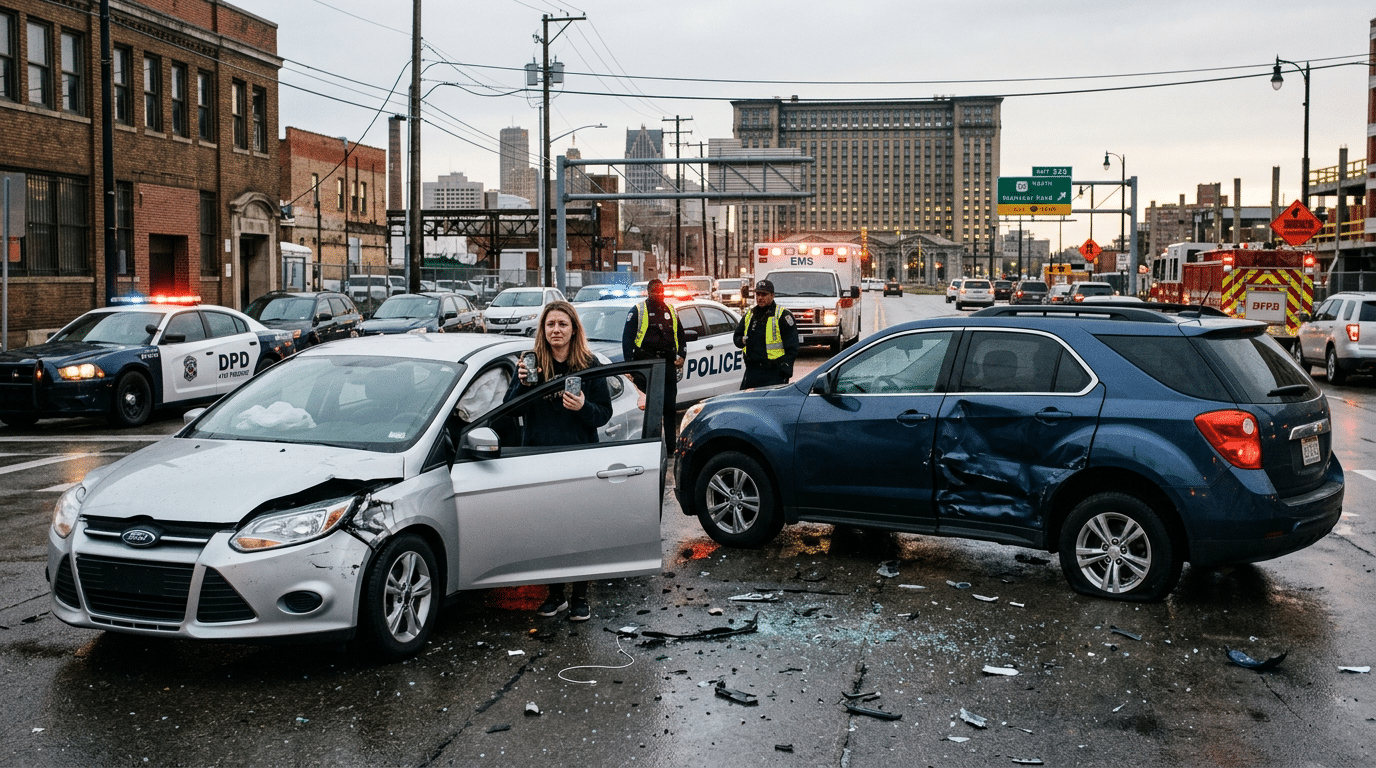
When a driver looks at a cell phone, even for a few seconds, they can miss important changes in traffic, pedestrians, or signals ahead. Sending a text, checking social media, entering navigation, or making a call might seem quick, but those moments can cause rear-end crashes, intersection accidents, or serious highway collisions. In our investigations of Michigan car accidents, we always look at whether cell phone distraction played a role, especially if a driver did not react in time. These accidents often cause serious injuries because the distracted driver may not brake or try to avoid the crash. Michigan law also sets clear rules about using mobile devices while driving.
If a distracted driver causes an accident in Detroit with injuries, we do more than just listen to their version of events. We check phone records, talk to witnesses, review vehicle data, look at photos, and examine any available video. Proving that a driver was using a phone can be key to showing negligence and getting compensation under Michigan law.
Michigan Law Prohibits Most Handheld Cell Phone Use While Driving
Michigan’s distracted-driving statute, MCL 257.602b, generally prohibits a driver from holding or using a mobile electronic device while operating a motor vehicle. The statute covers much more than texting. Prohibited use can include making or receiving telephone calls, reading or sending text messages, watching or recording video, and accessing social media.
The law defines operating broadly enough to include times when a vehicle is temporarily stationary because of traffic, a traffic signal, a stop sign, or road conditions. A vehicle that is lawfully parked is treated differently.
Michigan law permits certain uses, including qualifying emergency communications and permitted hands-free or voice-operated functions. A driver may also use navigation under conditions established by the statute without manually entering information while driving.
A driver who violates MCL 257.602b commits a civil infraction. If that driver is at fault for an accident while violating the statute, the law provides for increased civil fines. More importantly for an injured person, evidence of illegal phone use may become relevant to determining how and why the crash happened.
How Cell Phone Distraction Causes Serious Car Accidents
Cell phones can distract drivers in many ways at once. A driver might take their eyes off the road, take a hand off the wheel, and focus on a conversation or message instead of paying attention to traffic.
We often look into phone distraction in crashes where a driver rear-ends stopped cars, drifts into another lane, runs a red light, fails to yield, misses seeing a pedestrian, or does not respond to a hazard on the road.
These types of accidents can lead to serious injuries like brain or spinal injuries, broken bones, torn ligaments, internal damage, and lasting physical problems. On highways, if a driver does not brake before a crash, the injuries can be even worse because the car does not slow down before impact.
Proving The Driver Was Using A Cell Phone
A distracted driver might not say they were looking at their phone before a crash. That’s why we gather different types of evidence when building a case.
Cell phone records can show if there was activity around the time of the crash. Witnesses might have seen the driver holding or looking at a device. Footage from dash cams, traffic cameras, security cameras, and photos from the scene can also help prove what happened. In litigation, additional electronic evidence may sometimes be obtained through formal discovery.
Timing matters. Some evidence can be overwritten, deleted, or become difficult to obtain if an investigation is delayed.
Michigan No-Fault Benefits After A Distracted Driving Accident
Michigan’s No-Fault Insurance Act may provide Personal Injury Protection benefits after a motor vehicle accident regardless of which driver caused the crash.
Under MCL 500.3107, qualifying PIP benefits can include reasonable charges for reasonably necessary accident-related care, recovery, and rehabilitation. The statute also provides qualifying work-loss benefits for income an injured person would have earned during the first three years following the accident, subject to statutory limits and other requirements. Replacement-service benefits may also be available.
These benefits are separate from a liability claim against a distracted driver. The particular benefits available depend on the injured person’s circumstances, insurance coverage, and Michigan’s no-fault rules.
When We Can Pursue The Distracted Driver For Pain And Suffering
Michigan limits when a person injured in a motor vehicle accident may recover noneconomic damages from an at-fault driver.
Under MCL 500.3135, an injured person may pursue noneconomic damages when the accident results in death, permanent serious disfigurement, or a serious impairment of body function as defined by Michigan law.
For many clients, the critical issue is not simply the medical diagnosis. We also examine how the injury has affected important body functions and the client’s ability to live a normal life.
A fracture, spinal injury, significant knee or shoulder injury, traumatic brain injury, or other serious condition may substantially affect work, mobility, recreation, household responsibilities, and family activities. Medical records and evidence documenting these real-life effects can become central to the claim.
Comparative Fault Can Affect Compensation
Distracted-driving defendants and their insurance companies may attempt to shift part of the blame to the injured person.
Under MCL 600.2959, damages in Michigan personal injury cases are reduced according to the injured person’s percentage of comparative fault. If the injured person’s percentage of fault is greater than the combined fault of the other persons involved, noneconomic damages are not awarded, although economic damages are reduced by the injured person’s percentage of fault.
For that reason, we do not assume that a citation issued to one driver resolves every liability issue. We examine the entire collision and preserve evidence that can establish what each driver was doing immediately before impact.
Why Cell Phone Evidence Can Change A Michigan Injury Case
A distracted-driving claim becomes much stronger when we can move beyond suspicion and establish what the driver was actually doing.
A driver may initially say that traffic stopped suddenly or another vehicle appeared unexpectedly. Electronic records, video footage, witnesses, and crash data may show that the driver simply was not watching the roadway.
That distinction matters. We use evidence of distraction to establish negligence, respond to attempts to shift blame, and demonstrate why the collision occurred. When serious injuries are involved, proving those facts can materially affect settlement negotiations and trial preparation.
Frequently Asked Questions About Distracted Driving Accidents Caused By Cell Phone Use
Can We Obtain The Other Driver’s Cell Phone Records After A Michigan Accident?
Potentially, yes. We may be able to obtain relevant records when cell phone use is reasonably connected to the circumstances of the collision. The appropriate method depends on whether the case is in litigation and what information is being sought. Phone records do not always reveal everything a person was doing on a device, so we may also examine witness testimony, video, application information, and other electronic evidence. When distraction is suspected, preserving evidence quickly can be important.
Does A Cell Phone Ticket Automatically Prove The Driver Is Liable For My Injuries?
Not necessarily. A violation of Michigan’s distracted-driving law can be important evidence, but an injury claim still requires us to establish the relationship between the driver’s conduct and the collision. We examine whether the phone use contributed to the driver’s failure to stop, yield, maintain a lane, see a pedestrian, or otherwise operate the vehicle safely. We also evaluate any comparative-fault arguments raised by the defense.
Can We Bring A Claim If The Driver Was Using GPS?
The answer depends on how the navigation system was being used. MCL 257.602b contains exceptions for certain navigation and hands-free uses. Entering information manually while operating the vehicle can raise different issues from viewing permitted navigation information. Even conduct that does not result in a citation may still be relevant if a driver’s lack of reasonable attention caused the crash.
What Compensation May Be Available After A Distracted Driving Crash?
Depending on the facts, we may pursue Michigan no-fault benefits for qualifying medical treatment, rehabilitation, work loss, and replacement services. If the injuries satisfy Michigan’s tort threshold, we may also pursue the at-fault driver for noneconomic damages such as pain and suffering, along with recoverable economic losses not covered through no-fault benefits. Serious or permanent injuries may also require evaluation of future treatment, reduced earning ability, and long-term physical limitations.
What Should We Do If We Believe The Driver Was Texting Before The Crash?
We recommend preserving as much information as possible. Details from witnesses, statements made at the scene, photographs, police reports, vehicle information, and nearby surveillance cameras may become significant. We can also evaluate whether additional electronic evidence should be preserved or sought. Waiting can make some forms of evidence harder to recover.
Talk To Ravid & Associates, P.C. About A Michigan Distracted Driving Injury Claim
When a driver chooses a cell phone over watching the road, the consequences can follow an injured person for months, years, or permanently. We investigate distracted-driving crashes carefully because proving what happened in the seconds before impact may substantially affect the outcome of the case. We work to preserve evidence, establish liability, document the full extent of our client’s injuries, and pursue the compensation available under Michigan law.
If you were injured by a distracted driver in Detroit or anywhere in Michigan, contact our Detroit car accident attorneys at Ravid & Associates, P.C. today by calling (248) 948-9696 to receive your free consultation. We represent injured people in Detroit and throughout the entire state of Michigan from our office location in Southfield, Michigan. We can review the circumstances of the crash, determine whether cell phone use may have contributed to it, and explain the legal options available for pursuing compensation.

