
Detroit Car Accident Claims Involving Serious Impairment of Body Function
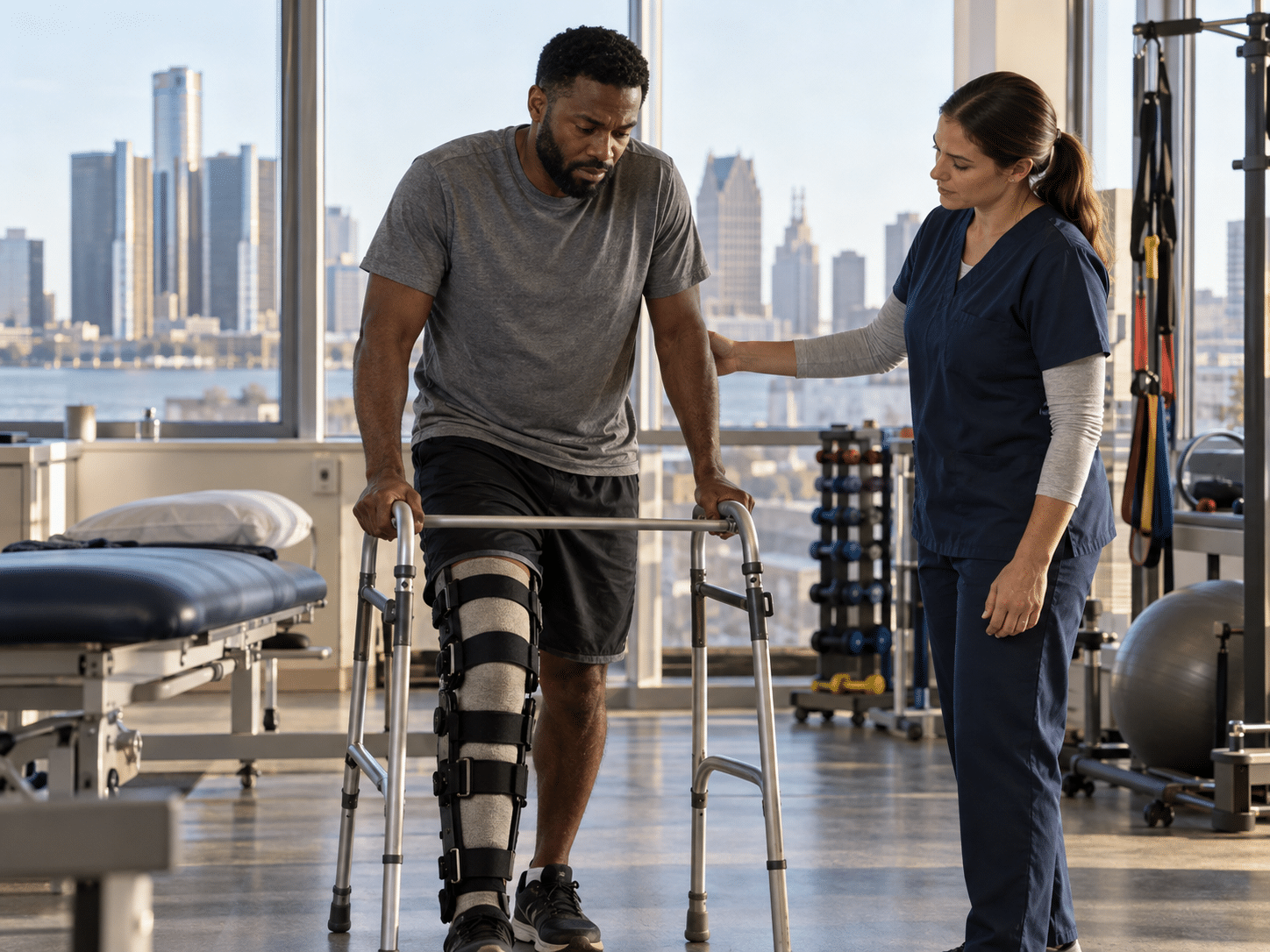
A serious car accident can leave someone unable to work, drive, exercise, care for family, or do everyday activities they once took for granted. But under Michigan law, being injured does not automatically mean you can recover pain and suffering damages from the at-fault driver. Michigan’s no-fault system sets a legal threshold for certain auto injury lawsuits. One key way to meet this threshold is by proving a “serious impairment of body function.” We regularly look at how an accident changed our client’s physical abilities and daily life, since these facts are often central to whether a claim can move forward against the negligent driver.
For accident victims in Detroit, it’s especially important to understand this requirement if an insurer claims the injury is not serious enough for a lawsuit. You do not have to be permanently disabled, in a wheelchair, or completely unable to work to meet Michigan’s legal standard. Instead, the focus is on the actual impairment, which body function is affected, and how your ability to live normally changed after the crash.
What Does Serious Impairment Of Body Function Mean In Michigan?
Michigan’s automobile no-fault law provides that a person may remain subject to tort liability for noneconomic losses arising from the ownership, maintenance, or use of a motor vehicle when the injured person suffers death, permanent serious disfigurement, or serious impairment of body function. This rule appears in MCL 500.3135(1).
Under MCL 500.3135, a serious impairment of body function generally requires an objectively manifested impairment of an important body function that affects the injured person’s general ability to lead their normal life.
We look beyond just the diagnosis. Two people can have similar injuries but face very different challenges. For example, a back injury might stop one person from doing a physically demanding job, while someone else with the same injury might not see much change in their daily life.
What Is An Objectively Manifested Impairment?
An injured person generally needs more than complaints of pain alone. The impairment must have an objective basis that can be observed or identified through symptoms, conditions, medical findings, or other evidence.
Medical records are often very important. MRI and CT scans, orthopedic findings, neurological exams, range-of-motion limits, surgical records, physical therapy notes, doctor-imposed restrictions, and other clinical evidence can help show the impairment.
We work to connect those medical findings with the functional problems our client experiences. The issue is not merely whether an MRI shows a herniated disc, for example. We also want to establish what that condition prevents or restricts the injured person from doing.
What Counts As An Important Body Function?
Michigan law considers whether the affected body function has value, significance, or consequence to the injured individual. Walking, lifting, bending, using an arm or hand, maintaining balance, thinking clearly, seeing, sleeping normally, and performing physical work are examples of functions that may become important in a particular case.
Serious injuries commonly involved in these claims include spinal injuries, fractures, traumatic brain injuries, torn ligaments, nerve damage, shoulder injuries, knee injuries, hip injuries, and injuries requiring surgery.
We do not assume that a diagnosis automatically satisfies the legal threshold. We examine how the injury interferes with a function that mattered to our client’s life before the collision.
How Does The Injury Have To Affect Your Normal Life?
One of the most important parts of a serious impairment claim is comparing life before the crash with life afterward. Michigan law does not require a person to lose every ability to participate in normal activities. An impairment may satisfy the standard when it influences some of the person’s capacity to live in their normal manner.
We may examine whether our client can still perform the same job, drive independently, care for children, handle household responsibilities, exercise, participate in hobbies, attend social activities, travel, or perform ordinary daily tasks.
Duration also matters factually, but an injury does not necessarily have to be permanent before it can qualify. A severe impairment lasting for a meaningful period can substantially alter someone’s life even if improvement eventually occurs.
Serious Impairment And Pain And Suffering Compensation
Michigan’s no-fault system separates certain first-party insurance benefits from claims against negligent drivers. Personal Protection Insurance benefits can address qualifying economic losses without requiring proof that another driver caused the accident.
Pain and suffering damages are different. Under MCL 500.3135, satisfying the statutory injury threshold can allow an injured person to pursue noneconomic damages against an at-fault driver.
These damages may compensate for physical pain, emotional suffering, disability, physical limitations, loss of enjoyment of life, and other consequences that cannot be measured simply by totaling medical bills.
For someone whose accident causes substantial physical restrictions, these losses can become a major part of the claim.
Serious Impairment Does Not Require Total Disability
Insurance companies may sometimes focus on the activities an injured person can still perform. Someone may return to work because bills need to be paid. Another person may continue caring for children despite significant pain. Being able to perform some activities does not necessarily mean there has been no serious impairment.
We focus on the difference between what our client could do before the accident and what they can reasonably do afterward. Returning to work with restrictions, giving up recreational activities, needing assistance around the house, reducing work hours, or performing activities with substantially greater difficulty may all become relevant evidence.
The legal question is highly dependent on the person’s individual circumstances rather than a single mechanical test.
Comparative Fault Can Still Affect A Serious Injury Claim
Meeting the serious impairment threshold does not automatically establish that another driver must pay the entire claim. Liability must still be established.
Michigan applies comparative fault principles. Under MCL 600.2959, damages can be reduced according to an injured person’s percentage of fault. Michigan automobile claims also contain comparative-fault provisions under MCL 500.3135.
For example, allegations that an injured driver was speeding, distracted, or otherwise contributed to the collision may become important. We investigate both the severity of the injury and the underlying cause of the accident because both issues can directly affect compensation.
Evidence That Can Strengthen A Serious Impairment Claim
Medical documentation is important, but a serious impairment case should tell the complete story of how the collision changed the injured person’s life. We may use physician records, diagnostic imaging, therapy records, employment records, testimony from relatives or coworkers, photographs, activity limitations, and documentation showing missed work or abandoned activities.
Consistency matters. When medical records, testimony, employment restrictions, and daily-life evidence all tell the same story, they can provide compelling proof of the effect of an injury.
We also pay close attention to claims involving delayed symptoms or pre-existing medical conditions because insurers frequently use these issues to challenge causation.
Frequently Asked Questions About Serious Impairment Of Body Function Claims
Does A Broken Bone Automatically Count As A Serious Impairment Of Body Function?
Not automatically in every civil automobile claim. We examine the fracture itself, the body function affected, the treatment required, and the impact on the injured person’s normal life. A significant fracture requiring surgery, immobilization, rehabilitation, or extended restrictions may provide strong evidence supporting the threshold. However, Michigan law requires a case-specific analysis rather than deciding the issue solely from the name of the injury.
Do We Have To Prove The Injury Is Permanent?
Not necessarily. Michigan’s serious impairment standard does not simply require permanent disability. The duration of an impairment can be relevant, but we also examine its nature, severity, and actual effect on the person’s normal life. Someone who loses significant physical abilities for months may still have an important claim even if improvement eventually occurs. Permanent limitations can strengthen a damages claim, but permanency is not the only consideration.
Can A Herniated Disc Meet Michigan’s Serious Impairment Threshold?
It can, depending on the evidence. A herniated disc that causes nerve compression, restricted movement, weakness, chronic pain, surgery, injections, work restrictions, or substantial changes in daily activities may support a serious impairment claim. We would examine objective medical findings along with evidence showing how the condition affected the person’s normal life. A diagnosis by itself does not tell the entire story.
Can We Bring A Claim If We Returned To Work After The Accident?
Returning to work does not automatically defeat a serious impairment claim. We look at whether the injured person returned with restrictions, reduced hours, different responsibilities, physical difficulty, lost overtime, or other limitations. We also consider changes outside work. Someone may continue working while losing the ability to exercise, maintain a home, care for family members, participate in hobbies, or perform other activities that were previously important.
Who Decides Whether An Injury Is A Serious Impairment?
Under MCL 500.3135, the issue may be decided by the court as a matter of law when there is no material factual dispute concerning the nature and extent of the injuries relevant to the threshold determination. When material factual disputes exist, the circumstances can require factual resolution. These cases therefore require careful development of both the medical evidence and evidence concerning the injured person’s life before and after the collision.
What If An Insurance Company Says Our Injuries Are Not Serious Enough?
An insurer’s position is not the final legal determination. Insurance companies may challenge the diagnosis, causation, treatment, restrictions, or effect the injury has had on daily life. We can examine the medical records, accident evidence, employment history, functional limitations, and other evidence to determine whether the requirements of MCL 500.3135 may be satisfied. The strength of the claim should be based on the evidence and applicable Michigan law rather than solely on an insurance adjuster’s assessment.
Talk To Ravid & Associates, P.C. About A Serious Michigan Car Accident Injury
When a Detroit car accident causes injuries that interfere with work, mobility, family responsibilities, independence, or other important parts of normal life, we believe the full effect of those injuries needs to be documented and understood. Serious impairment claims can become heavily contested because the insurance company may attack both the medical evidence and the degree to which the accident changed the injured person’s life.
At Ravid & Associates, P.C., we investigate the collision, review the medical evidence, document functional limitations, and pursue compensation available under Michigan law. We understand that a serious injury is measured by more than medical bills. We work to show what the accident actually took away from our client and how those losses continue to affect everyday life.
If you suffered a serious injury in a Detroit or Michigan car accident and believe the crash has affected your ability to live your normal life, contact our Detroit motor vehicle accident attorneys at Ravid & Associates, P.C. today by calling (248) 948-9696 to receive your free consultation. We represent injured clients in Detroit and throughout the entire state of Michigan from our office locations in Southfield, Michigan. We can review the accident, evaluate whether your injuries may satisfy Michigan’s serious impairment requirements, and discuss the compensation that may be available under Michigan law.

