
Detroit Backover Accidents: When Drivers Strike Pedestrians Behind Their Vehicles
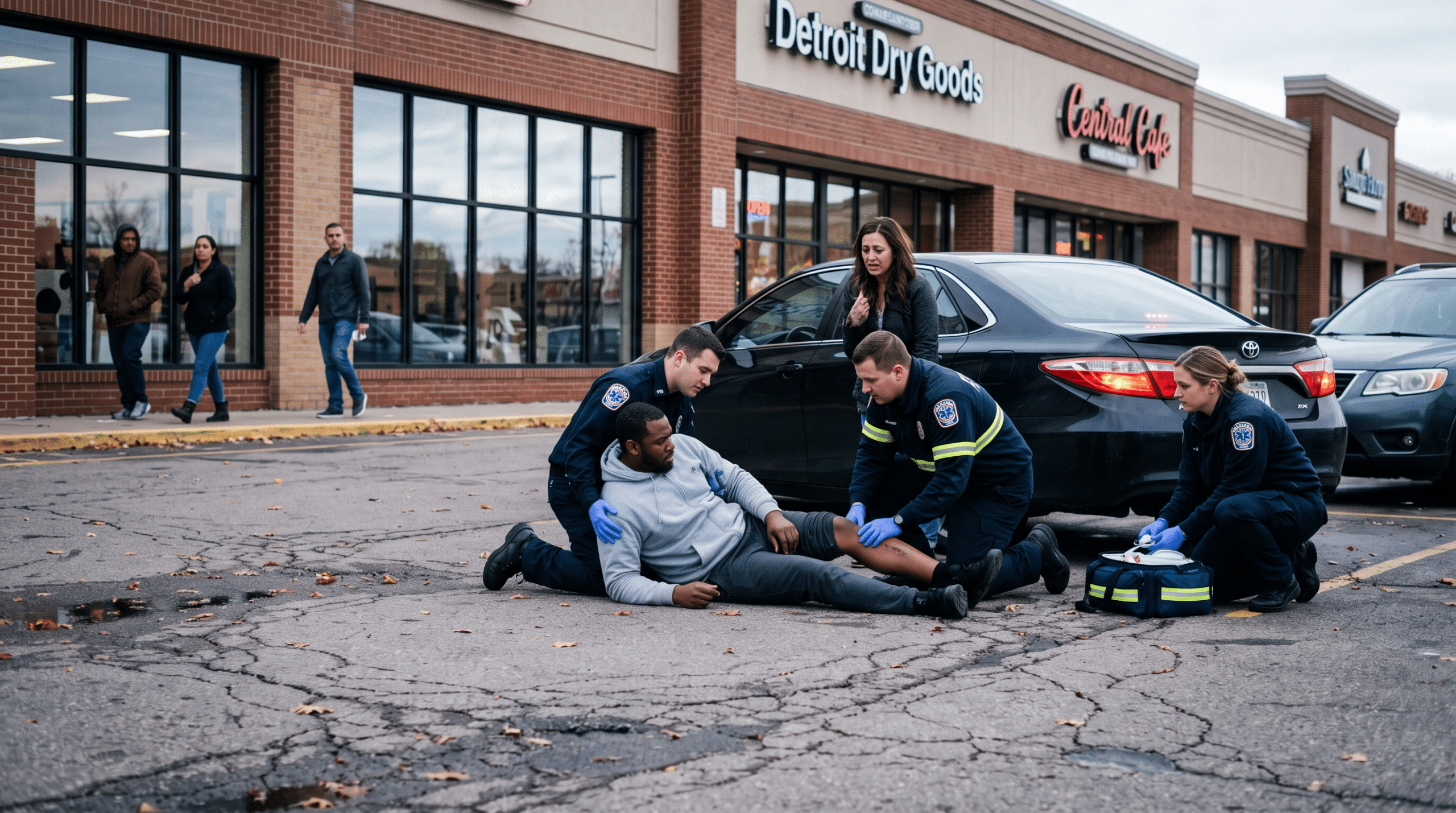
Backover accidents happen when a driver reverses into a pedestrian who is standing, walking, working, or playing behind the vehicle. Although these collisions usually take place at low speeds, the injuries can still be serious since the pedestrian has no protection against the weight and force of the vehicle. A victim can be knocked down to the ground, crushed underneath the vehicle, or hit a second time if the driver keeps reversing. People such as children, older adults, those who use wheelchairs, and individuals of short stature are at greater risk because drivers may not be able to see them in the rear window or in the mirrors. We provide legal representation to pedestrians who have been injured and to their families who are seeking answers following preventable backing collisions in Detroit and all of Michigan.
While a backup camera may assist a driver in seeing a person behind their vehicle, it does not take the place of the obligation to look carefully before moving. When assessing a backover injury claim, we look at the driver’s actions, the physical environment, the available video footage, the vehicle’s technology, the statements of any witnesses, and the insurance coverage. Since evidence such as that found in parking lots, businesses, apartment complexes, and nearby security systems can be deleted within a few days, these cases need to be dealt with promptly.
Where Backover Pedestrian Accidents Commonly Occur
Collisions from rear-end movements happen a lot in driveways, parking lots, parking garages, loading areas, apartment complexes, shopping centers, schools, and workplaces. When a driver is reversing, they might concentrate on looking for traffic instead of checking for pedestrians who are behind the vehicle. Although large sport utility vehicles, pickup trucks, vans, and commercial vehicles can have quite considerable areas that are not visible from the back, drivers of smaller vehicles should still take the same amount of care.
Parking lots present their own kind of risk since both vehicles and pedestrians are in the same limited area. Someone walking behind a parked car might not get any notice before the vehicle starts to move. The sound of an engine can be hard to hear in a crowded parking lot, and electric or hybrid vehicles can move silently. Bad lighting, heavily crowded parking aisles, snowbanks, shopping carts, and poorly designed paths for pedestrians can make the situation even more dangerous.
A Driver’s Duty Before Backing Up
Most personal injury claims in Michigan are concerned with whether the driver had acted with reasonable care in the situation in question. A careful driver ought to check the mirrors, look through the rear window, use any available backup camera, and make sure that the way is clear before reversing. While the vehicle is in motion the driver should keep an eye out for pedestrians and not depend on just one look taken before putting the vehicle in reverse.
A driver could be considered negligent if he or she backs up without carrying out a sufficient observation. Appropriate evidence in this case could be that the driver was distracted, was moving at an excessive speed, was using a phone, had relied completely on technology, or had ignored a warning given by a passenger. Furthermore, a breach of the Michigan Vehicle Code might support the liability assessment, according to the location and circumstances of the collision.
The general rules concerning the operation of vehicles mandate that drivers should go at a careful and prudent speed enabling them to come to a stop within a distance which is certain and clear, as stated in MCL 257.627. If a driver hits a pedestrian and either knows that an accident has taken place or has reason to believe that one has, then MCL 257.619 places upon them duties such as stopping, staying at the scene, giving their identifying details, and offering reasonable assistance if needed.
Proving Who Was Responsible For The Backover Accident
Liability isn’t always settled by what the driver says or the first police report; we look into how long the pedestrian was behind the vehicle, whether the driver’s view was blocked, whether the brake lights or reversing lights were working, and whether the vehicle was equipped with functional safety systems. We might also consider whether the driver carried out a reasonable visual check before moving.
Video can be particularly important; surveillance cameras can be found on storefronts, houses, parking garages, apartment buildings, delivery vehicles, buses, or on nearby traffic-control structures. Furthermore, modern vehicles may also store electronic data which shows speed, braking, gear selection, and other events surrounding the impact.
Witness statements, photographs, measurements, medical records, and vehicle inspections can help establish what occurred. When a commercial driver causes the crash, employment records, company training materials, safety policies, and prior driving history may become relevant. An employer may share responsibility when the driver was acting within the scope of employment.
Michigan No-Fault Benefits For Injured Pedestrians
A pedestrian injured by a motor vehicle may qualify for Michigan no-fault Personal Protection Insurance benefits. These benefits can be available even though the injured person was not occupying a vehicle and did not cause the accident. The applicable order of priority and source of benefits depend on the pedestrian’s household insurance circumstances and the facts of the collision.
The No-Fault Insurance Act in Michigan, which comprises MCL 500.3101, is the one that regulates claims for benefits resulting from an accident. The PIP benefits available will be able to cover allowable medical expenses, a part of the lost income, replacement services, and certain care requirements. In the case of an injured pedestrian who has no no-fault insurance available to him, he may have to obtain his benefits through the Michigan Assigned Claims Plan as provided for in MCL 500.3115
The deadlines governing no-fault benefits differ from the deadline for filing a negligence lawsuit. Under MCL 500.3145, an action for unpaid PIP benefits is subject to strict timing requirements. We advise injured pedestrians not to wait until medical bills accumulate or an insurer begins denying treatment before examining the applicable deadlines.
Third-Party Claims For Pain And Suffering
No-fault benefits do not provide every category of compensation available after a serious pedestrian accident. A victim may also have a third-party liability claim against the negligent driver for pain and suffering, disability, disfigurement, and other losses not paid through PIP coverage.
Under MCL 500.3135, a person injured through the ownership, maintenance, or use of a motor vehicle may pursue noneconomic damages when the injury results in death, permanent serious disfigurement, or a serious impairment of body function. A backover accident may cause crushed bones, pelvic fractures, traumatic brain injuries, spinal damage, internal organ injuries, degloving injuries, amputation, or permanent scarring. These conditions can substantially affect the victim’s ability to walk, work, care for family members, sleep normally, or participate in ordinary activities.
The consequences of the injury matter as much as the diagnostic label. We document how the trauma changed the person’s daily life, physical abilities, employment, independence, and emotional well-being. Medical testimony and consistent treatment records often become central to proving the nature and duration of those losses.
Comparative Fault In A Pedestrian Backover Case
Insurance companies may argue that the pedestrian walked behind a vehicle that was already moving, ignored visible reverse lights, or failed to watch for traffic. Michigan’s comparative-fault rule does not necessarily eliminate a claim merely because the pedestrian is accused of sharing some responsibility.
Under MCL 600.2959, recoverable damages are reduced according to the injured person’s percentage of fault. If the pedestrian is found more than 50 percent at fault, noneconomic damages are barred. Economic damages may still be reduced by the assigned percentage of responsibility.
We do not accept an insurer’s fault assessment without examining the evidence. Drivers must anticipate that pedestrians will be present in parking lots, driveways, business entrances, and other shared areas. A pedestrian’s mere presence behind a vehicle does not establish that the pedestrian caused the collision.
When A Property Owner Or Business May Share Responsibility
Some backover claims involve more than driver negligence. A business, property owner, construction contractor, or parking-lot operator may have contributed to the danger by creating blocked sightlines, inadequate lighting, missing signs, unsafe loading practices, or poorly marked pedestrian routes.
Michigan premises-liability principles may apply when a dangerous property condition contributes to the accident. Proving such a claim requires evidence that the responsible party owed a duty, failed to address an unreasonable risk, and contributed to the resulting injury. These issues are highly fact-specific, particularly after changes in Michigan premises-liability law concerning open and obvious hazards.
We examine every potentially responsible party rather than assuming that the driver is the only available source of compensation. This analysis can be important when injuries are catastrophic or the driver has limited insurance coverage.
Deadlines For Filing A Michigan Backover Injury Claim
Michigan generally provides three years from the date of injury to file an action seeking damages for personal injury under MCL 600.5805. Shorter deadlines or special notice rules can apply when a governmental agency, public property, or public employee is involved.
A three-year limitations period should not be treated as permission to delay. Video may be overwritten, vehicles may be repaired, physical conditions may change, and witnesses may become difficult to locate. Early investigation gives us a better opportunity to preserve evidence and identify all applicable insurance policies.
Ravid & Associates Represents Victims Of Michigan Backover Accidents
A backover collision can leave a pedestrian with permanent physical limitations, mounting medical bills, and uncertainty about future employment and care. We investigate how the driver failed to identify the pedestrian, preserve available video and vehicle evidence, and determine whether a property owner, employer, or other party shares responsibility. Ravid & Associates, P.C. represents injured pedestrians and families seeking accountability after serious motor vehicle accidents.
If a driver backed into you or a family member, call our Detroit backover accident lawyers at Ravid & Associates, P.C. today by calling (248) 948-9696 to receive your free consultation. We represent clients in Detroit and throughout the entire state of Michigan from our office locations in Southfield, Michigan. We can review the accident, explain the applicable insurance coverage, and pursue the compensation available under Michigan law.

