
Compensation For Broken Bones And Orthopedic Injuries After A Detroit Car Accident
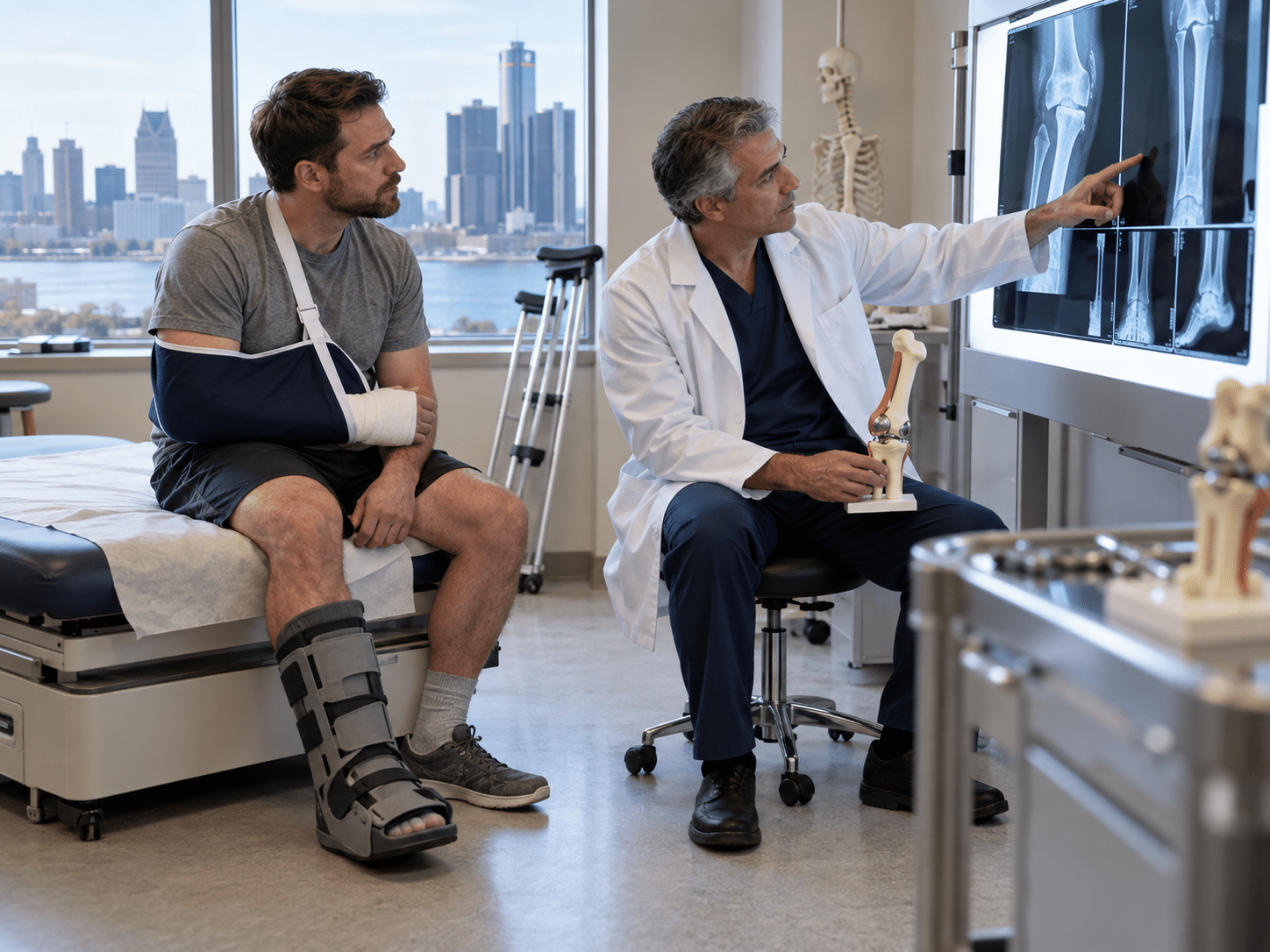
Broken bones and serious orthopedic injuries can quickly change your life, leading to months of medical care, physical therapy, lost wages, and worries about the future. A car accident in Detroit can break an arm, leg, hip, pelvis, wrist, ankle, shoulder, or other bone in an instant. Some fractures heal with a cast and rest, but others need surgery, hardware, joint reconstruction, or long rehabilitation. Even after healing, you might still have pain, stiffness, weakness, arthritis, or limited movement. If another driver caused the crash, we can help you seek insurance benefits and damages under Michigan law and make sure the full impact of your injury is documented.
Why Broken Bones Can Lead To Significant Injury Claims
A fracture is a clear injury that doctors can usually confirm with X-rays, CT scans, MRIs, or surgical records. But not every broken bone claim is worth the same amount. We carefully consider where the fracture happened, if the bone was out of place, if surgery was needed, how long you were unable to work, and whether the injury caused lasting problems.
A simple wrist fracture often heals differently than a shattered ankle, fractured pelvis, or broken femur. Compound fractures can bring risks like infection, nerve damage, scarring, and more surgeries. If you have plates, screws, rods, or pins, you might need more procedures in the future to remove or replace them.
These medical differences are important because your compensation should match the real impact of your injury, not just the fact that a bone was broken.
Common Orthopedic Injuries After Detroit Car Accidents
Motor vehicle collisions can place tremendous force on the human body. We commonly see fractures involving the wrists and arms when occupants brace for impact, lower-extremity fractures when knees or legs strike the dashboard, and hip or pelvic fractures in higher-force crashes.
Shoulder injuries can mean fractures, torn rotator cuffs, labral tears, or joint damage. Knee injuries might affect the kneecap, shinbone, thighbone, meniscus, or main ligaments. Even small ankle and foot fractures can make it hard to stand or walk for months.
We also consider how several orthopedic injuries interact. A person with both a fractured wrist and broken ankle may have difficulty using crutches. Multiple fractures can therefore produce limitations greater than the effect of each injury considered separately.
Michigan No-Fault Benefits Can Help Pay Accident-Related Expenses
Michigan’s No-Fault Insurance Act provides Personal Injury Protection benefits for qualifying motor vehicle accident injuries. Under MCL 500.3107, PIP benefits can include allowable expenses for reasonably necessary accident-related care, recovery, and rehabilitation, subject to the applicable No-Fault coverage and statutory rules.
For someone with a serious fracture, those expenses may include emergency treatment, hospitalization, orthopedic consultations, surgery, physical therapy, rehabilitation, medical equipment, and other necessary care. Michigan PIP benefits may also provide qualifying work-loss benefits when the injury prevents the person from working.
We review your insurance coverage closely because Michigan drivers have different levels of PIP medical coverage. Serious orthopedic injuries can lead to high costs, especially if you need surgery or long-term rehab.
When We Can Pursue Pain And Suffering Compensation
PIP benefits are different from a liability claim against the at-fault driver. To pursue noneconomic damages for pain and suffering arising from a Michigan motor vehicle accident, the injury generally must satisfy the threshold established by MCL 500.3135.
Michigan law permits recovery for noneconomic loss when an injured person suffers death, permanent serious disfigurement, or a serious impairment of body function. A serious impairment involves an objectively manifested impairment of an important body function that affects the person’s general ability to lead a normal life.
A major fracture may satisfy this standard when it interferes with walking, working, driving, caring for children, exercising, performing household duties, or participating in normal activities. Surgery, extended immobilization, permanent restrictions, and lasting loss of movement may provide additional evidence of how significantly the injury changed the person’s life.
What Compensation May Be Available For A Broken Bone
When the legal requirements are satisfied, we may pursue compensation for pain and suffering as well as economic losses that are recoverable from the responsible party under Michigan law.
The value of the claim may depend on medical expenses, lost income, future earning limitations, future treatment needs, physical pain, disability, scarring, reduced mobility, and loss of normal activities. If doctors anticipate future arthritis, joint replacement, additional surgery, or permanent restrictions, those issues should be considered before a settlement is accepted.
We do not evaluate an orthopedic case based solely on the initial emergency room bill. The long-term prognosis is often just as important as the initial diagnosis.
Comparative Fault Can Reduce Compensation
Insurance companies may attempt to argue that an injured person contributed to the accident. Under MCL 600.2959, Michigan applies comparative fault principles that can reduce damages according to the injured person’s percentage of responsibility.
If the injured person is found more than 50 percent at fault, Michigan law can bar recovery of noneconomic damages. For that reason, liability evidence can be just as important as medical evidence. We examine photographs, crash reports, witness accounts, vehicle damage, available video, and other evidence when fault is disputed.
Why We Wait To Understand The Full Orthopedic Prognosis
Insurance companies sometimes make settlement offers before an injured person knows whether surgery will be necessary or whether normal function will return. Accepting a settlement too early can be particularly risky in orthopedic cases because complications may not become clear for months.
We want to understand whether the fracture has healed properly, whether there is loss of motion, whether hardware causes continuing problems, and whether future treatment is expected. Once a claim is finally settled, the injured person generally cannot return later simply because the medical condition became worse.
Michigan Deadlines Can Affect Your Right To Recover
Michigan law imposes deadlines on injury claims. Under MCL 600.5805, the general limitations period for an action seeking damages for personal injury is three years from the date of injury, subject to exceptions and other rules that may apply to a particular case.
No-Fault benefit claims also involve separate requirements and time limitations. We encourage injured people to act early rather than waiting until a deadline approaches because valuable evidence may disappear long before the legal filing period expires.
Frequently Asked Questions About Broken Bones And Orthopedic Injuries After Detroit Car Accidents
How Much Is A Broken Bone Car Accident Claim Worth In Michigan?
There is no fixed dollar amount for a broken bone claim. We evaluate the type of fracture, whether surgery was required, the length of rehabilitation, lost wages, permanent limitations, future medical treatment, and how the injury has affected normal daily activities. A fracture that heals completely within several weeks is different from a severe fracture requiring multiple surgeries and leaving permanent loss of motion. Liability and available insurance coverage also affect the amount that may ultimately be recovered.
Does A Broken Bone Automatically Qualify As A Serious Impairment In Michigan?
Not automatically. Under MCL 500.3135, we must consider whether there is an objectively manifested impairment of an important body function that affects the person’s general ability to lead a normal life. Many significant fractures can satisfy this standard because walking, standing, lifting, working, driving, or using an arm may be restricted. We still need evidence showing how the injury actually affected the individual person’s life.
Can We Recover Compensation If Surgery Is Needed Later?
Future medical treatment can be an important part of evaluating the damages caused by an accident. If doctors reasonably anticipate another surgery, hardware removal, joint replacement, therapy, or other future care, we want that medical evidence documented before the case is resolved. A settlement should account for reasonably supported future consequences rather than only the expenses already incurred.
What If The Accident Made An Old Orthopedic Injury Worse?
A prior injury does not automatically prevent a new claim. A collision may aggravate an existing back, knee, shoulder, hip, or other orthopedic condition. We compare medical records from before and after the crash and look for objective evidence showing a change in symptoms, function, diagnosis, or treatment. Insurance companies often focus heavily on pre-existing conditions, so careful medical documentation can become especially important.
Can We Recover Lost Wages While A Fracture Heals?
Michigan No-Fault benefits may provide qualifying work-loss benefits when accident-related injuries prevent a person from working, subject to the statutory limits and requirements. Additional economic damages may also become relevant depending on the circumstances of the claim. We document employment history, income, medical work restrictions, missed time, and any long-term reduction in earning capacity caused by the injury.
Should We Settle Before Physical Therapy Is Finished?
We generally want enough medical information to understand the likely outcome of the injury before evaluating whether a settlement fairly reflects the damages. If treatment is still ongoing, important questions may remain about healing, permanent restrictions, additional surgery, or chronic pain. Once a settlement is final, an injured person usually cannot reopen the claim because the condition later becomes more serious.
Talk To Ravid & Associates, P.C. About A Broken Bone Or Orthopedic Injury Claim
A serious fracture can affect much more than a single bone. It can interrupt employment, limit independence, create months of painful rehabilitation, and leave permanent changes in mobility or strength. We investigate the accident, review the medical evidence, deal with the insurance companies, and pursue compensation based on the full impact of the injury rather than simply the first diagnosis.
If you suffered a broken bone or serious orthopedic injury in a Detroit car accident, contact our Detroit car accident attorneys at Ravid & Associates, P.C. today by calling (248) 948-9696 to receive your free consultation. We represent injured clients in Detroit and throughout the entire state of Michigan from our office location in Southfield, Michigan. We can review what happened, explain the Michigan laws that may apply, and determine the compensation that may be available for your injuries.

