
Ceiling Collapse Injury Claims In Commercial Buildings
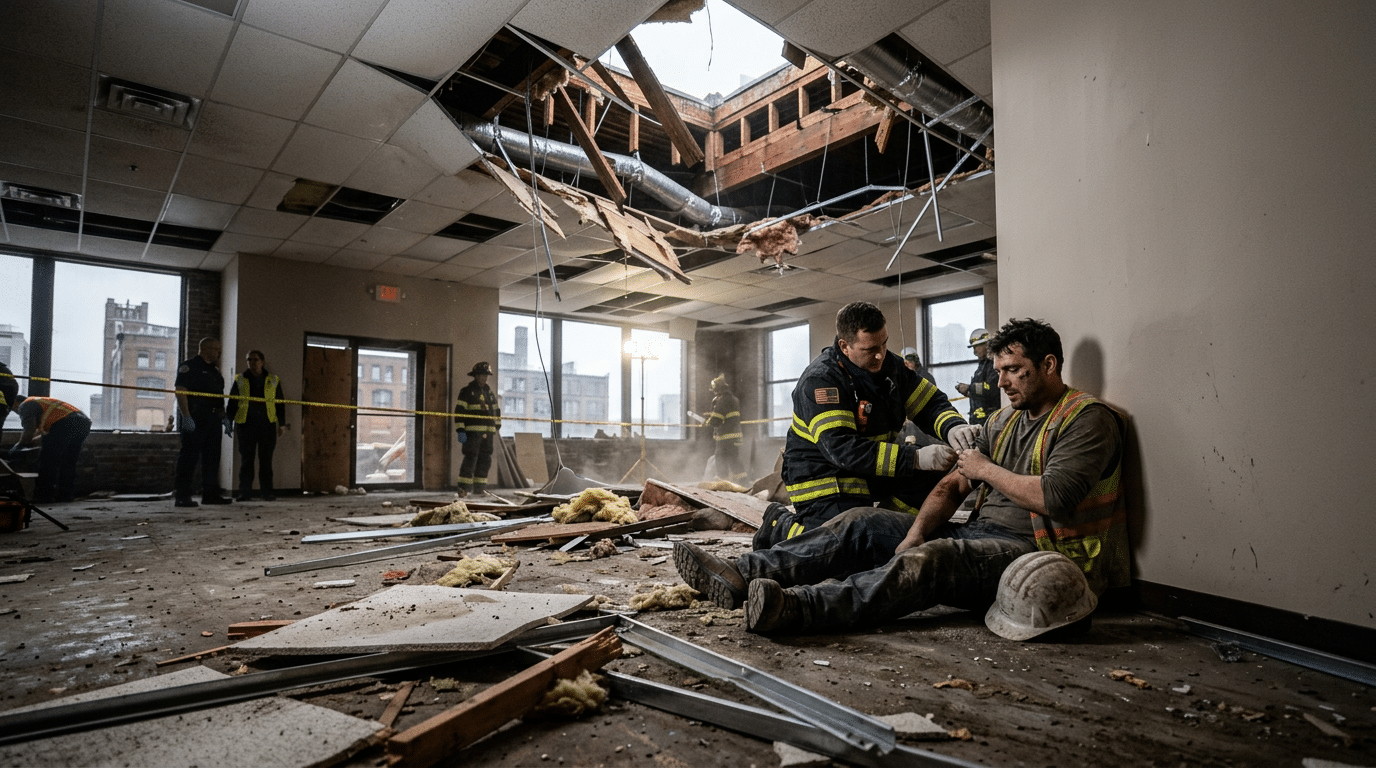
A ceiling collapse in a store, restaurant, office building, hotel, shopping center, or other commercial property in Detroit can happen suddenly and cause serious injuries. Falling drywall, ceiling tiles, plaster, lighting fixtures, insulation, pipes, and other materials can hit customers and visitors with great force. Often, there are warning signs before these incidents, like water leaks, sagging materials, visible cracks, previous repair requests, or ongoing construction.
If a property owner, business operator, management company, contractor, or another responsible party does not fix a dangerous condition, Michigan law may let an injured person seek compensation. We look at these cases closely because responsibility can go beyond just the business where the injury happened.
How Ceiling Collapses Happen In Commercial Buildings
Ceilings can collapse for many reasons. Water leaking from the roof, plumbing, HVAC system, or an upper floor can weaken drywall and ceiling materials until they fall. Poor construction, bad installation, lack of maintenance, too much weight, structural damage, and loose fixtures can also play a role.
Renovations in a commercial building can create extra risks. Contractors might remove supports, disturb plumbing or electrical systems, fail to secure materials properly, or leave parts of the ceiling exposed while customers are still in the building.
We look into what caused the collapse instead of assuming only one party is responsible. Maintenance records, repair bills, inspection reports, employee complaints, security footage, photos, construction contracts, and earlier reports of leaks or damage can help show when the problem started and who knew about it.
Michigan Premises Liability Law And Commercial Property Owners
A claim for a ceiling collapse in a commercial building usually falls under Michigan premises-liability law.
Customers and other people entering commercial property for a business-related purpose are generally considered invitees. Under Michigan law, a possessor of property owes invitees a duty to exercise reasonable care to protect them from unreasonable risks of harm caused by dangerous conditions on the property. The Michigan Supreme Court reaffirmed this standard in Kandil-Elsayed v F & E Oil, Inc., 512 Mich 95 (2023).
We generally must establish that a dangerous condition existed, the defendant knew or reasonably should have known about it, reasonable precautions were not taken, and the condition caused the injuries.
A property owner is not automatically liable merely because a ceiling collapsed. Evidence establishing notice and negligent conduct remains central to the claim.
Proving The Property Owner Knew Or Should Have Known About The Danger
Actual or constructive notice can become one of the most important issues in a Michigan ceiling-collapse case.
Actual notice may exist when employees or management knew about recurring leaks, cracks, sagging ceiling panels, previous falling debris, water stains, or similar problems. Constructive notice can arise when a dangerous condition existed long enough, or was sufficiently apparent, that a reasonably careful property possessor should have discovered it.
We may examine maintenance logs, emails, work orders, inspection records, security video, photographs, employee testimony, and previous customer complaints. A ceiling that leaked and sagged for weeks raises a very different liability question than a completely concealed failure that occurred without warning.
What If The Ceiling Problem Was Visible Before The Collapse?
Michigan premises-liability law changed significantly following Kandil-Elsayed v F & E Oil, Inc. The Michigan Supreme Court held that the open-and-obvious nature of a dangerous condition is no longer part of the initial duty analysis.
Instead, whether a hazard was obvious may be considered when deciding whether the property possessor acted reasonably and whether the injured person bears some comparative fault.
This distinction can matter when a ceiling showed visible water damage, cracking, missing panels, or sagging before it fell. A commercial property owner does not automatically escape responsibility merely because some evidence of danger could be seen.
Contractors And Other Parties May Share Responsibility
Some ceiling-collapse cases involve more than the property owner or business operator. We investigate whether a general contractor, subcontractor, maintenance company, plumber, roofer, engineer, property management company, or another entity contributed to the dangerous condition.
For example, recent roof work could cause water infiltration, plumbing work could create a concealed leak, or a contractor could improperly install ceiling supports.
Claims involving defective or unsafe improvements to real property against certain contractors, licensed architects, or professional engineers may also be affected by the specialized time restrictions contained in MCL 600.5839. That statute can impose a six-year period measured from occupancy, use, or acceptance of an improvement, with additional provisions governing qualifying gross-negligence claims. We therefore investigate potential construction-related claims promptly.
Injuries Caused By Falling Ceiling Materials
A ceiling collapse can cause much more than cuts and bruises. Heavy materials falling from above can cause traumatic brain injuries, concussions, skull fractures, spinal injuries, herniated discs, shoulder injuries, broken arms, facial injuries, and fractures.
A person may also be knocked to the floor, creating a second mechanism of injury. Some symptoms, particularly headaches, neck pain, dizziness, and concussion-related problems, may become more noticeable after the initial incident.
We rely on medical documentation to establish the injuries, treatment requirements, physical limitations, and expected long-term consequences.
Comparative Fault In A Michigan Ceiling Collapse Claim
Defendants and insurance companies may attempt to shift responsibility to the injured person. They may argue that warning signs were visible, an area was restricted, or the injured person ignored a warning.
Under MCL 600.2959, damages in Michigan tort actions are reduced according to the injured person’s percentage of comparative fault. If that person’s percentage of fault exceeds the combined fault of the other responsible parties, noneconomic damages are barred, although economic damages are reduced according to the assigned percentage of fault.
We therefore take comparative-fault allegations seriously and look for objective evidence showing what warnings actually existed and whether a reasonable visitor would have understood that a ceiling-collapse danger was present.
Compensation After A Commercial Building Ceiling Collapse
A serious premises-liability claim may include compensation for medical expenses, lost earnings, reduced earning capacity, pain and suffering, disability, scarring, and future medical treatment when supported by the evidence.
A severe head, neck, back, or orthopedic injury can affect a person’s ability to work and perform everyday activities for months or permanently. We evaluate both current losses and reasonably anticipated future consequences before assessing the value of a claim.
The Deadline For Filing A Michigan Ceiling Collapse Injury Lawsuit
Michigan generally provides a three-year limitations period for actions seeking damages for personal injury under MCL 600.5805. Certain defendants, circumstances, or construction-related claims can involve different deadlines or additional restrictions.
Waiting also creates practical problems even when the filing deadline remains months or years away. Damaged ceiling materials may be discarded, repairs may erase evidence, surveillance footage can be overwritten, and witnesses become harder to locate.
We prefer to investigate these incidents before critical evidence disappears.
Frequently Asked Questions About Ceiling Collapse Injury Claims In Commercial Buildings
Can We Bring A Claim If A Store Ceiling Falls On Us?
A claim may be available when a dangerous ceiling condition causes an injury and the evidence establishes that the property possessor breached the duty of reasonable care owed under Michigan premises-liability law. We investigate whether the store knew or should have known about leaks, cracks, sagging materials, defective fixtures, or another condition associated with the collapse. Maintenance records, photographs, employee testimony, surveillance footage, and prior complaints can become particularly important.
Who Can Be Liable For A Ceiling Collapse At A Commercial Property?
We may identify several potentially responsible parties. Depending on the circumstances, those parties could include the building owner, tenant operating the business, property management company, maintenance company, contractor, roofer, plumber, subcontractor, architect, or engineer. Responsibility depends on who possessed or controlled the property, who created the dangerous condition, and who had responsibility for inspection or repairs.
What If There Was A Water Stain Or Crack In The Ceiling Before It Fell?
Visible evidence does not automatically defeat a Michigan premises-liability claim. Following Kandil-Elsayed v F & E Oil, Inc., whether a dangerous condition was open and obvious generally relates to whether reasonable care was exercised and comparative fault rather than eliminating the property possessor’s duty at the outset. We examine whether the property owner should have anticipated that customers could still be injured.
What Evidence Should Be Preserved After A Ceiling Collapse?
We consider photographs and video of the ceiling, debris, surrounding area, injuries, warning signs, and water damage extremely valuable. We also seek surveillance footage, incident reports, witness information, maintenance records, repair histories, inspection documents, and communications concerning earlier problems. When construction work may have contributed to the collapse, contracts and project records may identify additional responsible parties.
Can We Recover Compensation For A Head Or Brain Injury Caused By Falling Debris?
A person struck in the head by ceiling material may suffer a concussion, traumatic brain injury, skull injury, or other neurological harm. When negligence caused those injuries, recoverable damages may include medical expenses, lost income, future treatment, diminished earning capacity, pain and suffering, and other losses supported by the evidence. We look closely at persistent headaches, memory problems, dizziness, concentration difficulties, and other post-accident symptoms.
How Long Do We Have To File A Ceiling Collapse Lawsuit In Michigan?
Michigan’s general personal-injury limitations period is three years under MCL 600.5805, but we do not assume every case follows the same deadline. Claims involving contractors, architects, engineers, governmental property, or other circumstances can involve additional rules. Construction-related defendants may be subject to the provisions of MCL 600.5839. Early investigation also helps us preserve evidence before repairs alter the scene.
Talk With Ravid & Associates, P.C. About A Michigan Ceiling Collapse Injury Claim
When a ceiling collapses inside a commercial building, we look beyond the immediate accident to determine why it happened and who had the ability to prevent it. We investigate property maintenance, previous warning signs, construction work, repairs, inspections, and the conduct of every potentially responsible party. When negligence caused a serious injury, we pursue compensation for the financial and personal losses that resulted.
We represent people injured in ceiling collapses, falling-debris incidents, and other dangerous-property accidents in Detroit and throughout Michigan from our office location in Southfield, Michigan. To discuss a potential claim with Ravid & Associates, P.C., call our Detroit personal injury attorneys today at (248) 948-9696 to receive your free consultation. We can review what happened, identify potential responsible parties, and explain the legal options available under Michigan law.

