
Can I Recover Lost Wages After Being Hit by a Car?
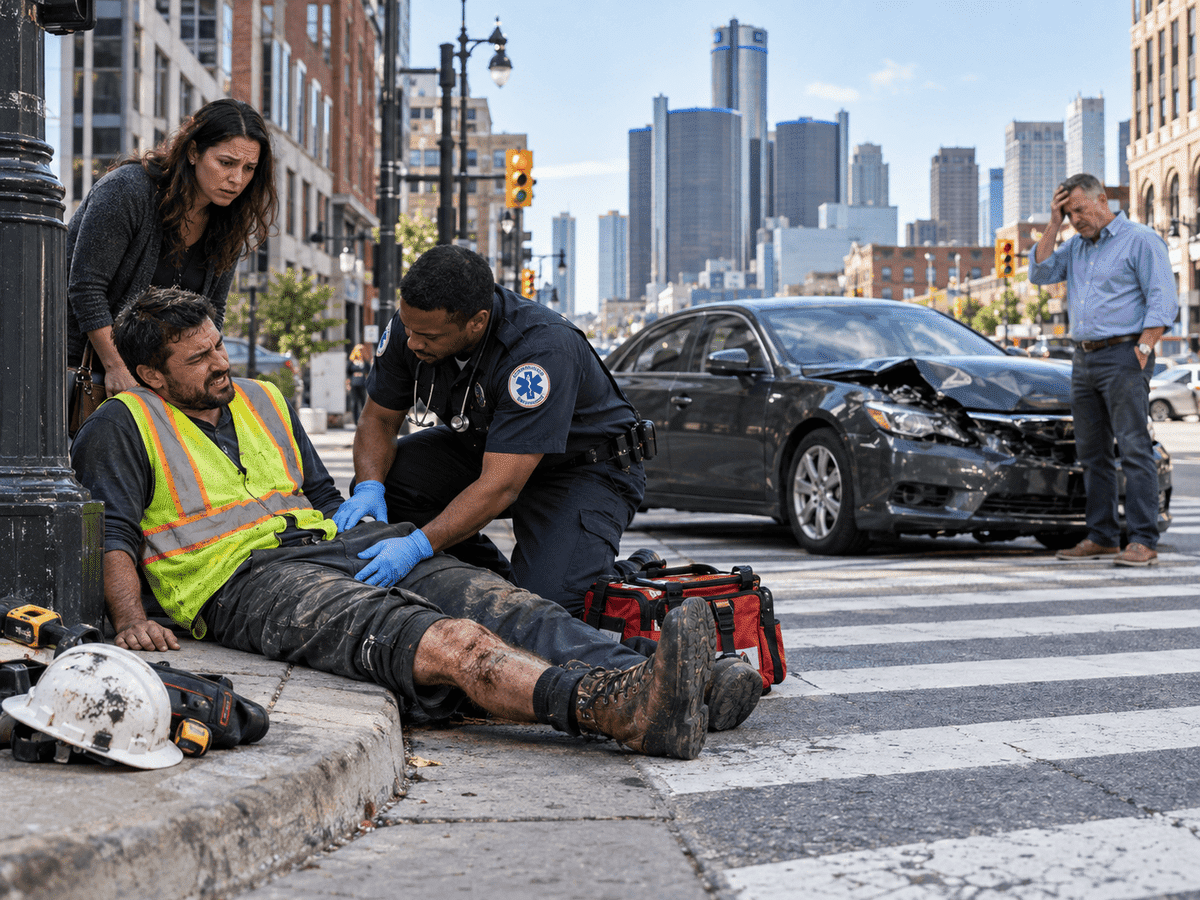
Getting hit by a car can impact more than just your health. If you suffer a broken leg, spinal injury, head injury, or other serious harm, you might not be able to work for weeks or even months. Some people go back to work but with restrictions, fewer hours, or a different job than before. Others have lasting injuries that lower their earning ability for years. In these situations, Michigan law may offer several ways to recover lost income.
We help injured pedestrians find every possible way to recover after a car accident. Lost wages may be covered by Michigan No-Fault benefits, a claim against the at-fault driver, or both. The rules depend on how much income you lost, how long you are unable to work, what insurance is available, and whether you can show the accident caused your inability to work.
Michigan No-Fault Benefits May Pay Lost Income
Michigan’s No-Fault Insurance Act allows an injured person to recover certain work-loss benefits without first proving that another driver was negligent.
Under MCL 500.3107(1)(b), Personal Injury Protection benefits include income that an injured person would have earned during the first three years after the accident if the injury had not prevented that person from working.
So, if a pedestrian is hit by a car, they may be able to claim lost income even before any case against the driver is finished.
The statute does impose limits. Work-loss benefits are subject to a monthly statutory maximum that is adjusted periodically for cost of living. Michigan law also generally reduces work-loss payments by 15 percent because PIP work-loss benefits are not treated as taxable income, unless the claimant proves that a smaller tax adjustment is appropriate.
Which Insurance Company Pays A Pedestrian’s Wage-Loss Benefits?
Determining which insurer must pay is an important early issue.
Under MCL 500.3114(1), a Michigan No-Fault policy generally covers the named insured, that person’s spouse, and qualifying relatives domiciled in the same household when an injury arises from a motor vehicle accident.
When a pedestrian does not have applicable coverage through that priority, MCL 500.3115 generally directs a person injured while not occupying a motor vehicle to seek PIP benefits through the Michigan Assigned Claims Plan.
You should identify the correct insurer quickly because No-Fault claims have strict procedural requirements. Filing with the wrong company or delaying coverage investigation can complicate an otherwise valid claim.
What Proof Do We Use To Establish Lost Wages?
An insurance company will not simply accept a statement that someone missed work. We ordinarily need documentation showing both what the injured person earned and why the accident prevented that person from working.
Important evidence may include employer wage verification, payroll records, tax returns, W-2 or 1099 forms, physician restrictions, disability notes, and records showing scheduled work that could not be performed.
Medical evidence is especially important. A doctor should document restrictions when an injury prevents a patient from working, standing for extended periods, lifting, driving, or performing other job duties.
For self-employed people, proving income can require a closer review of business records. Tax returns, invoices, contracts, bank records, and prior earnings can help demonstrate what income probably would have been earned but for the accident.
Can We Recover More Than Michigan PIP Pays?
Sometimes the answer is yes.
Michigan No-Fault wage-loss benefits have both monetary and time limitations. A person with substantial earnings may lose considerably more income than PIP pays each month. A catastrophic injury may also prevent someone from working beyond the three-year PIP period.
Michigan law preserves potential claims against an at-fault driver for certain excess economic losses. Under MCL 500.3135, economic losses that exceed applicable No-Fault limitations may potentially be pursued against the legally responsible party.
This can become particularly important for executives, skilled tradespeople, business owners, physicians, sales professionals, and others whose earnings exceed the PIP work-loss maximum.
It may also matter greatly when an injury causes permanent work restrictions.
What If You Can Work But Cannot Earn What You Made Before?
Lost-income claims are not limited to people who are completely unable to work.
Suppose a pedestrian worked in construction before suffering serious leg and back injuries. After the accident, the person may eventually return to employment but can no longer perform heavy physical work. A new position may pay substantially less.
In cases involving long-term impairment, we examine whether the evidence supports a claim for diminished earning capacity or other excess economic loss against the responsible driver.
These claims require more than speculation. Employment history, education, physical restrictions, previous earnings, future career opportunities, and medical prognosis can all become important.
What If You Used Vacation Or Sick Leave?
Using paid leave does not necessarily mean there was no economic consequence from the accident.
An injured employee may exhaust vacation days, sick leave, or other employment benefits while recovering. We review the circumstances carefully to determine what benefits may be claimed and how payments from other sources affect the calculation.
We also look beyond the first paycheck. Serious injuries can cause lost overtime, commissions, bonuses, promotion opportunities, or the inability to continue a second job.
Do You Have To Prove The Driver Was At Fault?
For PIP work-loss benefits, fault generally is not the central issue because Michigan’s No-Fault system provides qualifying benefits without requiring proof that the driver caused the accident.
A claim against the driver for excess economic damages is different. We must establish legal responsibility for the collision.
Evidence may include the crash report, witness testimony, traffic-camera footage, surveillance video, vehicle data, photographs, and phone records in distracted-driving cases.
Michigan’s comparative-fault rules can also affect a third-party recovery. Insurance companies may argue that a pedestrian entered the roadway improperly, ignored a traffic signal, or otherwise contributed to the collision. We examine the evidence rather than accepting an insurer’s allocation of fault.
Do Not Wait To Make A Michigan No-Fault Claim
Deadlines can become a serious problem in wage-loss cases.
Under MCL 500.3145, an action for PIP benefits generally cannot be started more than one year after the accident unless proper written notice of injury was given to the insurer within the statutory period or the insurer previously paid PIP benefits for the injury. Additional limitations apply to how far back unpaid benefits may be recovered.
That makes early documentation important. We want the insurer notified, the correct coverage identified, and the wage-loss claim supported before avoidable disputes arise.
Frequently Asked Questions About Lost Wages After Being Hit By A Car
Can I Get Lost Wages If I Was A Pedestrian When The Car Hit Me?
Yes. Being outside a vehicle does not automatically prevent you from receiving Michigan No-Fault work-loss benefits. Depending on your insurance situation, benefits may come through an applicable household No-Fault policy or the Michigan Assigned Claims Plan. Under MCL 500.3107, qualifying work-loss benefits compensate income you would have earned during the first three years following the accident if your injuries had not prevented you from working.
How Much Of My Paycheck Will Michigan No-Fault Replace?
Michigan work-loss benefits are subject to a statutory monthly maximum that changes periodically. MCL 500.3107 also generally requires a 15 percent reduction because those benefits are not taxable, unless the claimant establishes a lower tax advantage. Someone earning more than the statutory maximum may therefore receive less through PIP than the actual amount of income lost. We examine whether the difference may qualify as excess economic loss against the at-fault driver.
Can I Recover Lost Income If I Am Self-Employed?
Potentially, yes. Self-employed claims often require more documentation because there may not be a traditional employer providing wage verification. We may use tax returns, business financial records, invoices, contracts, prior earnings, bank records, and evidence of work that had to be canceled. The goal is to show the income you probably would have earned had the pedestrian accident not occurred.
What If I Cannot Return To My Old Job?
A serious injury may affect more than several weeks of wages. If permanent physical restrictions prevent you from returning to your former occupation, there may be substantial future economic losses. We evaluate previous earnings, medical restrictions, vocational options, education, work history, and future earning ability when determining whether additional damages may be pursued against the negligent driver.
Can I Recover Lost Overtime, Bonuses, Or Commissions?
Potentially. Lost income is not necessarily limited to a basic hourly rate or salary. If overtime was regularly available, commissions were part of your established earnings, or bonuses could be demonstrated through prior employment records, those losses may be relevant. The strength of the claim depends heavily on documentation showing that the income was reasonably expected rather than merely possible.
What If The Driver’s Insurance Company Says I Could Have Returned To Work Earlier?
Insurers sometimes dispute the duration of disability or argue that a claimant could have performed lighter work. Medical documentation becomes critical in these disputes. We compare job requirements with physician restrictions and treatment records to show why returning sooner would not have been medically appropriate or practically possible.
Talk To Ravid & Associates, P.C. About Lost Wages After A Pedestrian Accident
Being hit by a vehicle can suddenly take away your health and your paycheck at the same time. We investigate available No-Fault benefits, document income losses, determine whether excess economic damages may be pursued, and address attempts by insurers to reduce legitimate claims. When injuries interfere with a career or permanently reduce earning ability, we look beyond immediate lost wages and consider the financial effect the collision may have for years.
If you were hit by a vehicle in Detroit, contact our Detroit pedestrian accident attorneys at Ravid & Associates, P.C. today by calling (248) 948-9696 to receive your free consultation. We represent injured pedestrians and other accident victims in Detroit and throughout the entire state of Michigan from our office location in Southfield, Michigan. We can review the accident, available insurance coverage, your employment losses, and the compensation Michigan law may allow you to pursue.

