
Can A Bar Be Sued If It Served The Driver Before The Fatal Crash?
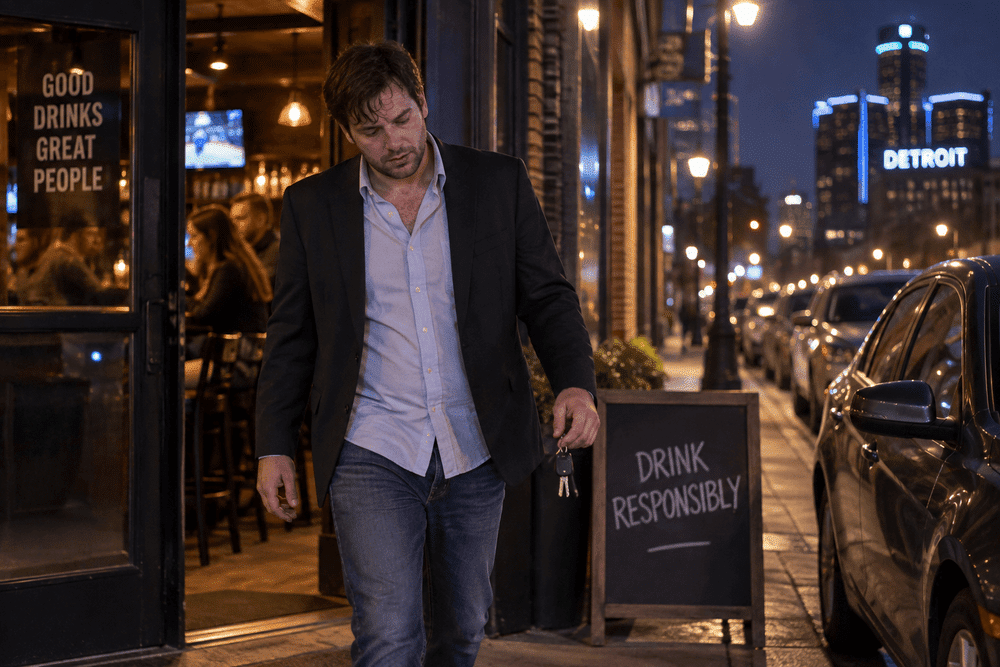
When an intoxicated driver causes a fatal Detroit car accident, the driver’s conduct is usually the first focus of an investigation. But the investigation should not necessarily stop with the person behind the wheel. If a bar, restaurant, nightclub, or other licensed alcohol retailer continued serving the driver after the driver was visibly intoxicated, Michigan law may permit a claim against that establishment. These cases can provide an additional source of compensation for families who have suffered an unimaginable loss. They can also be difficult to prove because Michigan places specific evidentiary and procedural requirements on claims against alcohol retailers.
We investigate where an impaired driver was drinking, who served that person, when the alcohol was served, and whether the driver was showing outward signs of intoxication. A fatal drunk-driving collision may therefore involve both a wrongful death claim against the driver and a separate claim against a licensed establishment under Michigan’s dram-shop law.
Michigan’s Dram-Shop Law Can Make A Bar Liable
Michigan’s dram-shop law is contained in MCL 436.1801. The statute prohibits a retail licensee from selling, furnishing, or giving alcoholic liquor to an individual who is visibly intoxicated.
More importantly for an innocent person killed by an impaired driver, MCL 436.1801(2) creates a civil cause of action when someone suffers injury, damage, or death because alcohol was unlawfully furnished to a visibly intoxicated person and that unlawful service was a proximate cause of the harm.
That means a bar is not automatically liable simply because the driver consumed alcohol there before the crash. We generally must establish that the establishment served alcohol when the driver was visibly intoxicated and connect that unlawful service to the fatal collision.
What Does “Visibly Intoxicated” Mean In Michigan?
Visible intoxication is often one of the central disputes in these cases. Michigan courts require evidence of actual outward signs of intoxication. A high blood alcohol concentration after a crash may be important evidence, but a BAC level by itself does not necessarily prove that the person was visibly intoxicated when the bar served another drink.
Evidence of visible intoxication can include observations that the person was slurring words, stumbling, having difficulty maintaining balance, behaving unusually, having impaired coordination, or otherwise displaying observable signs of intoxication.
The Michigan Supreme Court addressed this issue in Reed v Breton, 475 Mich 531 (2006), holding that a plaintiff must establish actual evidence of visible intoxication. Evidence concerning the amount of alcohol consumed or blood alcohol concentration can reinforce other evidence, but it cannot substitute entirely for proof of outward manifestations of intoxication.
That makes a prompt investigation particularly important.
Evidence From The Bar Can Become Critical
When we investigate whether a drinking establishment contributed to a fatal collision, evidence from the hours before the crash may become just as important as evidence from the accident scene.
Surveillance video can show how the driver walked, spoke, interacted with employees, or behaved before leaving. Credit-card receipts and point-of-sale records may reveal the amount and timing of alcohol purchases. Bartenders, servers, patrons, friends, and security personnel may have seen the driver’s condition.
We may also examine police reports, toxicology results, cellphone records, social media activity, rideshare records, and receipts from other establishments.
This evidence can disappear quickly. Some businesses routinely overwrite surveillance recordings. Employees leave jobs, witnesses become difficult to locate, and memories fade. Preserving evidence early can make a substantial difference in determining whether a viable dram-shop claim exists.
What If The Driver Drank At Several Bars?
A driver may have visited several establishments before causing a fatal accident. Michigan law specifically addresses this possibility. Under MCL 436.1801(7), there is a rebuttable presumption that a retail licensee other than the establishment that last furnished alcohol to the visibly intoxicated person did not commit an act giving rise to liability under the statute.
This does not necessarily mean earlier establishments can never be liable. It does mean that identifying the final establishment that served the driver and establishing the order in which alcohol was furnished can become extremely important.
We may use receipts, bank records, witness testimony, surveillance footage, cellphone location information, and other available evidence to reconstruct where the driver went during the hours preceding the crash.
A Wrongful Death Claim May Also Be Filed Against The Driver
The dram-shop claim is only one part of a potential case. The family may also have a wrongful death claim arising from the driver’s negligence or unlawful conduct. Under the Michigan Wrongful Death Act, MCL 600.2922, when a person’s death is caused by another person’s wrongful act, neglect, or fault, a civil action may be pursued through the deceased person’s estate. Michigan requires the action to be brought by the personal representative of the estate.
In a motor vehicle case, MCL 500.3135 permits tort liability for noneconomic losses when the injured person suffers death, permanent serious disfigurement, or serious impairment of body function. A fatality therefore satisfies the statutory injury threshold applicable to motor vehicle tort claims.
Depending on the facts and available insurance, we may investigate liability involving the drunk driver, the vehicle owner, applicable auto insurance policies, uninsured or underinsured motorist coverage, and a licensed alcohol establishment.
What Damages May Be Recovered After A Fatal Crash?
A wrongful death case is intended to address the losses created by the death. Under MCL 600.2922, recoverable damages may include reasonable medical, hospital, funeral, and burial expenses, along with compensation for losses suffered by qualifying family members.
Depending on the circumstances, damages may include the deceased person’s conscious pain and suffering before death, lost financial support, lost services, and the loss of society and companionship suffered by eligible survivors.
We evaluate the person’s age, health, employment, earnings, family relationships, financial contributions, and the circumstances surrounding the death when determining the potential value of a wrongful death claim.
A dram-shop claim involving an innocent victim can provide another source from which those losses may potentially be recovered, subject to Michigan law and the evidence available.
The Dram-Shop Deadline Requires Immediate Attention
Families should be particularly careful about deadlines when a bar may be responsible. Under MCL 436.1801(3), an action under Michigan’s dram-shop statute generally must be filed within two years after the injury or death. This deadline is shorter than the limitation period that commonly applies to many other Michigan personal injury claims.
The statute also contains a separate notice requirement. A plaintiff pursuing a dram-shop claim generally must provide written notice to defendants within 120 days after entering an attorney-client relationship for the purpose of pursuing the dram-shop claim. Michigan law provides a limited exception when sufficient information establishing that a retail licensee might be liable was not known and could not reasonably have been known within that period.
Missing these requirements can jeopardize an otherwise valid case. For that reason, we believe an investigation into possible alcohol-service liability should begin as soon as there is reason to believe the driver had been drinking at a licensed establishment.
Why A Fatal Drunk-Driving Case May Require A Broader Investigation
It can be tempting to view a fatal drunk-driving crash solely as a claim against the impaired driver. Doing that may overlook important evidence and additional responsible parties.
We look backward from the collision. Where was the driver during the hours before the crash? Who was with the driver? How many drinks were purchased? Did employees continue serving alcohol despite obvious signs of intoxication? Was there another establishment involved? What surveillance footage still exists?
Answers to those questions can determine whether Michigan’s dram-shop law applies and whether the family has claims beyond the driver’s auto insurance policy.
Frequently Asked Questions About Michigan Bar Liability And Fatal Drunk-Driving Accidents
Can We Sue A Michigan Bar Just Because The Drunk Driver Was Drinking There?
No. Evidence that the driver consumed alcohol at a particular establishment does not by itself establish dram-shop liability. Under MCL 436.1801, we generally must show that the establishment unlawfully furnished alcohol to the driver while the driver was visibly intoxicated and that the unlawful service was a proximate cause of the injury or death. This distinction makes witness testimony, video recordings, receipts, and other evidence concerning the driver’s condition at the time of service particularly important.
What If The Driver’s Blood Alcohol Level Was Extremely High?
A high BAC can be significant evidence, especially when combined with information about how much the person drank and when. However, Michigan’s Supreme Court has held that proof of intoxication does not automatically establish visible intoxication at the time alcohol was served. We therefore look for evidence showing how the person was actually behaving inside the establishment, including speech, balance, coordination, conduct, and interactions with employees and other patrons.
What If Nobody Remembers Seeing The Driver Acting Drunk?
That can make the case more difficult, but we would not necessarily end the investigation there. Surveillance recordings, bartender observations, receipts, text messages, cellphone videos, testimony from companions, and other evidence may help establish the driver’s behavior. The circumstances immediately before and after leaving the establishment may also provide relevant evidence. Each case depends heavily on the available facts.
Can The Family Sue Both The Drunk Driver And The Bar?
Potentially, yes. A family may have a wrongful death claim against the driver under MCL 600.2922 while also pursuing a dram-shop claim against a licensed establishment under MCL 436.1801 when the statutory requirements are satisfied. We investigate every potentially responsible party and applicable source of insurance rather than assuming that the driver’s policy is the only source of recovery.
What If The Driver Went To More Than One Bar Before The Fatal Accident?
We would want to identify every establishment and determine which one served the driver last. MCL 436.1801(7) creates a rebuttable presumption benefiting retail licensees other than the licensee that last furnished alcohol to the person. Establishing the driver’s movements, the sequence of establishments, and the timing of alcohol purchases can therefore become a major part of the case.
How Quickly Should We Contact A Lawyer About A Possible Dram-Shop Claim?
We encourage families to act promptly because these claims carry special deadlines. Michigan’s dram-shop statute generally requires the lawsuit to be filed within two years after the death and contains a separate 120-day notice provision tied to entering an attorney-client relationship for purposes of pursuing the dram-shop claim. Early investigation also gives us a better opportunity to preserve surveillance footage, receipts, witness information, and other evidence before it disappears.
Talk To Ravid & Associates, P.C. About Your Family’s Fatal Drunk-Driving Accident
When an intoxicated driver causes a fatal accident, we look beyond the collision itself to determine how the driver became intoxicated and whether another party may share legal responsibility. If a bar, restaurant, nightclub, or other licensed establishment continued serving a visibly intoxicated driver, Michigan’s dram-shop law may provide the deceased person’s family with an additional claim.
We investigate the driver’s activities before the collision, work to preserve evidence, identify available insurance coverage, and pursue claims against the parties whose conduct contributed to the death. Because dram-shop cases involve special proof requirements and shorter deadlines, waiting can make important evidence harder to obtain.
If your loved one was killed in a crash involving an intoxicated driver, call our Detroit fatal accident lawyers at Ravid & Associates, P.C. today by calling (248) 948-9696 to receive your free consultation. We represent families in Detroit and throughout the entire state of Michigan from our office locations in Southfield, Michigan.
We can review the circumstances of the fatal crash, investigate where the driver obtained alcohol, determine whether a potential dram-shop claim exists, and explain the legal options available to your family under Michigan law.

