
Injured By A Driver Who Was Going Too Fast For Icy Roads In Michigan?
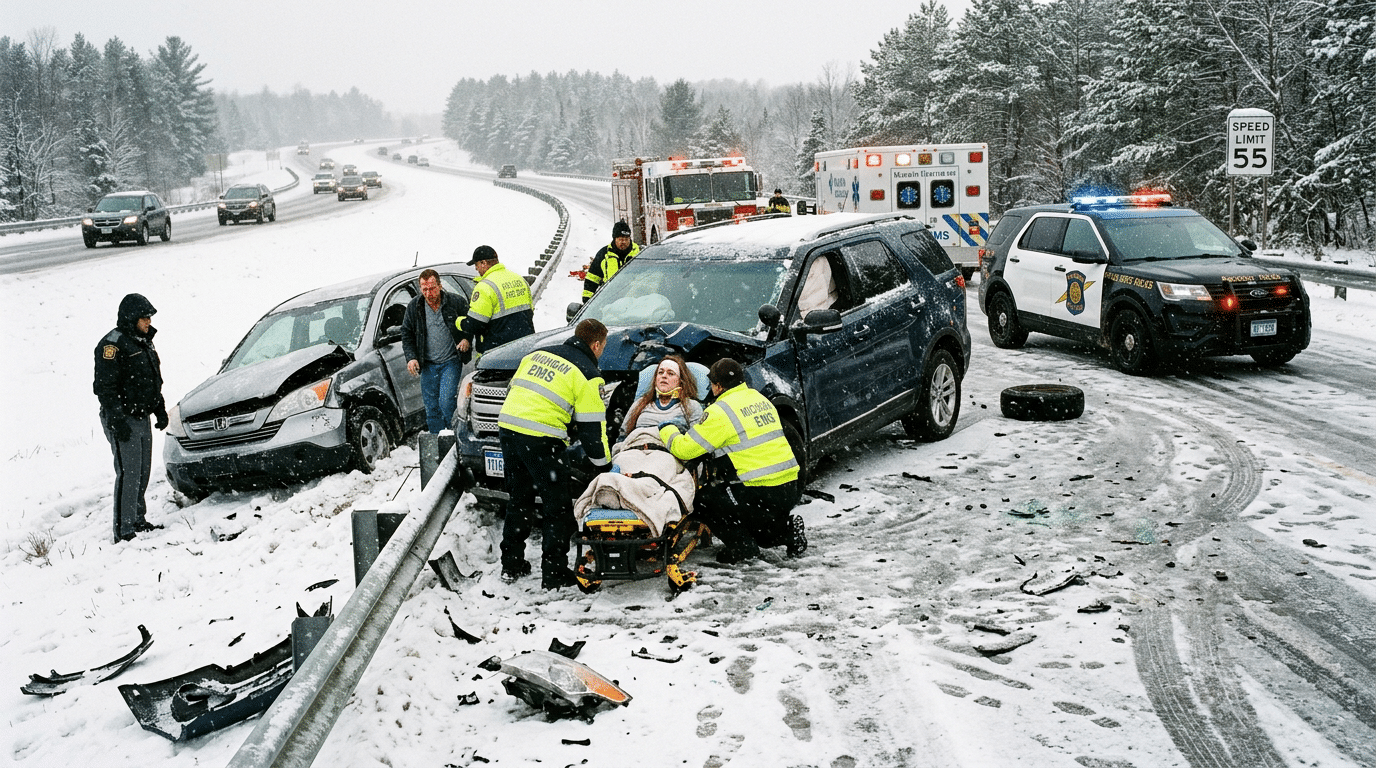
Snow, freezing rain, and black ice are common in Detroit winters, but bad weather is not an excuse for careless driving. Even if a driver is going below the speed limit, they can still be driving too fast for icy roads, poor visibility, or heavy traffic. If a driver loses control, slides through an intersection, rear-ends another car, or crosses into the opposite lane, innocent people can get seriously hurt. Insurance companies may call these crashes unavoidable weather accidents, but that does not decide who is legally responsible. We carefully review the driver’s speed, following distance, braking, visibility, road conditions, and choices before the crash to see if negligence was involved.
Michigan law requires drivers to adjust the way they operate a vehicle when road conditions deteriorate. Ice may explain why a vehicle lost traction, but it does not necessarily excuse traveling at a speed that made stopping or maintaining control impossible.
Michigan Drivers Must Slow Down For Icy Road Conditions
Michigan’s basic speed law is especially important in winter accident cases. Under MCL 257.627(1), a driver must operate at a careful and prudent speed that is reasonable and proper considering traffic, the surface and width of the highway, and other conditions existing at the time. The statute also prohibits driving faster than a speed that permits the vehicle to stop within the assured clear distance ahead.
This means the posted speed limit is not always safe. Just because the limit is 55 mph does not mean it is safe to drive that fast on icy roads. Depending on the situation, a careful driver might need to slow down a lot.
When we investigate an icy-road collision, we examine whether the driver adjusted speed before entering hazardous conditions or simply continued driving as though the road were dry.
Losing Control On Ice Does Not Automatically Excuse The Driver
Drivers often tell police or insurance companies that they “hit ice” and could not stop. This may explain what happened right before the crash, but it does not answer the main question about who is responsible.
We examine what happened before the vehicle began sliding. Was the driver moving too fast? Was the motorist accelerating toward an icy intersection? Did the driver wait too long to brake? Was the vehicle following another car too closely? Were weather conditions obvious enough that a reasonable driver should have anticipated slippery pavement?
Michigan also prohibits careless or negligent vehicle operation likely to endanger people or property under MCL 257.626b. Evidence that a driver failed to make reasonable adjustments for obvious winter conditions can become important when establishing negligence.
Following Too Closely Becomes More Dangerous On Ice
Rear-end accidents are common during Michigan winters because stopping distances can increase significantly on snow and ice. A following distance that might be adequate on dry pavement may become dangerously short when traction is reduced.
Under MCL 257.643, a motorist may not follow another vehicle more closely than is reasonable and prudent, taking into account vehicle speed, traffic, and highway conditions.
We often see drivers blame the roadway after rear-ending a stopped or slowing vehicle. However, if icy conditions were already present, the driver should have increased following distance and reduced speed before needing to stop. The inability to stop can itself raise questions about whether the motorist was following too closely for existing conditions.
Common Icy-Road Crashes That Can Lead To Injury Claims
Winter negligence can produce several types of serious collisions. A speeding vehicle may slide through a red light or stop sign and strike another car in an intersection. A driver may lose control on a curve and cross the center line. Another motorist may approach stopped traffic too quickly and cause a chain-reaction rear-end collision.
Black ice can also contribute to freeway accidents when drivers fail to account for freezing temperatures on bridges, ramps, and shaded road surfaces. We examine weather reports, photographs, witness accounts, traffic-camera recordings, vehicle damage, roadway evidence, and police observations when reconstructing how the collision occurred.
The presence of ice is part of the investigation. It is not necessarily a defense.
Michigan No-Fault Benefits After A Winter Car Accident
Michigan’s no-fault system may provide Personal Injury Protection benefits to qualifying accident victims regardless of who caused the crash. Under MCL 500.3107, PIP benefits can include allowable expenses for reasonably necessary care, recovery, and rehabilitation, as well as qualifying wage-loss and replacement-service benefits.
Serious winter crashes can result in fractures, traumatic brain injuries, torn ligaments, spinal injuries, shoulder damage, and other conditions requiring extended medical treatment. We examine the applicable no-fault coverage and make sure the medical and economic losses are properly documented.
These first-party insurance benefits are different from a liability claim against the negligent driver.
When We Can Pursue The At-Fault Driver For Pain And Suffering
Under MCL 500.3135, Michigan allows certain injured people to pursue noneconomic damages against an at-fault motorist when the statutory threshold is met. The law addresses injuries involving death, permanent serious disfigurement, or serious impairment of body function.
For a serious impairment claim, we focus heavily on how the injury affects the client’s actual life. An orthopedic injury may prevent someone from working, driving, lifting a child, exercising, maintaining a home, or performing basic daily activities. A head injury may affect concentration, memory, balance, or the ability to maintain employment.
Medical records are important, but they tell only part of the story. We document both the physical injury and the practical consequences it creates.
Comparative Fault Can Become An Issue In An Icy-Road Claim
Insurance companies sometimes respond to icy-road cases by blaming everyone involved. They may argue that the injured driver was also traveling too fast, should have reacted sooner, or failed to maintain sufficient distance.
Under MCL 600.2959, Michigan applies comparative-fault principles. Damages may be reduced according to an injured person’s percentage of fault. When that person’s fault exceeds the combined fault of the other responsible persons, Michigan law bars recovery of noneconomic damages.
For this reason, we carefully investigate the entire collision rather than relying exclusively on an insurer’s early fault determination.
Evidence Can Show Whether The Driver Ignored Dangerous Conditions
Weather-related cases can depend heavily on evidence showing what a careful driver should have known before the crash. Photographs taken shortly afterward may document snow accumulation, ice, visibility, and roadway conditions. Witnesses may describe the other vehicle’s speed or inability to stay in its lane.
Vehicle event data, dash-camera video, surveillance recordings, traffic cameras, police reports, and physical damage can also help establish what happened. In serious cases, accident reconstruction may help determine speed and braking behavior.
We want to understand whether the driver encountered an unforeseeable hazard or ignored conditions that were already demanding slower and more cautious driving.
Frequently Asked Questions About Michigan Icy-Road Car Accident Claims
Can A Driver Be At Fault Even If The Crash Was Caused By Ice?
Yes. Ice can contribute to a collision without eliminating driver negligence. Under MCL 257.627, Michigan motorists must drive at a careful and prudent speed based on traffic, road surface, and other existing conditions. If a driver knew or reasonably should have known that the roadway was icy but continued at a speed that made stopping or controlling the vehicle unsafe, that conduct may support an injury claim. We examine the driver’s actions before the loss of control, not merely the fact that the vehicle eventually slid.
What If The Driver Was Traveling Below The Posted Speed Limit?
Driving below the posted limit does not automatically mean the driver was operating safely. Michigan’s basic speed law requires a speed that is reasonable and proper for actual conditions. A motorist traveling 45 mph in a 55 mph zone could still be driving too fast if severe ice required a much slower speed. We consider traffic, visibility, pavement conditions, braking distance, weather, and the driver’s surrounding circumstances.
Who Is Responsible If A Driver Slides Through A Red Light On Ice?
Responsibility depends on the facts, but the driver may still be liable. A motorist approaching an icy intersection should account for increased stopping distance before reaching the signal. If the driver approached too quickly and was unable to stop, we may argue that the excessive speed for conditions contributed to the collision. The driver’s explanation that the vehicle slid does not automatically resolve the negligence issue.
Can I File A Claim If Someone Rear-Ended Me On An Icy Road?
Potentially, yes. MCL 257.643 requires Michigan drivers to maintain a reasonable and prudent following distance while considering traffic, speed, and highway conditions. Ice generally requires more stopping distance, not less. When a driver follows too closely and cannot stop before striking another vehicle, we investigate whether speed and following distance were unreasonable for winter conditions.
What If The Insurance Company Says The Crash Was Just Caused By Bad Weather?
We don’t accept that explanation without looking into the details. Weather might have played a role in the crash, but the real question is whether the driver’s actions also mattered. We look at things like speed, braking, following distance, weather warnings, road conditions, photos, witnesses, crash data, and video. If the driver didn’t respond reasonably to clear hazards, bad weather alone doesn’t always block an injury claim.
Can I Recover Pain And Suffering After A Serious Icy-Road Crash?
You may be able to pursue noneconomic damages if your injuries satisfy Michigan’s requirements under MCL 500.3135. Serious fractures, spinal injuries, traumatic brain injuries, permanent limitations, and other significant conditions may qualify depending on how they affect important body functions and your ability to live your normal life. We evaluate both the medical diagnosis and the practical impact of the injury when determining whether a third-party claim can be pursued.
Ravid & Associates, P.C. Represents People Injured In Michigan Winter Car Accidents
An insurance company should not be allowed to dismiss a serious collision simply because snow or ice was present. Michigan drivers have a responsibility to adjust their speed, increase following distance, and maintain control when winter weather makes driving more difficult. When a motorist ignores those conditions and causes an injury-producing crash, we investigate the collision, preserve evidence, identify available insurance coverage, and pursue the compensation permitted under Michigan law.
If you were injured by a driver who was traveling too fast for snow, black ice, freezing rain, or other dangerous winter conditions, contact our Detroit motor vehicle accident attorneys at Ravid & Associates, P.C. today by calling (248) 948-9696 to receive your free consultation. We represent injured people in Detroit and throughout the entire state of Michigan from our office location in Southfield, Michigan. We can review the circumstances of the crash, determine whether the other motorist failed to adjust to the road conditions, and pursue available compensation for your injuries and losses.

