
Memory Loss and Cognitive Problems Following a Serious Car Accident
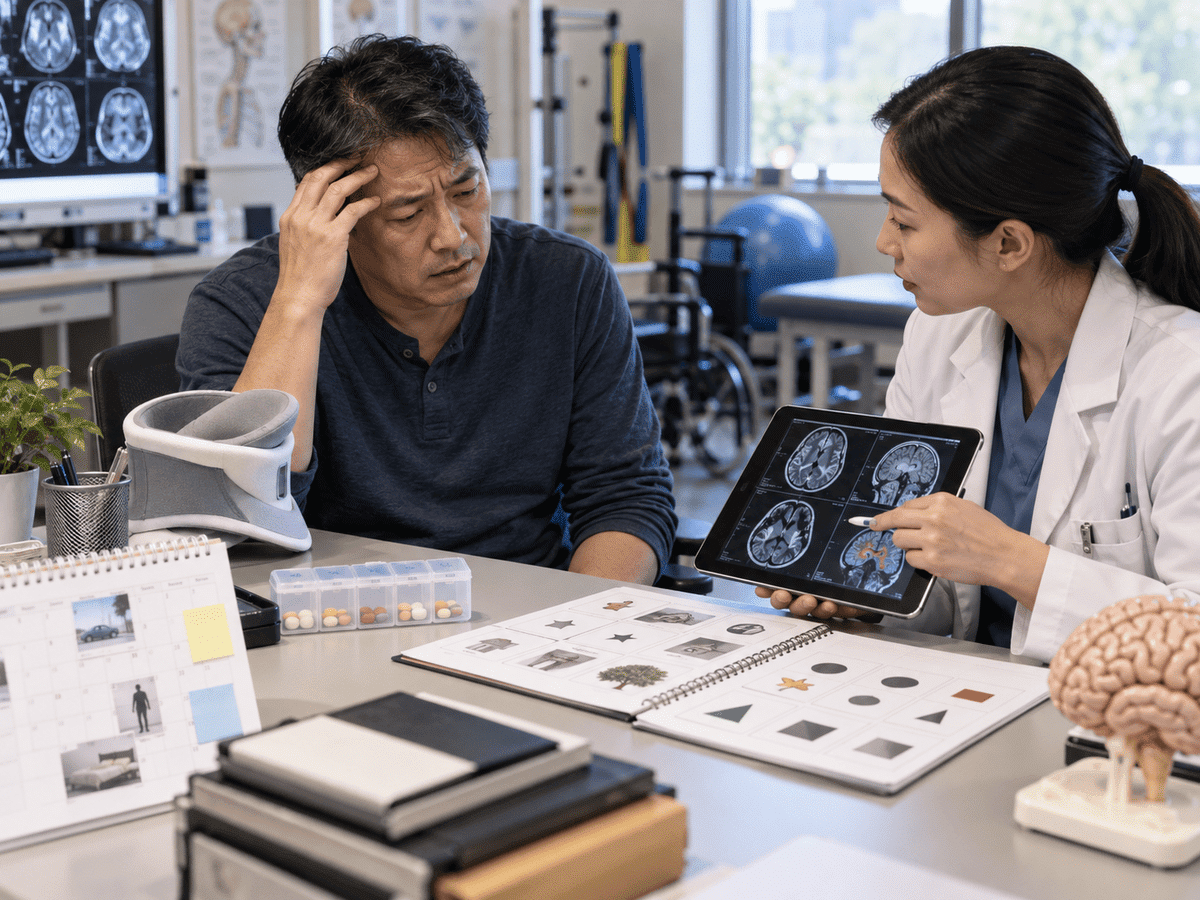
Memory loss, confusion, poor concentration, and other cognitive problems can be among the most disruptive consequences of a serious Detroit car accident. Unlike a broken bone or visible wound, cognitive injuries may not be obvious to other people, and symptoms sometimes appear gradually after the crash. A person may return home believing the worst has passed, then begin forgetting appointments, losing track of conversations, struggling at work, or having difficulty completing tasks that were once routine.
Family members are often the first to notice changes in personality, memory, judgment, or attention. When these problems result from a traumatic brain injury or other accident-related condition, the consequences can affect employment, relationships, independence, and nearly every part of daily life.
We represent Michigan accident victims whose injuries extend far beyond what can be seen on an X-ray. When memory or cognitive problems follow a collision, we look closely at the medical evidence, the person’s functioning before and after the accident, and the insurance coverage available under Michigan law. Proper documentation is particularly important because insurance companies may dispute symptoms that cannot be easily photographed or measured.
Why Memory Problems Can Develop After A Car Accident
A motor vehicle collision can cause the brain to move violently inside the skull even when the person’s head never directly strikes a hard surface. Rapid acceleration, deceleration, rotation, and impact forces can produce a concussion or more serious traumatic brain injury.
Memory problems may involve difficulty recalling events before the crash, remembering what happened immediately afterward, or forming and retaining new memories. Other accident victims experience slowed thinking, poor concentration, difficulty finding words, problems following conversations, or an inability to handle several tasks at once.
Symptoms are not always immediate. Headaches, mental fatigue, dizziness, sleep disturbances, sensitivity to light, mood changes, and cognitive difficulties may become clearer in the hours or days after the collision. We encourage anyone experiencing new neurological symptoms after a serious crash to obtain appropriate medical care promptly.
Cognitive Symptoms Can Affect Work And Everyday Life
Cognitive impairment can dramatically change how someone functions even when that person appears physically healthy. A worker who once handled complex assignments may suddenly need additional time to complete basic tasks. Someone who managed household finances may begin missing bills or forgetting passwords. Driving, shopping, cooking, reading, and maintaining appointments can become difficult.
These changes matter legally because Michigan’s motor vehicle injury law considers how an impairment affects an injured person’s normal manner of living.
Under MCL 500.3135, a person injured in a motor vehicle accident may pursue noneconomic damages when the accident causes death, permanent serious disfigurement, or a serious impairment of body function. Michigan law defines serious impairment to include an objectively manifested impairment of an important body function that affects the injured person’s general ability to lead their normal life.
Cognitive functioning can be enormously important to employment, communication, decision-making, and independent living. We therefore focus not only on the medical diagnosis but also on how the cognitive changes have altered the client’s actual life.
Proving Memory Loss And Cognitive Impairment
Insurance companies may challenge cognitive injury claims because many symptoms depend partly on what the injured person reports. That makes objective medical evidence and consistent documentation especially valuable.
We may examine emergency department records, neurological evaluations, brain imaging, neuropsychological testing, rehabilitation records, occupational therapy records, and testimony from treating physicians. Statements from family members, coworkers, and friends can also help establish how a person’s behavior and abilities changed after the collision.
Neuropsychological testing can be particularly useful because it may evaluate memory, attention, processing speed, executive functioning, language abilities, and other cognitive skills. Not every brain injury appears clearly on a conventional CT scan or MRI, so the absence of dramatic imaging findings does not necessarily mean that meaningful cognitive impairment does not exist.
Michigan No-Fault Benefits May Help Pay For Treatment
Michigan’s No-Fault Act provides Personal Injury Protection benefits for qualifying losses resulting from motor vehicle accidents. Under MCL 500.3107, available PIP benefits may include reasonable and necessary accident-related medical expenses, rehabilitation expenses, certain wage-loss benefits, and replacement-service benefits, subject to applicable statutory and policy limitations.
For someone suffering cognitive problems, treatment may include neurological care, neuropsychological assessment, cognitive rehabilitation, speech-language therapy, occupational therapy, psychological treatment, and other services recommended by medical providers.
The applicable PIP medical coverage depends partly on the coverage level selected under the insurance policy and Michigan’s no-fault rules. We review the available policies carefully because significant brain injuries can result in substantial long-term treatment costs.
Pursuing Pain And Suffering Damages Against The At-Fault Driver
PIP benefits and a liability claim against an at-fault driver serve different purposes. If a cognitive injury satisfies the requirements of MCL 500.3135, an injured person may be able to pursue damages for pain and suffering and other noneconomic losses.
These damages may reflect much more than physical discomfort. Memory loss can interfere with careers, education, relationships, hobbies, parenting, communication, and independence. Some people are able to return to work but can no longer perform at the same level. Others require permanent accommodations or assistance.
We build these claims around the real effect the injury has had on the client’s life rather than relying solely on a diagnostic label.
Comparative Fault Can Affect A Michigan Injury Claim
Michigan’s comparative-fault statute, MCL 600.2959, can affect compensation when an injured person is partly responsible for the collision. Damages may be reduced according to the percentage of fault assigned to the injured person.
If the injured person’s percentage of fault is greater than the combined fault of the other responsible persons, noneconomic damages are not recoverable under the statute. For this reason, proving how the crash occurred can be just as important as proving the brain injury itself.
We may use crash reports, witnesses, photographs, vehicle data, video footage, and other evidence to challenge an insurer’s attempt to place excessive fault on our client.
Why Early Documentation Matters In Cognitive Injury Cases
Memory problems create an unusual challenge: the injury itself can make it harder for someone to accurately remember appointments, symptoms, medications, and important events. Family involvement and good medical documentation can therefore become particularly important.
We encourage clients to report cognitive symptoms accurately to their medical providers and follow recommended treatment. Long unexplained gaps in care can give an insurance company an opportunity to argue that the condition resolved or was unrelated to the collision.
A cognitive injury deserves to be evaluated according to what it has actually taken away from the injured person. When the evidence shows meaningful impairment, we pursue compensation based on both the immediate consequences and the future impact of the injury.
Frequently Asked Questions About Memory Loss And Cognitive Problems After Michigan Car Accidents
Can Memory Loss After A Car Accident Be A Sign Of A Brain Injury?
Yes. Memory problems can occur after a concussion or more significant traumatic brain injury. An injured person may have difficulty remembering events surrounding the crash, retaining new information, concentrating, finding words, or completing familiar tasks. Symptoms can occur even when there was no loss of consciousness. We encourage accident victims who experience new memory or cognitive problems to discuss those symptoms promptly with an appropriate medical provider.
What If My CT Scan Or MRI Was Normal?
A normal CT scan or conventional MRI does not necessarily eliminate the possibility of a concussion or other cognitive injury. Imaging is useful for identifying certain structural abnormalities, bleeding, and other serious conditions, but some brain injuries are diagnosed primarily through symptoms, clinical examinations, and cognitive testing. We look at the full medical record rather than treating one imaging result as the entire case.
Can I Sue For Memory Problems After A Michigan Car Accident?
Potentially. Under MCL 500.3135, an accident victim may pursue noneconomic damages against an at-fault motorist when the injuries satisfy Michigan’s motor-vehicle tort threshold. Cognitive impairment may qualify when it is objectively manifested, involves an important body function, and affects the person’s general ability to lead their normal life. The analysis depends on the individual’s specific condition and circumstances.
How Do We Prove Cognitive Problems If Other People Cannot See Them?
We build these claims through medical records, neurological evaluations, neuropsychological testing, rehabilitation records, employment evidence, and testimony describing changes in the client’s abilities. Family members and coworkers can sometimes provide important evidence because they may have directly observed memory lapses, personality changes, reduced concentration, or difficulty performing tasks that were previously routine.
Can Michigan No-Fault Insurance Pay For Cognitive Rehabilitation?
Depending on the circumstances and available coverage, PIP benefits under MCL 500.3107 may provide payment for reasonably necessary accident-related care, recovery, and rehabilitation. Cognitive rehabilitation, neurological treatment, occupational therapy, speech-language therapy, and other services may qualify when medically necessary and related to the collision. Coverage limits and policy elections must be reviewed in each case.
Talk To Ravid & Associates, P.C. About Cognitive Injuries After A Michigan Car Accident
Memory loss and cognitive problems can affect far more than someone’s ability to remember names or appointments. A serious brain injury can interfere with employment, relationships, independence, communication, and the ability to enjoy everyday life. We investigate how the collision occurred, document the medical consequences, examine available insurance coverage, and pursue compensation when another person’s negligence causes serious harm.
If you or a family member developed memory loss, concentration problems, confusion, or other cognitive symptoms after a Michigan car accident, contact our Detroit car accident attorneys at Ravid & Associates, P.C. today by calling (248) 948-9696 to receive your free consultation. We represent injured people in Detroit and throughout the entire state of Michigan from our office locations in Southfield, Michigan. We can review the circumstances of the crash, the medical evidence, and the available insurance claims and explain the legal options that may be available.

