
Motorcycle Left-Turn Accidents And Serious Injury Claims In Detroit
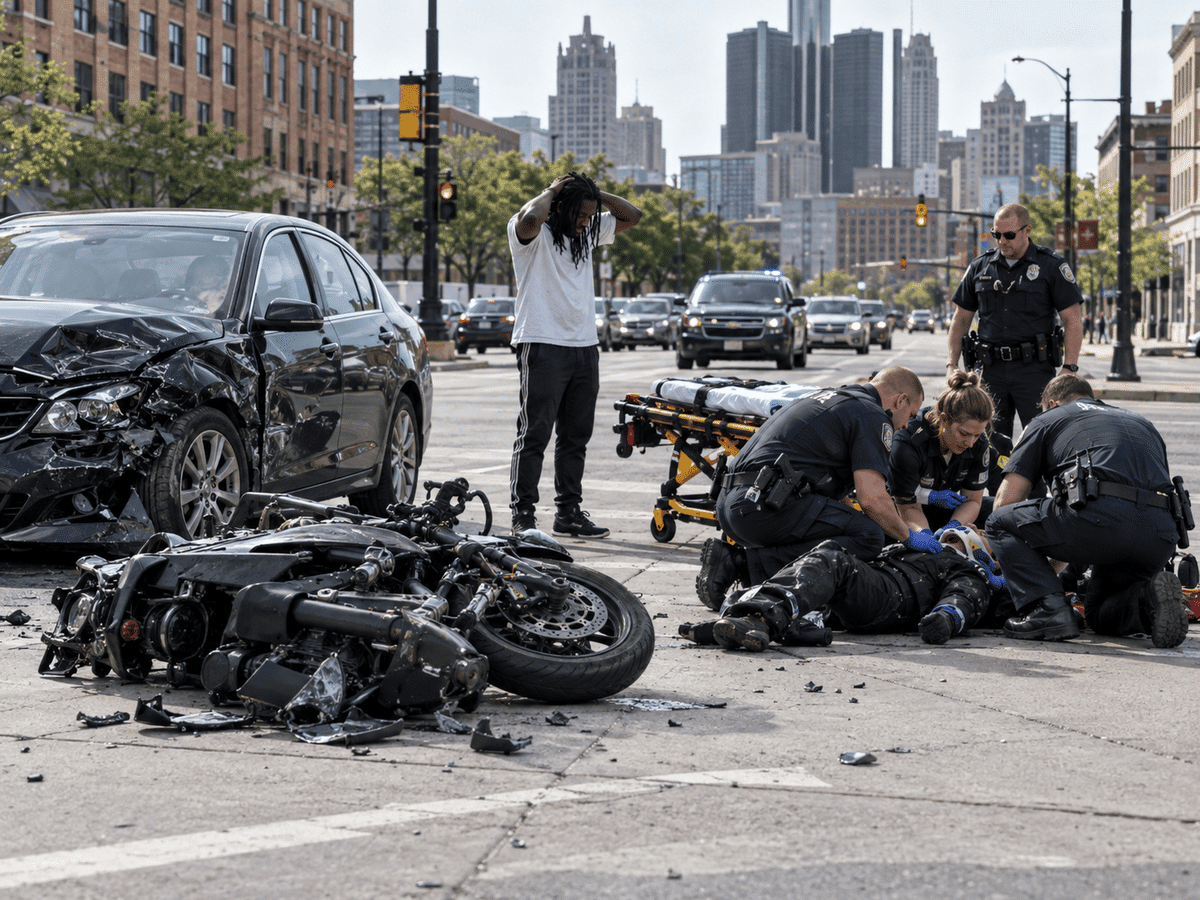
One of the most dangerous situations for motorcyclists in Detroit is when a car suddenly turns left in front of them. This often happens at intersections if a driver misjudges the motorcycle’s speed, doesn’t see the rider, or tries to turn before the motorcycle arrives. Motorcyclists don’t have the same protection as people in cars, so these crashes can cause serious injuries. We often see broken bones, brain injuries, spinal injuries, internal injuries, and permanent disabilities after these accidents. If another driver fails to yield to a motorcyclist, Michigan law may let the injured rider seek compensation for the physical, financial, and personal impact of the crash.
Why Left-Turn Motorcycle Accidents Are So Dangerous
In a typical left-turn motorcycle accident, a motorcyclist is going straight through an intersection when a car coming from the other direction turns left across the motorcycle’s path. The rider often has just seconds to brake, swerve, or try to avoid a crash.
These crashes are often severe because the motorcycle can hit the side or front of the turning car. Even if the rider avoids a direct hit, braking hard or swerving can still throw them onto the road.
These accidents can cause broken bones, pelvic and shoulder injuries, torn ligaments, road rash, spinal cord and brain injuries, and damage to internal organs. Some people need several surgeries and months of rehab. Others may never fully recover their abilities from before the crash.
Michigan Law Requires Left-Turning Drivers To Yield
Michigan law gives drivers a serious responsibility when they make left turns. Under MCL 257.650, a driver intending to turn left at an intersection must yield the right-of-way to a vehicle approaching from the opposite direction when that vehicle is already within the intersection or is close enough to constitute an immediate hazard.
This law applies to motorcycles just as it applies to passenger vehicles.
A driver is not allowed to turn in front of an oncoming motorcycle just because they think they have enough time. If they misjudge and cause a crash, not yielding can be strong evidence of negligence.
We look at the driver’s actions, traffic signals, what could be seen, where the vehicles were, witness statements, and any video footage to figure out how the crash happened.
Why Drivers Often Claim They Did Not See The Motorcycle
One of the most common statements after a left-turn motorcycle collision is that the driver never saw the rider. Not seeing a motorcycle does not excuse a crash. Drivers must watch for traffic before crossing another vehicle’s lane.
Many things can cause these crashes. A driver might be distracted, looking at a phone, focused on other cars, or trying to turn before the light changes. Drivers can also misjudge how fast or close a motorcycle is because motorcycles are harder to see than bigger vehicles.
We check if the driver had enough time to see the motorcycle and if a careful driver would have waited before turning.
Proving Fault After A Detroit Left-Turn Motorcycle Crash
A left turn by a vehicle can be strong evidence, but we know liability is not always clear. Insurance companies might say the motorcycle was speeding, ran a red light, changed lanes, or could have avoided the crash.
Evidence can become extremely important.
We may review intersection cameras, nearby business surveillance footage, dash cameras, police reports, witness statements, physical damage, skid marks, electronic vehicle information, and crash scene photographs. In serious cases, accident reconstruction may help determine vehicle speed, impact location, braking distances, and the sequence of events.
Obtaining this evidence quickly matters because surveillance recordings can be erased and physical evidence at an intersection can disappear.
Comparative Fault Can Affect A Motorcycle Injury Claim
Michigan uses comparative fault principles under MCL 600.2959. If a motorcyclist shares some responsibility for the collision, damages can be reduced according to the rider’s percentage of fault. If the injured person is more than 50 percent at fault, Michigan law bars recovery of non-economic damages.
Suppose a driver’s improper left turn causes a collision, but the insurer claims the motorcycle was traveling above the speed limit. The insurance company may attempt to assign a percentage of fault to the rider and reduce the claim accordingly.
That is why we take allegations of motorcycle speed, visibility, braking, and rider conduct seriously rather than allowing an insurer’s assumptions to become the accepted version of the crash.
Michigan No-Fault Benefits After A Motorcycle Accident
Motorcycle insurance claims operate differently from ordinary passenger vehicle claims in Michigan. Under MCL 500.3114(5), when a motorcycle operator or passenger suffers an accidental bodily injury in an accident showing evidence of motor vehicle involvement, Michigan law establishes an order of priority for Personal Protection Insurance benefits. The first priority is generally the insurer of the owner or registrant of the motor vehicle involved, followed by the insurer of the motor vehicle’s operator. Additional priority rules apply if those sources do not provide coverage.
Depending on the circumstances and available coverage, PIP benefits can be important for medical treatment and other accident-related losses.
Because motorcycle No-Fault claims involve rules different from many ordinary automobile cases, determining the correct insurer can be one of the first legal issues we address.
Pursuing Pain And Suffering Damages After A Serious Motorcycle Injury
A badly injured motorcyclist may also have a claim against the negligent driver for non-economic damages. Under MCL 500.3135, Michigan permits recovery for non-economic loss arising from the ownership, maintenance, or use of a motor vehicle when the injured person suffers death, permanent serious disfigurement, or a serious impairment of body function.
The statute defines serious impairment using factors that focus on whether there is an objectively manifested impairment of an important body function and whether it affects the person’s general ability to lead their normal life.
For a motorcyclist, this analysis can be particularly significant when injuries interfere with walking, working, lifting, driving, sleeping, exercising, caring for family members, or participating in activities that were previously part of everyday life.
Serious Injuries Can Create Significant Future Losses
The financial consequences of a motorcycle crash do not necessarily end when the initial hospital bills are paid.
A victim may require additional operations, orthopedic care, neurological treatment, physical therapy, occupational therapy, assistive equipment, or long-term medical management. Permanent injuries may also reduce the person’s ability to return to the same occupation or work the same number of hours.
We look beyond immediate expenses when evaluating a serious injury case. Future medical needs, diminished earning capacity, permanent restrictions, pain, scarring, disfigurement, and the effect of the injuries on normal life can all become important parts of the claim.
Michigan Deadlines Make Prompt Action Important
Michigan generally provides a three-year limitations period for personal injury actions under MCL 600.5805, although different deadlines and insurance requirements can apply depending on the claim involved.
Waiting until that deadline approaches is risky. The legal deadline is only one concern. Evidence needed to prove how a motorcycle collision happened can disappear much sooner.
We prefer to investigate serious motorcycle crashes while witnesses still remember what they saw and video, vehicle evidence, and scene information may still be available.
Frequently Asked Questions About Detroit Motorcycle Left-Turn Accidents
Who Is Usually At Fault When A Car Turns Left In Front Of A Motorcycle?
The left-turning driver is frequently responsible when the motorcyclist had the right-of-way. MCL 257.650 requires a driver turning left at an intersection to yield to approaching traffic that is within the intersection or close enough to create an immediate hazard. However, every collision must be evaluated using its specific facts. Insurers may claim the motorcyclist was speeding, disregarded a signal, or contributed to the crash in another way. We use the available evidence to determine what actually occurred rather than relying solely on the driver’s account.
What If The Driver Says They Never Saw My Motorcycle?
A statement that the driver did not see the motorcycle may help explain how the collision occurred, but it does not necessarily relieve the driver of responsibility. Drivers are expected to observe approaching traffic before turning across its path. We may examine visibility, lighting, traffic signals, sight obstructions, witness testimony, and video evidence to determine whether the motorcycle should have been visible before the driver began the turn.
Can I Recover Compensation If The Insurance Company Says I Was Speeding?
Potentially, yes. Michigan’s comparative fault law allows fault to be divided among those responsible for an accident. An allegation of speeding does not automatically eliminate a claim. The insurer still needs evidence supporting its position, and we can challenge unsupported assumptions about the motorcycle’s speed. If comparative fault is established, it can reduce damages, and being more than 50 percent at fault prevents recovery of non-economic damages under MCL 600.2959.
What Compensation May Be Available After A Serious Motorcycle Accident?
The available recovery depends on the insurance coverage, circumstances of the collision, and severity of the injuries. A claim may involve medical expenses and applicable No-Fault benefits as well as damages against the negligent driver for pain and suffering, disability, disfigurement, excess economic losses, lost earning capacity, and other legally recoverable losses. Serious motorcycle injuries often require careful evaluation of future medical and employment consequences before a claim can be valued fairly.
What If I Suffered A Brain Injury Or Multiple Fractures?
Severe injuries such as traumatic brain injuries, spinal injuries, multiple fractures, surgical injuries, or permanent physical restrictions can support substantial claims when another driver caused the crash. We document not only the diagnosis but also how the injury changes the person’s daily life. Medical restrictions, rehabilitation, inability to work, loss of independence, chronic pain, and future treatment can all become important evidence when determining damages.
How Quickly Should We Investigate A Left-Turn Motorcycle Accident?
We believe serious motorcycle crashes should be investigated as early as possible. Businesses may overwrite surveillance footage, vehicles may be repaired or destroyed, witnesses can become difficult to locate, and memories can fade. Early investigation gives us a better opportunity to preserve information that may prove the driver violated the motorcyclist’s right-of-way.
Talk To Ravid & Associates, P.C. About A Detroit Motorcycle Injury Claim
A left-turn motorcycle collision can leave a rider facing surgery, rehabilitation, lost income, permanent limitations, and an insurance company trying to shift responsibility. We investigate how the collision occurred, identify available insurance coverage, document the full extent of the injuries, and pursue compensation from those legally responsible.
We understand that a serious motorcycle injury claim is about much more than the bills accumulated immediately after the crash. We consider the long-term medical, financial, and personal effects when evaluating what the case may require.
If you or a loved one has been harmed in a motorcycle accident, contact our Detroit motorcycle accident attorneys at Ravid & Associates, P.C. by calling (248) 948-9696 for a free consultation. We represent injured motorcyclists in Detroit and throughout the entire state of Michigan from our office locations in Southfield, Michigan. We can review the circumstances of the collision, explain your rights under Michigan law, and determine what sources of compensation may be available.

