
Elevator Accident Personal Injury Claims In Michigan
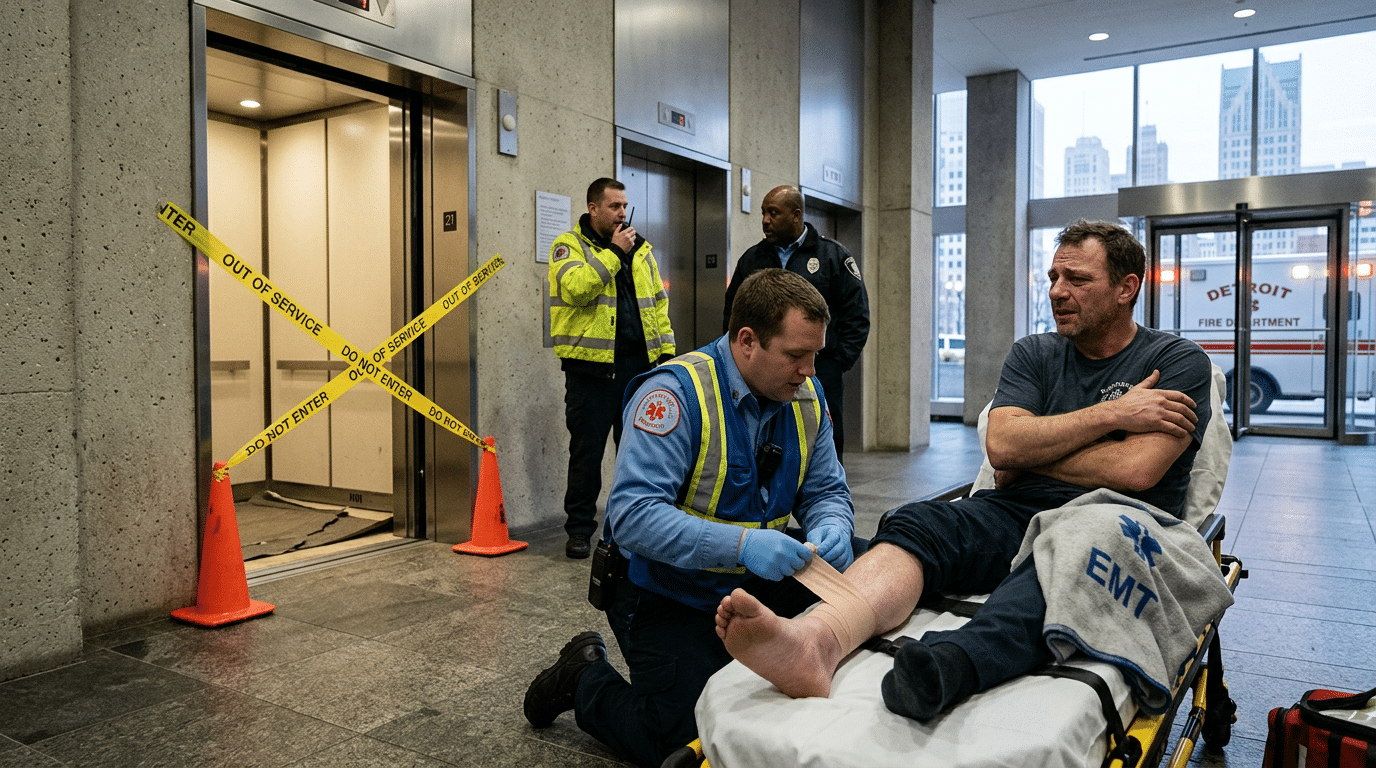
People use elevators every day in places like apartment buildings, hospitals, hotels, offices, parking garages, and shopping centers across Detroit. Most of the time, elevator rides are safe, but a malfunction can cause serious injuries very quickly. Problems like sudden drops, uneven floors, doors closing too soon, or mechanical failures can lead to broken bones, head injuries, spinal injuries, and other long-term health issues.
If an elevator accident happens because safety rules were ignored or repairs were delayed, several parties might be legally responsible. We look into these cases thoroughly because finding out who took care of the elevator is just as important as figuring out what went wrong.
How Elevator Accidents Happen In Michigan
Elevator injuries can occur in several ways. A passenger may enter an elevator that is not level with the floor and trip over the height difference. Doors may close too quickly and strike someone entering or leaving the car. An elevator may stop abruptly, shake, move unexpectedly, or experience a mechanical problem that causes occupants to fall.
Some accidents happen because of problems like broken sensors, worn-out parts, faulty control systems, poor repairs, or not enough maintenance. Other times, accidents occur when a property owner ignores earlier complaints about an elevator that was already having issues.
We do more than just look at the accident itself. We review things like maintenance records, repair bills, inspection reports, service calls, past complaints, security footage, and incident reports to find out if a dangerous problem existed before the injury happened.
Michigan Elevator Safety Laws And Regulations
Michigan regulates elevators through the Elevator Safety Board Act, MCL 408.801, together with the Michigan Elevator Code and related administrative requirements. These rules govern matters such as elevator installation, alteration, maintenance, repair, testing, and operation.
Michigan’s Department of Licensing and Regulatory Affairs oversees elevator safety through the Bureau of Construction Codes. Elevators are subject to safety inspections, and elevator contractors and other professionals performing regulated work must satisfy applicable licensing requirements.
Breaking an elevator safety rule does not automatically decide every injury case. However, if there is proof that needed maintenance, inspections, testing, or repairs were ignored, that information can be very important when we look at negligence.
Who May Be Responsible For An Elevator Injury?
Responsibility depends on who owned, controlled, serviced, or repaired the elevator.
A commercial property owner may be responsible if management knew about a dangerous condition but failed to address it. A building management company may face liability if it received complaints and did not take reasonable corrective action. An elevator maintenance contractor may be responsible if improper repairs or inadequate servicing contributed to the accident. In some cases, a manufacturer or component supplier may also become involved if defective equipment contributed to the failure.
We determine liability by reviewing contracts, maintenance responsibilities, inspection records, and the elevator’s history. These cases should not be treated like ordinary slip-and-fall claims because technical evidence often plays an important role.
Elevator Accidents In Michigan Apartment Buildings
Elevator injuries in apartment buildings may involve additional statutory protections.
Under MCL 554.139, a residential landlord generally has obligations to keep rented premises and common areas fit for their intended use, keep the premises in reasonable repair, and comply with applicable health and safety laws, subject to statutory qualifications.
An elevator serving tenants is typically part of a building’s common facilities. When management repeatedly receives reports that an elevator is malfunctioning, stopping between floors, failing to level correctly, or closing its doors improperly, those prior reports can become highly relevant after someone is injured.
We examine maintenance requests, tenant complaints, emails, work orders, and inspection records to determine what the landlord or management company knew before the incident occurred.
Common Injuries Caused By Elevator Accidents
Elevator accidents can cause injuries ranging from relatively minor soft-tissue trauma to permanent disability. A sudden stop or drop can throw passengers against walls or the elevator floor. An uneven landing can cause a person to fall forward with little opportunity to protect themselves.
Common injuries include broken wrists, fractured hips, ankle fractures, knee injuries, herniated discs, shoulder injuries, concussions, traumatic brain injuries, and spinal injuries.
Older adults may face particularly serious consequences after a fall because fractures can require surgery, hospitalization, rehabilitation, and extended assistance with daily activities.
Evidence We Look For After An Elevator Accident
Preserving evidence quickly is important because maintenance work may begin immediately after an accident. If a defective component is repaired or replaced, physical evidence concerning the cause of the malfunction can disappear.
We may seek elevator inspection reports, maintenance logs, service agreements, repair histories, photographs, surveillance recordings, witness statements, and records of earlier complaints. We may also examine whether the elevator had previously been taken out of service or cited for safety concerns.
When the cause is technical, engineering or elevator-industry analysis may be needed to determine whether a mechanical failure should have been discovered during routine maintenance or inspection.
Compensation In A Michigan Elevator Injury Claim
A person injured because of negligence may be entitled to pursue compensation for losses caused by the accident.
Depending on the facts, damages can include medical expenses, future medical treatment, lost wages, diminished earning capacity, pain and suffering, physical limitations, and the effect the injury has on normal daily activities.
More serious elevator accidents can create substantial future costs. A fractured hip may require additional surgery. A spinal injury may affect employment permanently. A brain injury may require rehabilitation or long-term assistance.
We evaluate both current losses and reasonably anticipated future consequences before determining the potential value of a claim.
Michigan’s Deadline For Filing An Elevator Injury Lawsuit
Michigan’s general statute of limitations for personal injury claims is found in MCL 600.5805. In many injury cases, the lawsuit must be filed within three years of the injury.
There can be exceptions and additional requirements depending on the defendant and circumstances. Claims involving governmental property, for example, may raise separate notice rules and legal issues.
Waiting also creates practical problems even when the filing deadline has not expired. Surveillance recordings may be deleted, witnesses become harder to locate, and maintenance records may become more difficult to obtain. We therefore recommend investigating a serious elevator injury promptly.
Frequently Asked Questions About Elevator Injury Claims In Michigan
Can We Sue After Being Injured In A Michigan Elevator?
A lawsuit may be possible when another party’s negligence contributed to the elevator accident. Potential defendants can include property owners, management companies, elevator maintenance contractors, and other entities responsible for keeping the elevator reasonably safe. We first determine what caused the accident and which parties controlled the equipment, maintenance, and repairs.
What If The Elevator Suddenly Dropped And Injured Us?
A sudden elevator movement should be investigated carefully. Maintenance records, inspection reports, service histories, and the elevator’s mechanical and electronic systems may help identify the cause. We do not assume that every reported “drop” occurred in the same way. We focus on determining precisely what the elevator did, why it happened, and whether reasonable maintenance or repair could have prevented it.
Can We File A Claim If An Elevator Door Closed On Us?
Potentially. Elevator doors use safety devices intended to prevent passengers from being struck or trapped during normal operation. A malfunctioning door sensor, improper adjustment, worn equipment, or maintenance problem may contribute to an injury. We examine the elevator’s service history and prior complaints to determine whether there was a known or discoverable problem.
What If We Tripped Because The Elevator Was Not Level With The Floor?
Improper leveling can create a dangerous tripping hazard, especially for older adults and people with mobility limitations. We investigate whether the elevator had a history of stopping above or below the landing and whether maintenance personnel or property management had received earlier complaints. Those records can help establish notice and negligence.
Who Is Responsible If We Were Injured In An Apartment Building Elevator?
Potential responsibility may involve the landlord, property owner, management company, elevator servicing contractor, or another entity. MCL 554.139 also imposes certain obligations on residential lessors concerning common areas, reasonable repair, and applicable health and safety laws. The correct defendant depends on the facts and the agreements governing maintenance and control of the elevator.
What Should We Do After An Elevator Accident?
We recommend obtaining medical treatment, reporting the accident to building management, documenting the elevator and surrounding area when possible, and preserving any photographs or videos. We also recommend recording the names of witnesses and avoiding assumptions about why the elevator malfunctioned until the maintenance and inspection history can be reviewed.
Talk To Ravid & Associates, P.C. About A Michigan Elevator Injury
An elevator accident can leave an injured person facing surgery, rehabilitation, lost income, chronic pain, or permanent limitations. We investigate the condition of the elevator, its maintenance history, prior complaints, inspections, and the responsibilities of every company involved. When negligence caused a serious injury, we pursue compensation from the parties responsible.
If you were injured in an elevator accident in Detroit or anywhere in Michigan, call our Detroit injury lawyers at Ravid & Associates, P.C. today at (248) 948-9696 to receive your free consultation. We represent injured clients in Detroit and throughout the entire state of Michigan from our office location in Southfield, Michigan. We can review what happened, identify potential responsible parties, and explain the legal options available under Michigan law.

