
Torn ACL Injury Claims After Motor Vehicle Accidents
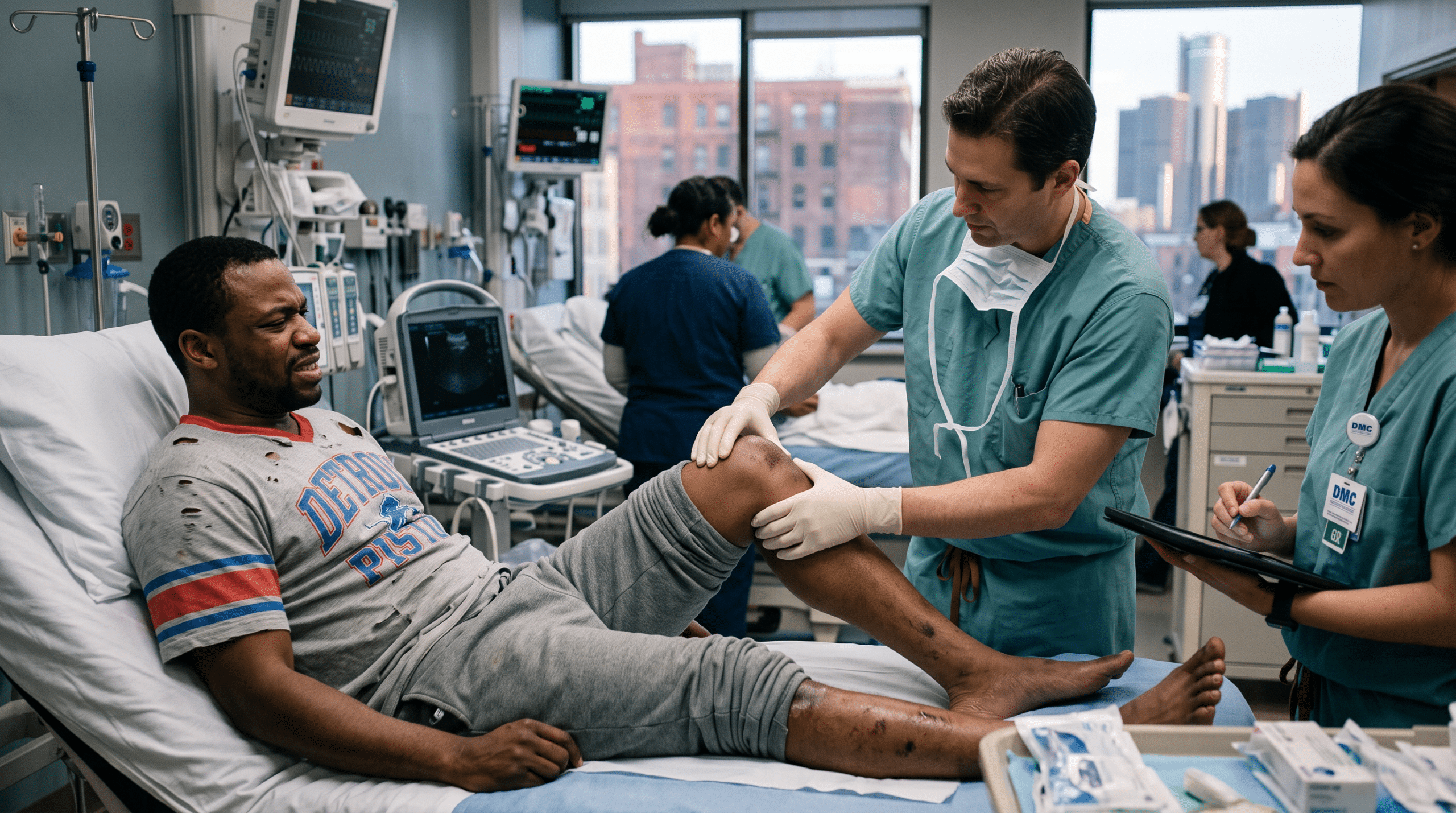
A car accident can put a lot of force on your knees, even if you do not see an injury right away. Your knee might hit the dashboard, twist under your body, or get pushed into an awkward position as the car spins or changes direction. These actions can tear the anterior cruciate ligament (ACL) or harm other parts of the knee. Some people feel right away that something is wrong, while others notice swelling or soreness that gets worse over time. An ACL tear may need surgery, months of rehab, time off work, and can cause lasting problems long after the accident.
We help people whose knee injuries have made it harder to work, walk, exercise, drive, or do everyday tasks. If another Detroit driver’s carelessness caused your ACL tear or another serious knee injury, Michigan law may allow you to get compensation through no-fault benefits and a claim against the at-fault driver. It is important to show how serious the injury is and that it was caused by the accident, since insurance companies may question both the cause and how bad the injury is.
How Motor Vehicle Accidents Cause ACL Tears And Knee Injuries
The ACL is a key ligament that helps keep the knee stable. While ACL tears often happen in sports, the strong forces in a car accident can cause the same twisting and turning that injures this ligament.t. The knee may also strike the dashboard in a frontal collision. Side-impact accidents can force the leg sideways, while rollover crashes may subject the knee to several different forces within seconds.
Car accidents can also cause other knee injuries, like meniscus tears, medial collateral ligament injuries, broken kneecaps, cartilage damage, tendon injuries, or a mix of these. We look at the full diagnosis, not just the ACL tear by itself.
Symptoms That May Indicate A Serious Knee Injury
Some ACL tears produce an audible or noticeable popping sensation at the moment of injury. Significant swelling may develop within several hours, and the injured person may have difficulty placing weight on the leg.
Other signs include your knee feeling unstable, not moving as much as usual, being tender or stiff, or feeling like it might give out when you walk. A partial tear might not feel as severe but can still make daily activities harder.
It is important to see a doctor if you have knee pain after a crash. X-rays can find broken bones but usually cannot show an ACL tear. Doctors often use physical exams and MRI scans to check for damage to ligaments, cartilage, and the meniscus.
Michigan No-Fault Benefits After An ACL Injury
Michigan’s No-Fault Insurance Act provides Personal Injury Protection benefits to qualifying people injured in motor vehicle accidents. Under MCL 500.3107, PIP benefits may include allowable expenses for reasonably necessary accident-related medical care as well as qualifying work-loss and replacement-service benefits subject to Michigan law and the applicable insurance coverage.
For an ACL injury, medical treatment may Treating an ACL injury can involve imaging tests, seeing an orthopedic doctor, surgery, physical therapy, medicine, braces, rehab, and follow-up visits. If the tear is severe, you might need ACL reconstruction and months of physical therapy afterward. Medical coverage can depend on the PIP medical coverage selected under the applicable policy and other provisions of Michigan’s no-fault system. We examine all potentially applicable insurance coverage when evaluating a serious knee injury claim.
When An ACL Tear Supports A Claim Against The At-Fault Driver
PIP benefits and a negligence claim against an at-fault driver serve different purposes. Michigan law allows certain accident victims to pursue noneconomic damages against an at-fault driver when the statutory threshold has been satisfied.
Under MCL 500.3135, a person may pursue noneconomic damages when the accident causes death, permanent serious disfigurement, or a serious impairment of body function. Michigan law defines serious impairment through factors that include whether an objectively manifested impairment involves an important body function and affects the person’s general ability to lead a normal life.
An ACL tear requiring reconstructive surgery can significantly affect mobility and everyday life. We examine how the knee injury affects work, household responsibilities, recreation, family activities, walking, driving, sleep, and other parts of the client’s pre-accident routine. The analysis is based on the particular person’s circumstances rather than the diagnostic label alone.
Surgery Can Increase The Long-Term Consequences Of A Knee Injury
ACL reconstruction is significant orthopedic surgery. The damaged ligament may be reconstructed using a graft, followed by a lengthy rehabilitation program intended to restore motion, stability, and strength.
Even after successful treatment, some patients continue to experience weakness, instability, stiffness, pain, or restrictions on physical activity. A person with a physically demanding job may be affected differently than someone whose employment is primarily sedentary.
Future medical concerns matter as well. Serious traumatic knee injuries can lead to additional procedures and may contribute to degenerative changes over time. When supported by medical evidence, we consider anticipated future care and lasting physical limitations when assessing damages.
Proving The Knee Injury Came From The Collision
Insurance companies may argue that a knee condition existed before the accident or resulted from sports, work, arthritis, or ordinary degeneration. Medical documentation becomes particularly important when causation is disputed.
We examine emergency treatment records, orthopedic evaluations, MRI findings, prior medical records, surgical reports, rehabilitation records, crash photographs, vehicle damage, and descriptions of how the occupant’s body moved during impact. When appropriate, medical testimony can explain whether the collision mechanism is consistent with the diagnosed injury.
A prior knee condition does not automatically eliminate a claim. The critical issue may be whether the accident caused a new injury or materially worsened an existing condition.
Comparative Fault Can Affect Compensation
Michigan’s comparative fault law can affect damages when the injured person is accused of contributing to the crash. Under MCL 600.2959, damages may be reduced according to the injured person’s percentage of fault.
If the injured person is more than 50 percent at fault, Michigan law bars recovery of noneconomic damages. Because a disputed percentage of fault can substantially change the financial outcome of an ACL injury claim, we investigate how the collision happened rather than simply accepting an insurance company’s liability determination.
Calculating The Value Of A Serious Knee Injury Claim
There is no fixed settlement value for an ACL tear. The value depends on the medical evidence and the individual consequences of the injury.
Important considerations include the severity of the tear, whether surgery was necessary, the length of rehabilitation, time missed from work, permanent restrictions, future treatment, and how significantly the injury changed the person’s normal life.
A torn ACL suffered by a construction worker who can no longer perform heavy physical work presents different losses from the same diagnosis in someone who fully recovers. We build the damages portion of the case around the actual effects of the injury rather than relying on a generic injury value.
FAQs About Torn ACL And Knee Injury Claims After Motor Vehicle Accidents
Can A Car Accident Cause A Torn ACL Without The Knee Hitting The Dashboard?
Yes. Direct impact is only one way an ACL injury can occur. The ligament can tear when the foot remains planted while the knee and upper leg rotate sharply during a collision. Side-impact crashes, spinning vehicles, and sudden changes in direction can place substantial rotational forces on the knee even without dashboard contact. Medical findings and the mechanics of the collision can help establish how the injury occurred.
Can We Bring A Claim If The ACL Tear Requires Surgery?
Potentially, yes. An ACL reconstruction can provide strong objective evidence that a substantial knee injury occurred, but surgery alone does not automatically determine liability or compensation. We still need to establish that another party was legally responsible for the collision and connect the knee damage to that accident. We also evaluate rehabilitation, work restrictions, permanent symptoms, and the effect of the injury on normal life.
What If Knee Pain Did Not Become Severe Until Several Days After The Accident?
Delayed symptoms do not automatically defeat a claim. Swelling, inflammation, and ligament instability can become more noticeable after the initial shock of a collision passes. Insurance companies may scrutinize a delay in treatment, however, so medical records explaining when symptoms developed and how they progressed can become important evidence. We examine the entire medical timeline when addressing causation.
Can We Recover Compensation If The Knee Was Injured Before The Crash?
A previous knee problem does not necessarily prevent recovery. A collision can aggravate an existing condition or cause a new traumatic injury involving structures that were previously damaged. We compare pre-accident medical records with post-accident imaging, examinations, treatment, and functional restrictions to identify what changed because of the collision.
Does An ACL Tear Automatically Meet Michigan’s Serious Impairment Requirement?
Not automatically. Under MCL 500.3135, the analysis focuses on the objectively manifested impairment, the importance of the affected body function, and whether the impairment affects the person’s general ability to lead a normal life. An ACL tear requiring surgery, lengthy rehabilitation, and substantial restrictions may provide strong evidence supporting that threshold, but each person’s circumstances must be evaluated individually.
What Compensation May Be Available For A Serious Knee Injury?
Depending on the facts and available coverage, an injured person may have claims involving accident-related medical treatment, qualifying wage loss, replacement services, excess economic losses, and noneconomic damages such as pain and suffering. The available categories depend on Michigan’s no-fault laws, the applicable insurance policies, fault, and whether the statutory threshold for a third-party claim has been satisfied.
Talk To Ravid & Associates, P.C. About A Torn ACL Or Knee Injury Claim
A serious knee injury can affect far more than the ability to walk comfortably. ACL reconstruction, months of rehabilitation, missed employment, physical restrictions, and uncertainty about future knee problems can disrupt nearly every part of daily life. We investigate how the collision occurred, document the medical consequences, address insurance disputes, and pursue the compensation available under Michigan law.
If you suffered a torn ACL, meniscus tear, ligament injury, fractured knee, or another serious knee injury in a motor vehicle accident, contact our Detroit auto accident lawyers at Ravid & Associates, P.C. today by calling (248) 948-9696 to receive your free consultation. We represent injured clients in Detroit and throughout the entire state of Michigan from our office location in Southfield, Michigan. We can review the accident, examine the available insurance coverage, and determine the legal options for pursuing compensation for the harm caused by the crash.

